
Catalogue Search | MBRL


Are you sure you want to remove the book from the shelf?

{{itemTitle}}
6
result(s) for
"Imperialism Social aspects France Colonies Africa History."
Sort by:

Regeneration through empire : French pronatalists and colonial settlement in the Third Republic
\"Following France's defeat in the Franco-Prussian War in 1870-71, French patriots feared that their country was in danger of becoming a second-rate power in Europe. Decreasing birth rates had largely slowed French population growth, and the country's population was not keeping pace with that of its European neighbors. To regain its standing in the European world, France set its sights on building a vast colonial empire while simultaneously developing a policy of pronatalism to reverse these demographic trends. Though representing distinct political movements, colonial supporters and pronatalist organizations were born of the same crisis and reflected similar anxieties concerning France's trajectory and position in the world. Regeneration through Empire explores the intersection between colonial lobbyists and pronatalists in France's Third Republic. Margaret Cook Andersen argues that as the pronatalist movement became more organized at the end of the nineteenth century, pronatalists increasingly understood their demographic crisis in terms that transcended the boundaries of the metropole and began to position the French empire, specifically its colonial holdings in North Africa and Madagascar, as a key component in the nation's regeneration. Drawing on an array of primary sources from French archives, Regeneration through Empire is the first book to analyze the relationship between depopulation and imperialism\"-- Provided by publisher.
Book

Regeneration through Empire
Following France's defeat in the Franco-Prussian War in 1870-71, French patriots feared that their country was in danger of becoming a second-rate power in Europe. Decreasing birth rates had largely slowed French population growth, and the country's population was not keeping pace with that of its European neighbors. To regain its standing in the European world, France set its sights on building a vast colonial empire while simultaneously developing a policy of pronatalism to reverse these demographic trends. Though representing distinct political movements, colonial supporters and pronatalist organizations were born of the same crisis and reflected similar anxieties concerning France's trajectory and position in the world.
Regeneration through Empireexplores the intersection between colonial lobbyists and pronatalists in France's Third Republic. Margaret Cook Andersen argues that as the pronatalist movement became more organized at the end of the nineteenth century, pronatalists increasingly understood their demographic crisis in terms that transcended the boundaries of the metropole and began to position the French empire, specifically its colonial holdings in North Africa and Madagascar, as a key component in the nation's regeneration. Drawing on an array of primary sources from French archives,Regeneration through Empireis the first book to analyze the relationship between depopulation and imperialism.
eBook
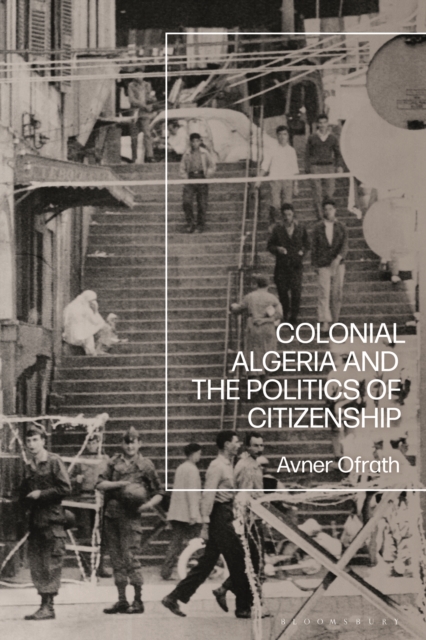
Colonial Algeria and the Politics of Citizenship
This book explores citizenship politics in colonial Algeria, which became a key battlefield for struggles over participation of the body politic and the reach of universal promise in 1789. In examining these struggles, Avner Ofrath shows how colonialism dissolved the political community as a frame of participation and negotiation, first in the colonies and ultimately in the metropole. Revealing the racialization of citizenship from the late 19th century onwards, this book shows how lawmakers under the Third French Republic construed colonial subjugation around rigid ethnic-religious criteria in order to protect settler privileges and exclude Algerian Muslims. Portraying Islam as oppressive and unmodern, the exclusion and othering of Muslims led to a concept of citizenship that was deeply hostile to religious difference. Despite this, Colonial Algeria and the Politics of Citizenship shows how Algeria witnessed some of the most powerful contestations of racialized citizenship seen in a colony. From a successful Jewish campaign for full political rights in the 1860s, to Muslims' demand for reform in the 1930s, Algerians insisted on Maghribi languages, religions and history as indispensable dimensions of political life. Tracing intellectual and political networks throughout the Maghrib, the Mashriq, and across the Mediterranean, Avner Ofrath weaves Algeria into a global history of citizenship in the age of empire.
eBook

Colonial Culture in France since the Revolution
This landmark collection by an international group of scholars and public intellectuals represents a major reassessment of French colonial culture and how it continues to inform thinking about history, memory, and identity. This reexamination of French colonial culture, provides the basis for a revised understanding of its cultural, political, and social legacy and its lasting impact on postcolonial immigration, the treatment of ethnic minorities, and national identity.
eBook

Environmental Imaginaries of the Middle East and North Africa
The landscapes of the Middle East have captured our imaginations throughout history. Images of endless golden dunes, camel caravans, isolated desert oases, and rivers lined with palm trees have often framed written and visual representations of the region. Embedded in these portrayals is the common belief that the environment, in most places, has been deforested and desertified by centuries of misuse. It is precisely such orientalist environmental imaginaries, increasingly undermined by contemporary ecological data, that the eleven authors in this volume question. This is the first volume to critically examine culturally constructed views of the environmental history of the Middle East and suggest that they have often benefitted elites at the expense of the ecologies and the peoples of the region. The contributors expose many of the questionable policies and practices born of these environmental imaginaries and related histories that have been utilized in the region since the colonial period. They further reveal how power, in the form of development programs, notions of nationalism, and hydrological maps, for instance, relates to environmental knowledge production. Contributors: Samer Alatout, Edmund Burke III, Shaul Cohen, Diana K. Davis, Jennifer L. Derr, Leila M. Harris, Alan Mikhail, Timothy Mitchell, Priya Satia, Jeannie Sowers, and George R. Trumbull IV
eBook

Madness and Colonization: Psychiatry in the British and French Empires, 1800–1962
Cultural, social, and intellectual historians have begun to examine the intersecting histories of European colonialism and psychiatry. At their best, these studies engage with at least four distinct historiographies. First, they revise the history of European medicine by illustrating the importance of the colonies to metropolitan scientific developments. Second, they explore the relationship between knowledge and power in the colonial context that the pre-occupied scholars since the publication of Edward Said's \"Orientalism\" in 1978. Third, they explicitly address the psychology of colonialism, a phenomenon at the heart of many intriguing yet speculative works in postcolonial studies. Finally, they open a new methodological window into the history of race by exploring institutional psychiatry's contributions to definitions of race and citizenship under colonialism. This essay reveals the potential implications of such research by highlighting recent studies of British and French colonial psychiatry in Africa and Asia, while also addressing possible future directions for the study of colonial psychiatry.
Journal Article