
Catalogue Search | MBRL


Are you sure you want to remove the book from the shelf?

{{itemTitle}}
390
result(s) for
"Imprisonment England."
Sort by:

Confronting penal excess : retribution and the politics of penal minimalism
\"This monograph considers the correlation between the relative success of retributive penal policies in English-speaking liberal democracies since the 1970s, and the practical evidence of increasingly excessive reliance on the penal state in those jurisdictions. It sets out three key arguments. Firstly, that increasingly excessive conditions in England and Wales over the last three decades represent a failure of retributive theory. Secondly, that the penal minimalist cause cannot do without retributive proportionality, at least in comparison to the limiting principles espoused by rehabilitation, restorative justice, and penal abolitionism. Thirdly that, accordingly, another retributivism is necessary if we are to confront penal excess. Hayes offers a sketch of this new approach, 'late retributivism', as both a theory of punishment and of minimalist political strategy, within a democratic society. Centrally, criminal punishment is approached as both a political act and a policy choice. Consequently, penal theorists must take account of contemporary political contexts in designing and advocating for their theories. Although Hayes's inquiry focuses primarily on England and Wales, its models of retributivism and of academic contribution to democratic penal policy-making are relevant to other jurisdictions, too\"-- Provided by publisher.
Book
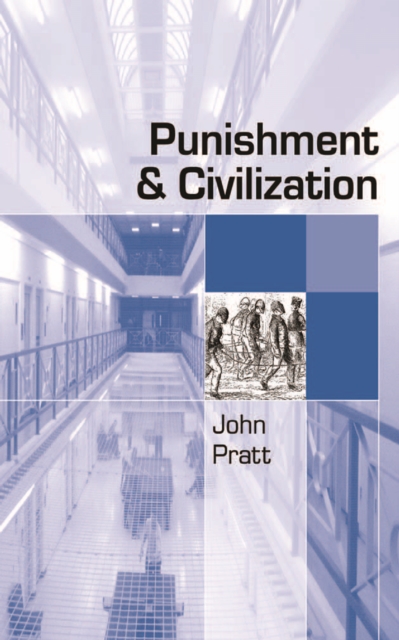
Punishment and civilization : penal tolerance and intolerance in modern society
This book examines how a framework of punishment that suited the values of the civilized world came to be set in place from around 1800 to the late 20th century. John Pratt draws on research about prison architecture, clothing, diet, hygienic arrangements and changes in penal language to establish this.
eBook


Exploring the Mandatory Life Sentence for Murder
Murder is often regarded as both the ‘ultimate’ and a unique crime, and whereas courts are normally given discretion in sentencing offenders, for murder the sentence is mandatory – indeterminate imprisonment. Since the crime and the punishment come as a ‘package deal’ this book looks at both the legal nature of the offence and at the current operation of the mandatory life sentence. Not only does the book adopt a critical approach, by assessing the strengths and weaknesses of the status quo, it also draws upon comparative material from both common and civil law jurisdictions in an attempt to provide a comprehensive exploration of these issues. The need for public confidence in the criminal justice system is particularly acute in the way it deals with the most serious homicides. In this book the authors report findings from the first systematic exploration of public attitudes to sentencing murder in this or any other common law jurisdiction. The picture of public opinion emerging from this recent large-scale nationwide qualitative and quantitative survey, funded by the Nuffield Foundation, is likely to surprise many, and will be of interest to all jurisdictions where the mandatory life sentence for murder has been questioned.
eBook

Hell and high water
Set in the 18th-century, Caleb is the mixed race son of a poor puppeteer. When his father is wrongfully accused of theft and sentenced to transportation, Caleb is forced to seek out his estranged aunt in Devon. When a body washes up on a nearby beach, a shattered Caleb finds himself involved in a plot that places him and his newfound family in mortal danger.
Book
