
Catalogue Search | MBRL


Are you sure you want to remove the book from the shelf?

{{itemTitle}}
148
result(s) for
"Inca pottery"
Sort by:
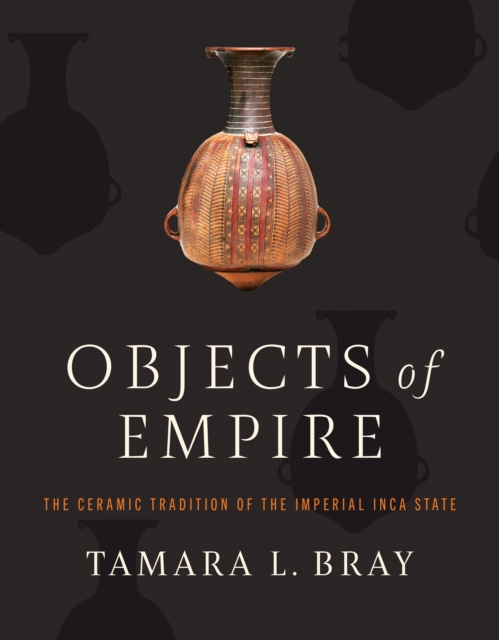
Objects of Empire
A comparative, empire-wide study of the ceramics associated with the imperial Inca state, theorizing the role of these highly recognizable vessel forms in legitimizing Inca rule and establishing imperial identities.
eBook

Small-scale pottery production and distribution in the southern confines of the Inca Empire: an archaeometric insight to define the Provincial style
This paper proposes an archaeometric contribution to the study of the Inca pottery style from the southeastern frontier of
Tawantinsuyu
, also known as the Inca Empire, located in Central Western Argentina (CWA). In complementing previous research, a geochemical and mineralogical characterisation of ceramics from various Inca and local sites is carried out by combining X-ray fluorescence analysis (WD-XRF), powder X-ray diffraction analysis (PXRD) and scanning electron microscopy (SEM-EDX). The exhaustive statistical treatment and discussion of the chemical data, complemented by mineralogical and microstructural data gathered through PXRD and SEM-EDX techniques, provide significant insights into the provenance of raw materials, paste recipes, firing conditions, estimated firing temperature and post-depositional contaminations. A complex structure comprising six meaningful ceramic groups has been identified, with some of them attributed to hypothetical provenance areas defined by previous research. Additionally, many ceramics remained ungrouped. Despite the identified compositional variability, certain technological attributes exhibit a higher degree of homogeneity. The estimated firing temperature and microstructure of the pottery denote some control over firing conditions to produce vessels with high mechanical strength and toughness suitable for storage and short-distance distribution. The results of both compositional and technological analyses point to the existence of multiple production
loci
within a domestic or communitarian model of production sharing the same pottery tradition.
Journal Article
Pre-Inca and Inca Pottery
This volume presents a collection of articles which offer different perspectives for archaeological pottery studies, regarding the understanding of pre-Hispanic social practices in Quebrada de Humahuaca, Argentina.
eBook

Retracing Inca Steps
Dean Arnold takes readers on a journey into the Andes, recounting the adventures of his 1960s research in the village of Quinua, Peru. Arnold’s quest to understand how contemporary pottery production reflected current Quinua society as well as its ancient Inca and pre-Inca past is one of the earliest studies in what later became known as ethnoarchaeology. This first-person narrative reveals the challenges of living and working in another culture and the many obstacles one can encounter while doing field research. Arnold shares how his feelings of frustration and perceived failure led him to refocus his project, a shift that ultimately led to an entirely new perspective on pottery production in the Andes. Masterfully weaving details about Peru’s geography, ecology, history, prehistory, and culture into his story, he chronicles his change from small-town Midwesterner to a person of much broader vision, newly aware of his North American views and values.
Retracing Inca Steps is an excellent read for the lay person wishing to learn about the environment, prehistory, history, and culture of Peru as well as for students wanting to know more about the joys and rigors of fieldwork.
eBook
Pottery technology and provenance in southern Tawantinsuyu. A petrographic approach to Provincial Inca style
In Central Western Argentina (CWA), the Provincial Inca pottery has been the most ubiquitous indicator of Inca influence and expansionism during the fifteenth–sixteenth centuries. This paper presents a petrographic analysis of thin sections of ceramic samples from the Inca and local sites located throughout CWA, in order to contribute to the study of the provenance of raw materials, technology, and distribution networks. The results point to a heterogeneous petrographic composition, consistent with a decentralized production model. However, major uniformity in pastes, and a higher correlation with the local geology, is identified in two sectors: the Uspallata Valley and Southern San Juan. Some innovations in production practices (such as grog and volcanic glass inclusions) are also noteworthy, probably in relation to the emergence of new socio-ethnic identities. This information is compared with their archaeological background to contribute to the discussion of the organization of pottery production during the Inca dominance of the state’s southern frontier.
Journal Article

Los nuevos sujetos imperiales del valle de Copiapó
Durante la expansión imperial inca, fueron introducidas nuevas formas y estilos cerámicos en el valle de Copiapó. Más allá de la presencia de nuevas vasijas como aríbalos, aisanas y escudillas planas, las vasijas locales no restringidas de perfil simple o ‘pucos’ permanecen en el tiempo e incorporan en su decoración una mezcla de estilos diaguita-inca reinterpretados localmente.
Este artículo se basa en el análisis morfológico y estilístico de colecciones museológicas de pucos tardíos de la costa y valle de Copiapó, sin considerar aquellos tipos locales Copiapó negro sobre rojo. Las configuraciones estilísticas más abundantes en la muestra analizada son el patrón Zigzag, Doble zigzag, Rombos y Triángulos en Doble Reflexión Especular y Greca Inca, incluyendo variantes que reinterpretan localmente diseños cuzqueños y diaguita. La creación de estos nuevos tipos es un posible reflejo del surgimiento de nuevas identidades sociales, en donde los actores sociales locales negociaron los referentes simbólicos de su cultura material durante una época de importantes cambios en lo político y social.
During the Inca imperial expansion, new kinds of pottery forms and styles appeared in Copiapó valley. Besides the presence of new pots such as aríbalos, aisanas, and shallow plates, local unrestricted and simple profile pots persisted. Furthermore, their designs incorporated a mix of locally re-interpreted Diaguita-Inca styles.
This paper is based on the morphological and stylistic analysis of pots from museum collections, which came from Copiapó coast and valley, excluding the Copiapó black-on-red style local pots. The most abundant stylistic patterns in the sample are the Zigzag, Double Zigzag, Diamonds in Double Mirror Reflection, and Greca Inca including all their variations, which are local interpretations of Cuzco and Diaguita designs. The creation of these new types suggests the rise of new social identities, where local actors negotiated the symbolic referents of their material culture during a time of important political and social changes.
Journal Article

Prácticas alfareras, tecnología y cronología durante los períodos Tardío e Inca en el sector meridional del Valle de Abaucán. Tradiciones y rupturas
Las prácticas alfareras en perspectiva arqueológica pueden ser estudiadas abordando diferentes aristas concernientes al proceso de producción y los restos materiales asociados a cada etapa. En este trabajo se presentan los resultados obtenidos del análisis tecnológico integral de una muestra extensiva de alfarería procedente del tambo Incaico de Costa de Reyes N°5 (Tinogasta, Catamarca, Argentina). La metodología implementada para lograr los objetivos consiste en la reconstrucción de formas típicas, la observación de cortes frescos en lupa binocular y la petrografía en secciones delgadas, aplicadas a un conjunto alfarero recolectado tanto de contextos superficiales como de excavaciones estratigráficas realizadas en dos recintos del sitio de Costa de Reyes N°5. A través de esta aproximación se han logrado visualizar continuidades y rupturas en el proceso de producción de alfarería y en las recetas aplicadas por los alfareros durante momentos de los períodos Agroalfarero tardío (ca. 900–1450 dC) e Inca (ca. 1480–1532 dC). Mientras que la producción de alfarería durante el período Tardío presenta características heterogéneas y una mayor variabilidad, en momentos Incaicos se observa que las recetas aplicadas por los alfareros para elaborar las pastas cerámicas se homogenizan, lo que se interpreta como un control más estricto sobre las fuentes de materia prima y sobre el proceso de hacer alfarería como un todo.
From an archaeological perspective, the practice of pottery making can be studied from different theoretical and analytical perspectives on the stages of pottery production. In this paper, we present the results obtained through technological analysis of prehispanic pottery from the Costa de Reyes N° 5 archaeological site (Tinogasta, Catamarca). The main goal of this analysis is to explore the pottery-making practices developed by ancient potters during the Late Period and through the arrival of Incas at the southern sector of Abaucán Valley. Our methodology consisted of the reconstruction of typical ceramic forms, the use of a stereoscopic microscope to study fresh transversal cuts, and thin-section analyses by ceramic petrography, carried out on pottery samples recovered from both surface collection and excavations in two structures at Costa de Reyes N° 5. Through this approach, we are able to explore and visualize continuities and ruptures in both the pottery-making practices and paste recipes during the Late Period (ca. 900–1450 aC), and how pottery-making was reconfigured when the Inca (ca. 1480–1532 aC) arrived in the region. While pottery production during the Late Period is characterized by technological variability and heterogeneous ceramic pastes, during Inca times there was a homogenization of the recipes used by ancient potters. This is interpreted as a strict control of both the raw materials available and over the pottery production as a whole.
Journal Article

Yavi-Chicha and the Inka expansion: a petrographic approach
The social complexities underlying imperial control are manifest in the material culture of everyday life encountered at archaeological sites. The Yavi-Chicha pottery style of the south-central Andes illustrates how local identities continued to be expressed in practices of pottery manufacture during the process of Inka expansion. The Yavi-Chicha style itself masks a number of distinct production processes that can be traced through petrographic analysis and that relate to the different communities by whom it was produced and consumed. The dispersion of pottery fabric types in this region may partly be attributable to the Inka practice of mitmaqkuna, the displacement and relocation of entire subject populations.
Journal Article
Interacciones y lenguajes visuales en la cerámica local de los períodos Inca y colonial
El estudio de la cerámica producida localmente en áreas fronterizas del dominio incaico permite investigar la circulación de personas y de conocimiento en esos sectores. Además, posibilita definir el rol que cumplieron las vasijas producidas localmente, tanto en la dominación simbólica imperial como en las estrategias surgidas entre las poblaciones dominadas. En este trabajo analizamos el caso de la cerámica Viluco, la que fue producida en la frontera meridional oriental incaica (Centro Oeste Argentino) y se encuentra en contextos coloniales hasta el siglo XVII. El estudio de las formas, decoraciones modeladas y el análisis exhaustivo de los patrones de simetría que estructuraron la decoración pintada, permitieron definir con mayor precisión las influencias recibidas por parte de diversas tradiciones cerámicas del Área Andina; cómo las poblaciones locales encontraron medios indirectos de representación en los nuevos contextos de relaciones de poder; y de qué modo la cerámica Viluco formó parte de los sistemas de representación visual inca, función que se proyectó hasta los primeros años de la Colonia.
Journal Article

Producción local de objetos cerámicos durante los períodos Tardío e Inca en el valle de Tafi
Uno de los aspectos destacados en el análisis de la dinámica de las sociedades prehispánicas es su capacidad para producir los bienes que consumen, en este caso, la cerámica que utilizarán en sus actividades cotidianas, sean estas de índole doméstica o simbólico/ritual. Arqueológicamente, las primeras etapas de una investigación que se oriente en tal sentido apuntan a determinar la presencia de potenciales fuentes de arcilla, recurso primario para la manufactura cerámica, y su afinidad composicional con los fragmentos arqueológicos.
Journal Article