
Catalogue Search | MBRL


Are you sure you want to remove the book from the shelf?

{{itemTitle}}
291
result(s) for
"Incendiary bombs"
Sort by:
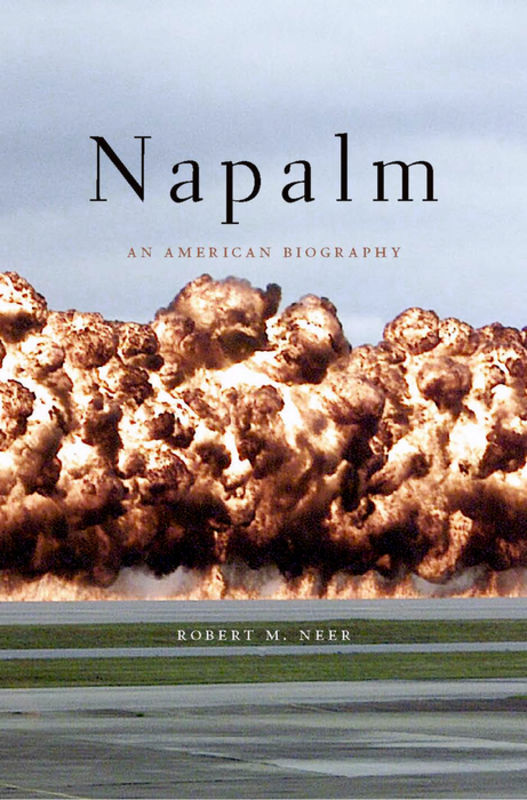
Napalm : an American biography
Napalm was invented on Valentine's Day 1942 at a secret Harvard war research laboratory. It created an inferno that killed over 87,500 people in Tokyo--more than died in the atomic explosions at Hiroshima or Nagasaki--and went on to incinerate 64 Japanese cities. The Bomb got the press, but napalm did the work. Robert Neer offers the first history.
eBook

Conspiracy Evidence: Plausible Connections
Northington also participated in the murder of a witness the day before the witness was scheduled to testify against Kaboni in a state-court murder trial. The arrest occurred when Northington, who was driving with his cousin in a rental vehicle approximately two miles from the Coleman residence, was pulled over by Philadelphia police officers. The court noted that Northington was in the vicinity of the Coleman home with materials that could enable a firebombing; even if no one knew who \"Money Sign\" was, the reality was that Kaboni was fixated on Coleman; and the firebombing used the same type of materials that Northington possessed when he was arrested. [...]a jury could reasonably conclude that the evidence relating to Northington's arrest showed that he intended to firebomb the Coleman home.\" An Alternative Ground for Admission The trial judge ruled that, even if the circumstances surrounding Northington's arrest did not establish that his actions were intrinsic to the charged conspiracy, the evidence was admissible under Rule 404(b) because it showed the relationship between the co-defendants, the nature and background
Journal Article
Napalm
Napalm, incendiary gel that sticks to skin and burns to the bone, came into the world on Valentine's Day 1942 at a secret Harvard war research laboratory. On March 9, 1945, it created an inferno that killed over 87,500 people in Tokyo—more than died in the atomic explosions at Hiroshima or Nagasaki. It went on to incinerate sixty-four of Japan's largest cities. The Bomb got the press, but napalm did the work. After World War II, the incendiary held the line against communism in Greece and Korea—Napalm Day led the 1950 counter-attack from Inchon—and fought elsewhere under many flags. Americans generally applauded, until the Vietnam War. Today, napalm lives on as a pariah: a symbol of American cruelty and the misguided use of power, according to anti-war protesters in the 1960s and popular culture from Apocalypse Now to the punk band Napalm Death and British street artist Banksy. Its use by Serbia in 1994 and by the United States in Iraq in 2003 drew condemnation. United Nations delegates judged deployment against concentrations of civilians a war crime in 1980. After thirty-one years, America joined the global consensus, in 2011. Robert Neer has written the first history of napalm, from its inaugural test on the Harvard College soccer field, to a Marine Corps plan to attack Japan with millions of bats armed with tiny napalm time bombs, to the reflections of Phan Thi Kim Phuc, a girl who knew firsthand about its power and its morality.
eBook

50 years of firebombing operations
On 6 February 2017, a small ceremony at Benambra in Victoria marked the 50th anniversary of the first organised operational firebombing flights in Australia. Back in 1967, two Piper Pawnees airplanes contracted from Alpine Aviation made the first operational drops of fire retardant on a small fire caused by lightning-strike in north-eastern Victoria. It was what has become a classic application of firebombing.
Journal Article
Firebombing at night - why not!
Dropping fire suppressant and retardant from aircraft provides great support to firefighters on the ground at bushfires - during daylight. So why isn't standard practice to continue firebombing operations into the night?
Journal Article
50 years of firebombing operations
On 6 February 2017, a small ceremony at Benambra in Victoria marked the 50th anniversary of the first organised operational firebombing flights in Australia. Back in 1967, two Piper Pawnees airplanes contracted from Alpine Aviation made the first operational drops of fire retardant on a small fire caused by lightning-strike in north-eastern Victoria. It was what has become a classic application of firebombing.
Report
50 years of firebombing operations
On 6 February 2017, a small ceremony at Benambra in Victoria marked the 50th anniversary of the first organised operational firebombing flights in Australia. Back in 1967, two Piper Pawnees airplanes contracted from Alpine Aviation made the first operational drops of fire retardant on a small fire caused by lightning-strike in north-eastern Victoria. It was what has become a classic application of firebombing.
Report

Five Decades of Terrorism in Europe: The TWEED Dataset
The article presents a regional dataset on internal terrorism, Terrorism in Western Europe: Event Data (TWEED), covering the period 1950 through 2004 for 18 West European countries. As the dataset covers internal terrorism, the distinction between this form of terrorism and international terrorism is discussed. In demarcating international from internal terrorism, the former is usually taken to mean terrorism involving nationals or territory of more than one state. In TWEED, however, terrorism is regarded as internal when terrorists act within their own political systems. Terrorists originating from outside Western Europe, but committing acts of terrorism inside the region, are excluded from TWEED. Next, the article discusses the selection of sources from which the coding is done. With its combination of continuous coverage and good reporting of Western Europe, Keesing's was chosen as the source for TWEED. The article discusses problems of source coverage related to relying on a single source. Finally, the article presents the structure of the dataset. The coding unit is the event related to terrorism, whether acts of terrorism or government acts directed against terrorists. A total of 11,245 events are recorded in TWEED, of which 86.5% are actions initiated by terrorist groups or non-state agents. TWEED records activities by 214 named terrorist groups. Events are coded for a range of 52 variables falling into two groups: attributes of the action, including basic information such as date and country of the terrorist attack, the agent (group) responsible and the number of deaths and injuries inflicted; and attributes of the agent, which records their ideological profile, regional context and attitude towards the state.
Journal Article
Napalm
Napalm was invented on Valentine's Day 1942 at a secret Harvard war research laboratory. It created an inferno that killed over 87,500 people in Tokyo-more than died in the atomic explosions at Hiroshima or Nagasaki-and went on to incinerate 64 Japanese cities. The Bomb got the press, but napalm did the work. Robert Neer offers the first history.
eBook

Liquid Church
Impractically built on a marsh, Saint Petersburg has relied on the nonstop ingenuity of civil engineers for more than three centuries to organize and orchestrate its network of canals and to subdue and restrain its rivers. The Moika wends its way among these stone buildings and through these cobbled streets. Here, Haas recalls his experience visiting Saint Petersburg last summer.
Journal Article