
Catalogue Search | MBRL


Are you sure you want to remove the book from the shelf?

{{itemTitle}}
18
result(s) for
"Inclusive education - Great Britain - Administration"
Sort by:

Managing special and inclusive education
This book is a guide to special and inclusive education and provides a comprehensive overview of this complex field. Author Stephen Rayner examines context, policy, and practice, and shows how to successfully navigate the managerial challenges involved, while contributing to the way forward through leadership in a diverse field.
eBook
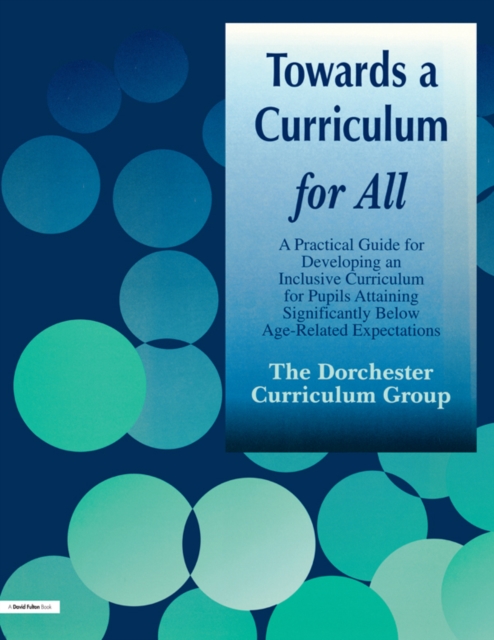
Towards a Curriculum for All
Designing an inclusive curriculum for all pupils is not easy. The practicing teachers who have written this book offer clearly laid out ideas and objectives for learning that goes beyond the National Curriculum. It incorporates a holistic approach to the development of a relevant curriculum for pupils and students who experience profound and multiple learning difficulties (PMLD).
eBook
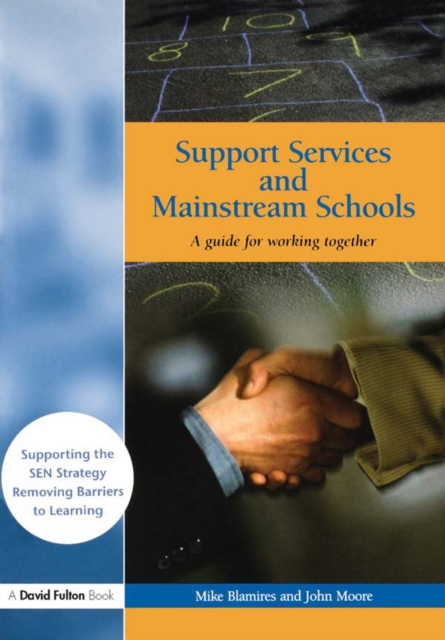
Support Services and Mainstream Schools
Schools are sometimes unaware of what support services can do for them while support services need to perform a credible and relevant function. This book will help either party to: make ideas work by being aware of implementation issues; benefit from those lessons learned by successful partnerships; and succeed with the right criteria for effective support.
eBook
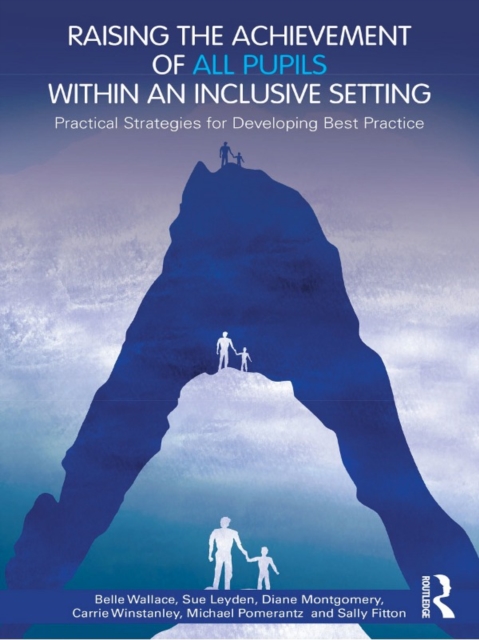
Raising the Achievement of All Pupils Within an Inclusive Setting
Schools everywhere are concerned with raising standards according to government requirements, particularly for those pupils who could be termed 'more able'. The key challenges revolve around government initiatives such as Every Child Matters, independent learning, inclusion and differentiation, thus making learning effective and successful for all pupils.
The authors of this highly engaging book carried out extensive analysis of 12 key schools, selected for their representation of common challenging educational circumstances including working with children from:
Multi-lingual and multi-ethnic communities
Low socio-economic and disadvantaged communities
Small rural schools and big inner city communities
Schools with high levels of special educational needs
All the case-study schools subscribe to the educational ethos of creating an environment for all pupils to discover their gifts and talents, and the authors show clearly how these findings can be applied in any school.
Raising the Achievement of All Pupils Within an Inclusive Setting describes the strategies that have been developed to provide equal opportunities for all pupils, whilst accommodating different individual needs and rates of development. A major focus is on identifying and resolving underachievement in schools.
Drawing upon intensive interviews with staff, pupils, parents and governors, the authors provide practical guidance for successfully raising motivation, achievement and educational standards in any school environment.
Teachers, Gifted and Talented Co-ordinators and school leaders seeking guidance and inspiration from real-life schools will benefit from the down-to-earth, achievable advice offered in this book.
Belle Wallace works as a consultant on the Education of Gifted and Talented Pupils, both nationally and internationally. She is also Director of TASC International and immediate past president of NACE.
Sue Leyden is an independent educational consultant and a chartered educational psychologist.
Diane Montgomery is Emeritus Professor in Education at Middlesex University, London. She is a qualified teacher and chartered psychologist specialising in research on giftedness and learning difficulties.
Carrie Winstanley currently works with undergraduate and postgraduate education students, specifically concerning inclusion and able children with specific learning needs.
Michael Pomerantz is an Associate Tutor to the DEdCPsy Course (initial training for Educational Psychologists) and the EdD Programme (research training for practising EPs) at the University of Sheffield. He is also a Senior Educational Psychologist in Derbyshire.
Sally Fitton is a Secondary School Improvement Adviser for Derbyshire local authority working in partnership with a range of schools in raising achievement.
@contents: Selected Contents: Introduction Chapter 1 Raising the achievement of all pupils within an inclusive setting (Belle Wallace) Chapter 2 Social and emotional needs of gifted and talented underachievers (Sue Leyden) Chapter 3 Gifted and talented children with special educational needs - lifting underachievement in dual and multiple exceptionalities (Diane Montgomery) Chapter 4 Providing challenging opportunities in the classroom (Carrie Winstanley) Chapter 5 Defining a research community (Michael Pomerantz) Chapter 6 Organisational strategies: Leadership and curriculum provision (Sally Fitton) Conclusion and personal reflection
'Some big names in the world of G&T education have come together with practitioners to write this gem of a book...This book is engaging, practical, well-referenced and research-based - go and buy it!' - G&T Update
eBook
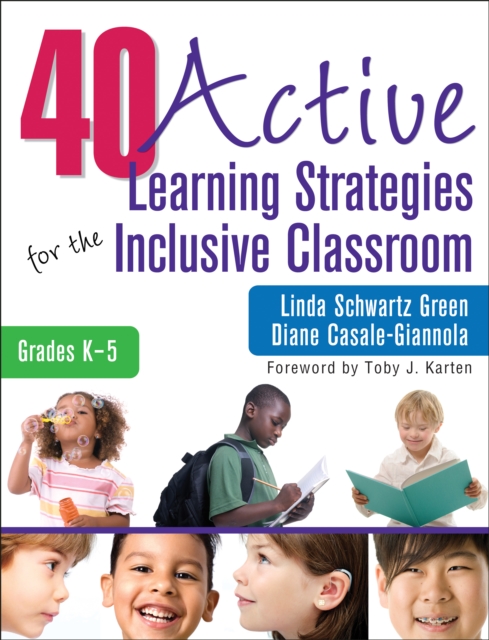
40 active learning strategies for the inclusive classroom, grades K-5
“An excellent tool to help teachers help students, this book would be particularly useful within a professional learning community or in a mentoring setting.”—Jim Hoogheem, Retired PrincipalFernbrook Elementary School, Maple Grove, MN“This book got me excited to teach in an inclusive setting! The tips and directions will work with every child and will ensure that ALL students can learn in the same environment.”—Rachel Aherns, Instructional Strategist IWestridge Elementary School, West Des Moines, IAEngage all learners with research-based strategies from acclaimed educatorsResearch indicates that students of all ages and demographics benefit from active learning strategies. The challenge is translating what we know into what we do. Award-winning educators Linda Schwartz Green and Diane Casale-Giannola build that bridge with more than 40 easy-to-implement strategies for today's inclusive classroom. This practical guide includes: Field-tested practices that are easily adaptable to various grade levels and subjects; Vignettes that demonstrate how to apply today's brain-compatible strategies in the classroom; Tools for differentiating instruction to serve ALL students, including high-ability students, those with ADHD or learning disabilities, and English learnersGrounded in foundational research and educational literature, these strategies include directions for use, sample applications across content areas, and how-to's for groups and individuals. Teachers and administrators will find this comprehensive guidebook an indispensable at-your- fingertips resource for enhancing student engagement, furthering professional development, and increasing positive learning outcomes.
eBook

Inclusion : developing an effective whole school approach
\"At a time when many schools are struggling to become more inclusive within a contradictory national policy context, this book provides some helpful practical leads. Its central message is that of the importance of developing an inclusive school culture within which every child really does matter.\" Professor Mel Ainscow, University of Manchester, UK \"It is a most useful resource for both practitioner-researchers and for school-based initiatives. Written in an accessible style and designed in a format that makes it ideal for use in continuing professional development, it is just right for the needs of twenty first century headteachers and their schools. I highly recommend it as a stimulating and supportive springboard for fruitful dialogue.\" Jenny Corbett, Emeritus Reader, Institute of Education, University of London, UK This book examines and offers solutions to the challenges faced by schools in ensuring that all students are enjoying, participating and achieving in education. The authors argue that self evaluation lies at the heart of truly inclusive school development.The book focuses on supporting schools in understanding and using school based systems and processes in a joined up, meaningful and strategic way to impact positively upon the progress and participation of all pupils. These processes include: self evaluationdata analysisintervention planningprovision mappingtarget settingEach system is explored and the reader is encouraged to consider them critically in order to develop an understanding of how and why to use these systems to enhance inclusive practice throughout the school. The authors present a model of inclusive practice, 'Inclusion in Action' which demonstrates how these processes can be linked together to inform and impact upon whole school strategic planning.With case studies, examples, templates and models, this practical and accessible book responds to the day to day needs of the SENCO, teacher, leader and everyone within the school setting in evaluating and meeting the needs of all pupils effectively.
eBook

First Steps in Inclusion
With more parents of disabled children seeking a mainstream place for their child, educational professionals are increasingly being faced with the task of making these placements successful. For many this can be their first experience of including a child with significant difficulties. This book is aimed at all those, be they parents, teachers, learning support assistants, SENCOs, school managers, governors or LEA officers who are charged with ensuring that inclusion is effective both for individual children and for schools as a whole.
Each chapter looks at the practicalities from a different perspective, focusing on the questions that need asking, the work that needs to be carried out before the child starts and practical steps that each person in the network can take to make sure that all those concerned are happy, are learning effectively and are fully included in the life of the school.
Stephanie Lorenz is a freelance educational consultant, trainer and a lay member of the SEN Tribunal.
eBook

Integration and the support service
The integration of children with special needs into mainstream schools demands a reorganisation of staff and support levels both in schools and in the advisory services. Integration and the Support Service, illustrated with examples from a detailed case study of one Local Education Authority, shows how support services can most effectively be matched to needs and how new strategies for integration can be developed.
eBook
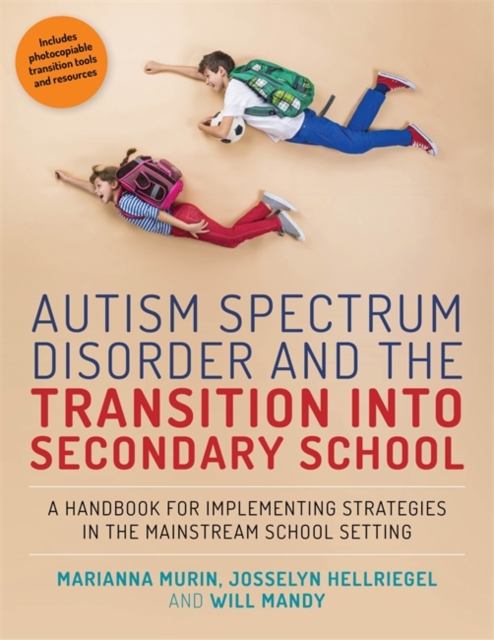
Autism Spectrum Disorder and the Transition into Secondary School
An effective evidence-based programme, this practical handbook provides everything schools need to make the transition from primary to secondary school as smooth and successful as possible for children with Autism Spectrum Disorder (ASD).The first part of the book explains how to create individualised transition plans for each child, and describes how school staff can collaborate successfully with parents and carers. Part two contains a wealth of practical, photocopiable resources for use directly with pupils on the autism spectrum that help to address their most frequent support needs, including sensory sensitivities, anxiety issues and difficulties with planning and organisation. The resources can be used in a pick and choose way based on the individual needs of the child.Developed and trialled extensively by the Social Communication Disorders Clinic at Great Ormond Street Hospital, this handbook will be an invaluable resource for SENCOs, teachers, autism support workers, educational psychologists and other professionals working with pupils with ASD.
eBook
How to Create the Inclusive Classroom
Hot on the heels of the Government's new SEN strategy, this book's at-a- glance' format provides practitioners with a handy self-help resource. This book will help you to:
create a learner-friendly barrier-free classroom using checklists to monitor inclusive practice
understanding the impact on classroom practice of recent legislation following power point slides detailing government standards and guidance
clarify the roles and expectations of pupils, parents, SENCOs, INCOs, teachers and school leaders
eBook