
Catalogue Search | MBRL


Are you sure you want to remove the book from the shelf?

{{itemTitle}}
15
result(s) for
"India Civilization To 1200."
Sort by:

Ancient India
\"In Ancient India, readers discover the history and impressive accomplishments of the people of ancient India, including their enduring religions and rich literary traditions. Engaging text provides details on the civilization's history, development, daily life, culture, art, technology, warfare, social organization, and more.\"--Publisher's web site.
Book

Universe and Inner Self in Early Indian and Early Greek Thought
From the sixth century BCE onwards there occurred a revolution in thought, with novel ideas such as such as that understanding the inner self is both vital for human well-being and central to understanding the universe. This intellectual transformation is sometimes called the beginning of philosophy. And it occurred – independently it seems - in both India and Greece, but not in the vast Persian Empire that divided them. How was this possible? This is a puzzle that has never been solved. This volume brings together Hellenists and Indologists representing a variety of perspectives on the similarities and differences between the two cultures, and on how to explain them. It offers a collaborative contribution to the burgeoning interest in the Axial Age and will be of interest to anyone intrigued by the big questions inspired by the ancient world.
eBook

The decline of ancient Indian civilization
How do civilizations rise and, ultimately, fall? U.S. students can have a difficult time understanding that empires come and go throughout the course of history. This volume explains how a once-flourishing civilization ran into decline, once foreign invaders took over the weakened government and spread their influence. Students will learn how India evolved into the country it is today. With engaging text, rich and colorful illustrations, and an enhanced e-book option, this title is a valuable resource for students researching reports. Bibliography, Detailed Table of Contents, Full-Color Photographs, Further Information Section, Glossary, Index, Primary Sources, Websites.
Book

The Courts of Pre-Colonial South India
This book investigates how the material culture of South Indian courts was perceived by those who lived there in the pre-colonial period. Howes peels away the standard categories used to study Indian palace space, such as public/private and male/female, and replaces them with indigenous descriptions of space found in court poetry, vastu shastra and painted representations of courtly life. Set against the historical background of the events which led to the formation of the Ramnad Kingdom, the Kingdom's material circumstances are examined, beginning with the innermost region of the palace and moving out to the Kingdom via the palace compound itself and the walled town which surrounded it. An important study for both art historians and South India specialists. The volume is richly illustrated in colour.
eBook


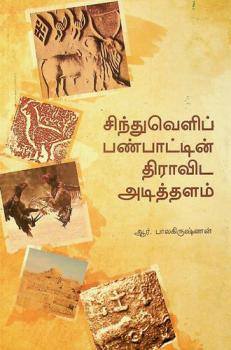
Cintuveḷip paṇpāṭṭin̲ Tirāviṭa aṭittaḷam
New insights which strengthen claims that inhabitants of Indus valley civilization are Dravidians.