
Catalogue Search | MBRL


Are you sure you want to remove the book from the shelf?

{{itemTitle}}
1,381
result(s) for
"India Foreign relations Asia."
Sort by:


India and Southeast Asia
This title, first published in 1990, provides a close contextual analysis of how influential Indian policy-makers have perceived India's interests within the ASEAN region since Indian independence in 1947. Placing these perceptions in the context of India's broad strategic and foreign policy framework, Ayoob analyses the policies which had emerged by the close of the 1980s and stresses the close link between the futures of the two regions. Including a thorough analysis of superpower involvement, as well as Indian relations with Indonesia, Vietnam and Cambodia, this is a comprehensive study of great value to students with an interest in Indian and Southeast Asian history and diplomacy.
eBook

India in a reconnecting Eurasia
India in a Reconnecting Eurasia examines the full scope of Indian national interests in the South Caucasus and Central Asia and analyzes the broad outlines of Indian engagement over the coming years. It is part of a six-part CSIS series, \"Eurasia from the Outside In,\" which includes studies focusing on Turkey, the European Union, Iran, India, Russia, and China.
eBook

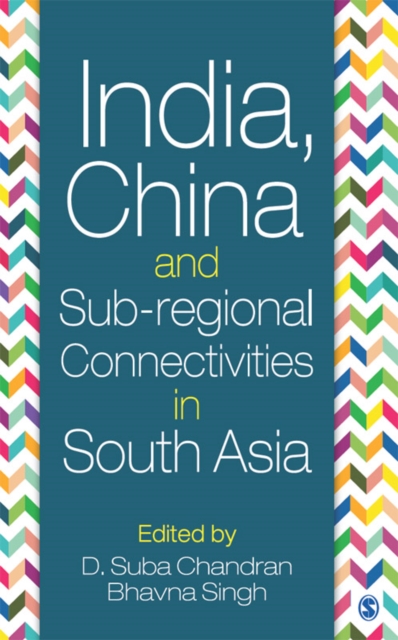
India, China and sub-regional connectivities in South Asia
An in-depth analysis of how India, China and other South Asian countries can cooperate on key challenges affecting their bilateral relationships This book focuses on identifying the extant barriers and impending opportunities for effective coordination of transport infrastructure and enhancement of trade activities along the border regions of South Asian countries. It asserts that with pertinent policy guidelines and timely initiatives from the participating countries, unprecedented opportunities can be capitalized upon for consolidated economic growth of the region. It exposes how untapped resources, bureaucratic and political inertia and a lack of collective endeavour remain major impediments to bilateral and multilateral cooperation which, if surmounted, could pave the way for successful regional initiatives. It will be indispensable to researchers and scholars of international relations, South Asia studies, international trade, comparative politics, political economy, and to the informed general reader.
eBook


The rise of China and India
The most remarkable phenomenon in Asia in the 21st century is arguably the economic rise of China and India. Amazingly, the two most populous countries in the world are uplifting millions of their citizens annually from poverty through rapid economic growth. What is the impact on the region, given the ascendance of China and India? There are at least two possible outcomes: the rise of the two great Asian powers may challenge the US and instill fear among the smaller countries in Asia, or, China and India will act as new economic dynamos that will benefit the region even if US economic presence in the region is to decline in the future. This book explores the opportunities and obstacles to a “harmonious” region underpinned by the rise of China and India.
eBook


The Cold War in South Asia
The Cold War in South Asia provides the first comprehensive and transnational history of Anglo-American relations with South Asia during a seminal period in the history of the Indian Subcontinent, between independence in the late 1940s, and the height of the Cold War in the late 1960s. Drawing upon significant new evidence from British, American, Indian and Eastern bloc archives, the book re-examines how and why the Cold War in South Asia evolved in the way that it did, at a time when the national leaderships, geopolitical outlooks and regional aspirations of India, Pakistan and their superpower suitors were in a state of considerable flux. The book probes the factors which encouraged the governments of Britain and the United States to work so closely together in South Asia during the two decades after independence, and suggests what benefits, if any, Anglo-American intervention in South Asia's affairs delivered, and to whom.
eBook