
Catalogue Search | MBRL


Are you sure you want to remove the book from the shelf?

{{itemTitle}}
59
result(s) for
"Indian authors Interviews."
Sort by:

The architecture of modern empire : conversations with David Barsamian
\"A revelatory and wide-ranging series of interviews with award-winning writer Arundhati Roy, touching on US empire, Indian nationalism, a writer's work, and more. As a novelist, Arundhati Roy is known for her lush language and intricate structure. As a political essayist, her prose is searching and fierce. All of these qualities shine through in the interviews collected here by David Barsamian. This newly reissued and expanded edition, featuring interviews from 2001 to 2022 and a moving foreword by Naomi Klein, explores Roy's evolving political thought and commitments across the tumultuous twenty-first entry\"-- Provided by publisher.
BOOK

Soul Talk, Song Language
Joy Harjo is a poet-healer-philosopher-saxophonist, and one of the most powerful Native American voices of her generation. She has spent the past two decades exploring her place in poetry, music, dance/performance, and art. Soul Talk, Song Language gathers together in one complete collection many of these explorations and conversations. Through an eclectic assortment of media, including personal essays, interviews, and newspaper columns, Harjo reflects upon the nuances and development of her art, the importance of her origins, and the arduous reconstructions of the tribal past, as well as the dramatic confrontation between Native American and Anglo civilizations. Harjo takes us on a journey into her identity as a woman and an artist, poised between poetry and music, encompassing tribal heritage and reassessments and comparisons with the American cultural patrimony. She presents herself in an exquisitely literary context that is rooted in ritual and ceremony and veers over the edge where language becomes music.
eBook

The Lubicon Lake Nation
Many argue that the Lubicon, a small Cree nation in northern Alberta, have been denied their unalienable right to self-determination by the Canadian government. In a country such as Canada, some see the plight of the Lubicon people as an enduring reminder that certain democratic principles and basic freedoms are still kept from minorities, indigenous groups in particular. The Lubicon Lake Nation strives, through a critique of historically-constructed colonial images, to analyze the Canadian government's actions vis-à-vis the rights of the Lubicon people. Dawn Martin-Hill illustrates the power of indigenous knowledge by contrasting the words, ideas, and self-conceptualizations of the Lubicon with official versions of Lubicon history as documented by the state. In doing so, she offers a genuine sense of the gravity of their lived experiences. By giving voice to the Lubicon, this study seeks to develop an exclusively indigenist framework in which the circumstances facing the people can be described and analyzed more accurately than they can using popular conceptions of native rights as put forth by the government.
The Lubicon Lake Nation is a story of one culture and the pursuit of indigenous rights in Canada as told from the perspective of those who know the situation best, the Lubicon themselves.
eBook

Speaking of Indigenous Politics
\"A lesson in how to practice recognizing the fundamental truth that every inch of the Americas is Indigenous territory\" -Robert Warrior, from the ForewordMany people learn about Indigenous politics only through the most controversial and confrontational news: the Standing Rock Sioux Tribe's efforts to block the Dakota Access Pipeline, for instance, or the battle to protect Bears Ears National Monument in Utah, a site sacred to Native peoples. But most Indigenous activism remains unseen in the mainstream-and so, of course, does its significance. J. Kēhaulani Kauanui set out to change that with her radio programIndigenous Politics. Issue by issue, she interviewed people who talked candidly and in an engaging way about how settler colonialism depends on erasing Native peoples and about how Native peoples can and do resist. Collected here, these conversations speak with clear and compelling voices about a range of Indigenous politics that shape everyday life.
Land desecration, treaty rights, political status, cultural revitalization: these are among the themes taken up by a broad cross-section of interviewees from across the United States and from Canada, Mexico, Chile, Bolivia, Peru, Australia, and New Zealand. Some speak from the thick of political action, some from a historical perspective, others from the reaches of Indigenous culture near and far. Writers, like Comanche Paul Chaat Smith, author ofEverything You Know about Indians Is Wrong, expand on their work-about gaming and sovereignty, for example, or protecting Native graves, the reclamation of land, or the erasure of Indian identity. These conversations both inform and engage at a moment when their messages could not be more urgent.
Contributors: Jessie Little Doe Baird (Mashpee Wampanoag), Omar Barghouti, Lisa Brooks (Abenaki), Kathleen A. Brown-Pérez (Brothertown Indian Nation), Margaret \"Marge\" Bruchac (Abenaki), Jessica Cattelino, David Cornsilk (Cherokee Nation), Sarah Deer (Muskogee Creek Nation), Philip J. Deloria (Dakota), Tonya Gonnella Frichner (Onondaga Nation), Hone Harawira (Ngapuhi Nui Tonu), Suzan Shown Harjo (Cheyenne and Hodulgee Muscogee), Rashid Khalidi, Winona LaDuke (White Earth Ojibwe), Maria LaHood, James Luna (Luiseño), Aileen Moreton-Robinson (Quandamooka), Chief Mutáwi Mutáhash (Many Hearts) Marilynn \"Lynn\" Malerba (Mohegan), Steven Newcomb (Shawnee/Lenape), Jean M. O'Brien (White Earth Ojibwe), Jonathan Kamakawiwo'ole Osorio (Kanaka Maoli), Steven Salaita, Paul Chaat Smith (Comanche), Circe Sturm (Mississippi Choctaw descendant), Margo Taméz (Lipan Apache), Chief Richard Velky (Schaghticoke), Patrick Wolfe.
eBook

\People Encountering People\ and \The Comfort of Making\: An Interview with Pamela Mordecai about Sandberry Press and More
What she often passes on as a \"whim\" or a crazy idea has provided publishing space for a number of poets and initiated her role as distributor, which helped to make Canadian-published books available in the Caribbean and Caribbean books in Canada and beyond. Because we never planned to leave. Books that were [from] Caribbean publishers like KPH [Kingston Publishing House], [and] I think maybe a couple other people. 3 They had a bookstore [Third World Books and Crafts].
Journal Article
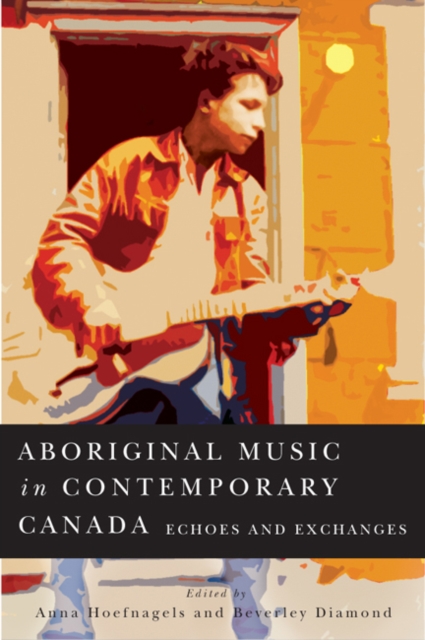
Aboriginal music in contemporary Canada : echoes and exchanges
First Nations, Inuit, and Métis music in Canada is dynamic and diverse, reflecting continuities with earlier traditions and innovative approaches to creating new musical sounds. Aboriginal Music in Contemporary Canada narrates a story of resistance and renewal, struggle and success, as indigenous musicians in Canada negotiate who they are and who they want to be. Comprised of essays, interviews, and personal reflections by Aboriginal and non-Aboriginal musicians and scholars alike, the collection highlights themes of innovation, teaching and transmission, and cultural interaction. Individual chapters discuss musical genres ranging from popular styles including country and pop to nation-specific and intertribal practices such as powwows, as well as hybrid performances that incorporate music with theatre and dance. As a whole, this collection demonstrates how music is a powerful tool for articulating the social challenges faced by Aboriginal communities and an effective way to affirm indigenous strength and pride. Juxtaposing scholarly study with artistic practice, Aboriginal Music in Contemporary Canada celebrates and critically engages Canada's vibrant Aboriginal music scene. Contributors include Véronique Audet (Université de Montreal), Columpa C. Bobb (Tsleil Waututh and Nlaka'pamux, Manitoba Theatre for Young People), Sadie Buck (Haudenosaunee), Annette Chrétien (Métis), Marie Clements (Métis/Dene), Walter Denny Jr. (Mi'kmaw), Gabriel Desrosiers (Ojibwa, University of Minnesota, Morris), Beverley Diamond (Memorial University), Jimmy Dick (Cree), Byron Dueck (Royal Northern College of Music), Klisala Harrison (University of Helsinki), Donna Lariviere (Algonquin), Charity Marsh (University of Regina), Sophie Merasty (Dene and Cree), Garry Oker (Dane-zaa), Marcia Ostashewski (Cape Breton University), Mary Piercey (Memorial University), Amber Ridington (Memorial University), Dylan Robinson (Stó:lo, University of Toronto), Christopher Scales (Michigan State University), Gilles Sioui (Wendat), Gordon E. Smith (Queen's University), Beverly Souliere (Algonquin), Janice Esther Tulk (Memorial University), Florent Vollant (Innu) and Russell Wallace (Lil'wat).
eBook
Caribbean Writers on Teaching Literature
Spanning three generations of teacher-writers, Caribbean Writers on Teaching Literature speaks to the emergence of a distinct body of teaching styles, approaches, methods and philosophy for teaching literature. Each generation enriched by the others has extended the field of literature teaching.
With its collection of eighteen interviews and its insightful theoretical discussions on creative ways of teaching literature, Caribbean Writers on Teaching Literature is an innovative and significant text on the pedagogy of literature. Grounded in the practice of teacher-writers in lecture rooms and classrooms this text has much to offer every teacher of literature. All the interviewees are teachers and writers. They bring to the field of teaching literature the perspective of the literary insider as well as the teacher. Passionate about literature, these teacher-writers highlight literature's value and necessity for enriching the quality of life in our societies.
The text embodies the experience of teaching literature. Each interviewee recalls what it is like to create interesting and meaningful experiences with literary texts within the larger context and understanding of the purpose of literature. Reflecting on memorable as well as challenging experiences in teaching, these teacher-writers uncover unique pathways for engaging students in the study of literature.
eBook

Companion to James Welch's The Heartsong of Charging Elk
James Welch was one of the central figures in twentieth-century American Indian literature, andThe Heartsong of Charging Elkis of particular importance as the culminating novel in his canon. A historical novel,Heartsongfollows a Lakota (Sioux) man at the end of the nineteenth century as he travels with Buffalo Bill's Wild West show; is left behind in Marseille, France; and then struggles to overcome many hardships, including a charge for murder. In this novel Welch conveys some of the lifeways and language of a traditional Sioux.
Here for the first time is a literary companion to James Welch'sHeartsongthat includes an unpublished chapter of the first draft of the novel; selections from interviews with the author; a memoir by the author's widow, Lois Welch; and essays by leading scholars in the field on a wide range of topics. The rich resources presented here make this volume an essential addition to the study of James Welch and twentieth-century Native American literature.
eBook

Feminisms, Collaborations, Friendships: A Conversation
This conversation with Richa Nagar about feminist friendships and co-authorships emerged from a collaborative interview as a way to resist individualism, career-centric-orientations and academic-stardom; themes that are prominent in the interview itself. The conversation explores the process of collaborative writing, how it challenges hegemonic modes of knowledge production, and what types of relationships sustain such an engagement, based on Richa’s experiences in collectively writingPlaying with Fire: Feminist Thought and Activism Through Seven Lives in Indiawith theSangtin Writers Collective. The conversation foregrounds the significance of deep relationality in defining situated solidarities, transnational feminist collaborations, and the meanings and possibilities of co-authorship, and sparked new conversations about each of our journeys as activists, intellectuals, and immigrants who lived multiple, and often bi-national, political lives. This conversation is chiefly an elaboration on the theme of feminist friendships, trust, and radical vulnerability that allows collective writing to navigate the hierarchies of knowledge production and the publication industry. The ideas about ‘co-authorship,’ 'collaboration,' and ‘friendship’ that Richa Nagar articulates throughout this interview allowed us to think about friendship as radical vulnerability and has unsettled our notion of friendship, feminist cooperation, and intimacy and made us acutely aware of the multifarious sites of power and creativity within academic and activist spaces alike, as well as our positions and relationships within these domains.
Journal Article

Conversations with Remarkable Native Americans
In these lively and informative interviews, noted ethnohistorian
and international consultant Joëlle Rostkowski brings to light
major developments in the Native American experience over the last
thirty years. Overcoming hardships they have experienced as the
\"forgotten\" minority, often torn between two cultures, these
prominent native writers, artists, journalists, activists, lawyers,
and museum administrators each have made remarkable contributions
towards the transformation of old stereotypes, the fight against
discrimination, and the sharing of their heritage with mainstream
society. Theirs is a story not so much of success but of
resilience, of survivance, with each interview subject having
marked their time and eventually becoming the change they wanted in
the world. The conversations in this volume reveal that the
assertion of ethnic identity does not lead to bitterness and
isolation, but rather an enthusiasm and drive toward greater
visibility and recognition that at the same time aims at a greater
understanding between different cultures. Conversations with
Remarkable Native Americans rewards the reader with a deeper
understanding of the Native American Renaissance.
eBook