Search Results Heading

MBRLSearchResults

mbrl.module.common.modules.added.book.to.shelf
Title added to your shelf!
View what I already have on My Shelf.
Oops! Something went wrong.
While trying to add the title to your shelf something went wrong :( Kindly try again later!
Are you sure you want to remove the book from the shelf?
Oops! Something went wrong.
While trying to remove the title from your shelf something went wrong :( Kindly try again later!
    Done
    Filters
    Reset
  • Discipline
      Discipline
      Clear All
      Discipline
  • Is Peer Reviewed
      Is Peer Reviewed
      Clear All
      Is Peer Reviewed
  • Reading Level
      Reading Level
      Clear All
      Reading Level
  • Content Type
      Content Type
      Clear All
      Content Type
  • Year
      Year
      Clear All
      From:
      -
      To:
  • More Filters
      More Filters
      Clear All
      More Filters
      Item Type
    • Is Full-Text Available
    • Subject
    • Publisher
    • Source
    • Donor
    • Language
    • Place of Publication
    • Contributors
    • Location
25 result(s) for "Indian cartography North America."
Sort by:
Weaponizing maps : indigenous peoples and counterinsurgency in the Americas
\"Maps play an indispensable role in indigenous peoples' efforts to secure land rights in the Americas and beyond. Yet indigenous peoples did not invent participatory mapping techniques on their own; they appropriated them from techniques developed for colonial rule and counterinsurgency campaigns, and refined by anthropologists and geographers. Through a series of historical and contemporary examples from Nicaragua, Canada, and Mexico, this book explores the tension between military applications of participatory mapping and its use for political mobilization and advocacy. The authors analyze the emergence of indigenous territories as spaces defined by a collective way of life--and as a particular kind of battleground\"-- Provided by publisher.
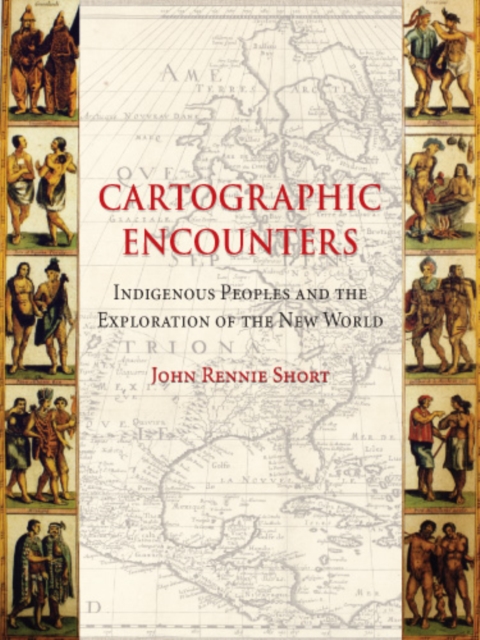
Cartographic encounters
There's no excuse for getting lost these days—satellite maps on our computers can chart our journey in detail and electronics on our car dashboards instruct us which way to turn. But there was a time when the varied landscape of North America was largely undocumented, and expeditions like that of Lewis and Clark set out to map its expanse. As John Rennie Short argues in Cartographic Encounters, that mapping of the New World was only possible due to a unique relationship between the indigenous inhabitants and the explorers. In this vital reinterpretation of American history, Short describes how previous accounts of the mapping of the new world have largely ignored the fundamental role played by local, indigenous guides. The exchange of information that resulted from this \"cartographic encounter\" allowed the native Americans to draw upon their wide knowledge of the land in the hope of gaining a better position among the settlers. This account offers a radical new understanding of Western expansion and the mapping of the land and will be essential to scholars in cartography and American history.
How the West Was Drawn
How the West Was Drawnexplores the geographic and historical experiences of the Pawnees, the Iowas, and the Lakotas during the European and American contest for imperial control of the Great Plains during the eighteenth and nineteenth centuries. David Bernstein argues that the American West was a collaborative construction between Native peoples and Euro-American empires that developed cartographic processes and culturally specific maps, which in turn reflected encounter and conflict between settler states and indigenous peoples.Bernstein explores the cartographic creation of the Trans-Mississippi West through an interdisciplinary methodology in geography and history. He shows how the Pawnees and the Iowas-wedged between powerful Osages, Sioux, the horse- and captive-rich Comanche Empire, French fur traders, Spanish merchants, and American Indian agents and explorers-devised strategies of survivance and diplomacy to retain autonomy during this era. The Pawnees and the Iowas developed a strategy of cartographic resistance to predations by both Euro-American imperial powers and strong indigenous empires, navigating the volatile and rapidly changing world of the Great Plains by brokering their spatial and territorial knowledge either to stronger indigenous nations or to much weaker and conquerable American and European powers.How the West Was Drawnis a revisionist and interdisciplinary understanding of the global imperial contest for North America's Great Plains that illuminates in fine detail the strategies of survival of the Pawnees, the Iowas, and the Lakotas amid accommodation to predatory Euro-American and Native empires.
Being and Place among the Tlingit
In Being and Place among the Tlingit, anthropologist Thomas F. Thornton examines the concept of place in the language, social structure, economy, and ritual of southeast Alaska's Tlingit Indians. Place signifies not only a specific geographical location but also reveals the ways in which individuals and social groups define themselves. The notion of place consists of three dimensions - space, time, and experience - which are culturally and environmentally structured. Thornton examines each in detail to show how individual and collective Tlingit notions of place, being, and identity are formed. As he observes, despite cultural and environmental changes over time, particularly in the post-contact era since the late eighteenth century, Tlingits continue to bind themselves and their culture to places and landscapes in distinctive ways. He offers insight into how Tlingits in particular, and humans in general, conceptualize their relationship to the lands they inhabit, arguing for a study of place that considers all aspects of human interaction with landscape. In Tlingit, it is difficult even to introduce oneself without referencing places in Lingit Aani (Tlingit Country). Geographic references are embedded in personal names, clan names, house names, and, most obviously, in k-waan names, which define regions of dwelling. To say one is Sheet'ka K-waan defines one as a member of the Tlingit community that inhabits Sheet'ka (Sitka). Being and Place among the Tlingit makes a substantive contribution to the literature on the Tlingit, the Northwest Coast cultural area, Native American and indigenous studies, and to the growing social scientific and humanistic literature on space, place, and landscape.
The Common Pot
Lisa Brooks demonstrates the ways in which Native leaders—including Samson Occom, Joseph Brant, Hendrick Aupaumut, and William Apess—adopted writing as a tool to reclaim rights and land in the Native networks of what is now the northeastern United States. She shows that writing was not a foreign technology but rather a crucial weapon in the Native Americans’ arsenal as they resisted—and today continue to oppose—colonial domination._x000B_
Kiowa Ethnogeography
Examining the place names, geographical knowledge, and cultural associations of the Kiowa from the earliest recorded sources to the present,Kiowa Ethnogeographyis the most in-depth study of its kind in the realm of Plains Indian tribal analysis. Linking geography to political and social changes, William Meadows applies a chronological approach that demonstrates a cultural evolution within the Kiowa community. Preserved in both linguistic and cartographic forms, the concepts of place, homeland, intertribal sharing of land, religious practice, and other aspects of Kiowa life are clarified in detail. Native religious relationships to land (termed \"geosacred\" by the author) are carefully documented as well. Meadows also provides analysis of the only known extant Kiowa map of Black Goose, its unique pictographic place labels, and its relationship to reservation-era land policies. Additional coverage of rivers, lakes, and military forts makes this a remarkably comprehensive and illuminating guide.
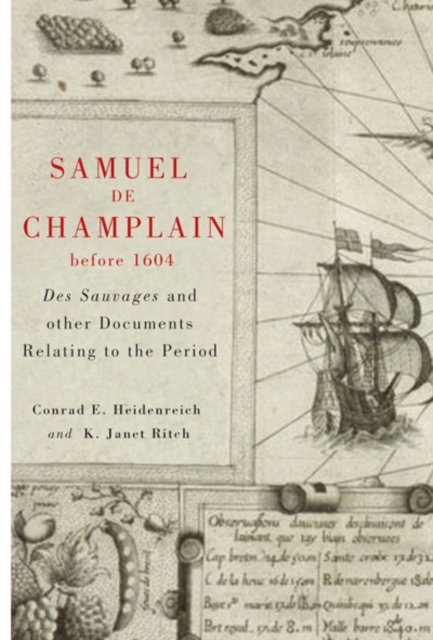
Samuel de Champlain before 1604
The French explorer, surveyor, cartographer, and diplomat Samuel de Champlain (c. 1575-1635) is often called the Father of New France for founding the settlement that became Quebec City, governing New France, and mapping much of the St. Lawrence and eastern Great Lakes region. Champlain was also a prolific writer who documented his experiences in the Americas, including his travels, impressions of the New World, and encounters and alliances with native peoples.
John Mitchell's Map of North America (1755): A Study of the Use and Publication of Official Maps in Eighteenth-Century Britain
John Mitchell's famous map of North America stands as an archetype of the official publication of maps in eighteenth-century Britain. It was, however, the product of a special effort by the Earl of Halifax, president of the Board of Trade, who sought to advance his own aggressive agenda with respect to the British empire in North America in the run-up to the Seven Years' War (1756-1763, known in North America as the French and Indian War, 1755-1760), to persuade his ministerial colleagues both directly through negotiation and indirectly by manipulating public opinion. This re-evaluation of Mitchell's work concludes that its archetypal status is unwarranted. The practices that were developed by administrators in London and the colonies for commissioning, using and circulating regional maps are examined. A distinction is made between the use by officials of printed maps as sources for general geographical knowledge and of manuscript maps for knowledge specific to certain administrative issues. Then the origins of Mitchell's map are re-examined. The conclusion reached is that the map is truly innovative: it was the result of a uniquely successful solicitation of information from the colonies and its publication broke with the established patterns of map circulation and consumption.
Black Goose's Map of the Kiowa-Comanche-Apache Reservation in Oklahoma Territory
Plains Indian cultures have left numerous forms of Native drawings in the form of painted and drawn clothing, robes, tipis and tipi liners, shields and shield covers, calendars, ledger books, religious and historical drawings, and maps. Native drawings of geographic features are distinguished from other forms of drawings by their focus on the concept of territory rather than on occasional individual features such as a hill or river. Native maps predate European contact and are recorded for every major region of North America. Although most extant Native maps are from the Plains and Arctic regions and date to the nineteenth century, others range from 1540 to 1869. Nearly every major North American explorer through the late nineteenth century used geographic information and/or maps obtained from Native inhabitants of their respective areas.
Black Rock

To visiting geologists Black Rock, New Mexico, is a basaltic escarpment and an ideal natural laboratory. To hospital workers Black Rock is a picturesque place to earn a living. To the Zuni the mesas, arroyos, and the rock itself are a stage on which the passion of their elders is relived. William A. Dodge ex-plores how a shared sense of place evolves over time and through multi-ple cultures that claim the landscape.

Through stories told over many generations, this landscape has given the Zuni an understand-ing of how they came to be in this world. More recently, paleogeographers have studied the rocks and landforms to better understand the world as it once was. Archaeologists have conducted research on ancestral Zuni sites in the vicinity of Black Rock to explore the cultural history of the region. In addition, the Anglo-American employees of the Bureau of Indian Affairs came to Black Rock to advance the federal Indian policy of assimilation and brought with them their own sense of place.

Black Rock has been an educational complex, an agency town, and an Anglo community. Today it is a health care center, commercial zone, and multiethnic subdivision. By describing the dramatic changes that took place at Black Rock during the twentieth century, Dodge deftly weaves a story of how the cultural landscape of this community reflected changes in government policy and how the Zunis themselves, through the policy of Indian self-determination, eventually gave new meanings to this ancient landscape.

William A. Dodge is a cultural historian at Van Citters Historic Preservation LLC in Albuquerque, New Mexico. He has worked for over thirty years in southwestern cultural resources and was director of the Zuni Archaeology Program at the Pueblo of Zuni.