
Catalogue Search | MBRL


Are you sure you want to remove the book from the shelf?

{{itemTitle}}
573
result(s) for
"Indians in popular culture"
Sort by:

Holy War
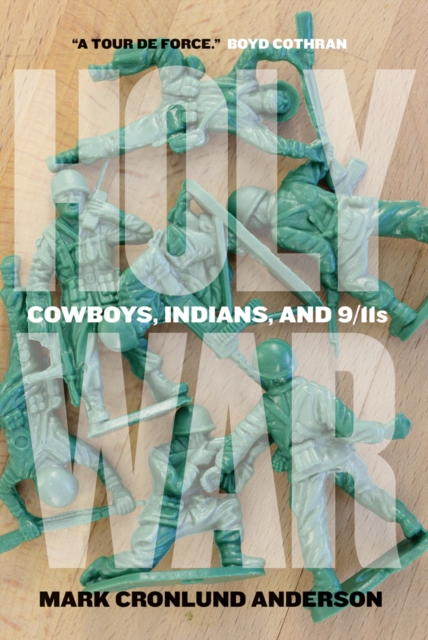
Noam Chomsky and George W. Bush seldom agree, but they both argued that 9/11 stood alone in American history. Although the use of airplanes as weapons of mass destruction was new, Mark Anderson maintains that the response to the attack was not: it was, in fact, as old as the Republic itself. Beginning with the Mexican-American War and ending with the invasion of Iraq, 'Holy War' probes presidential speeches, news reports, editorial cartoons, television programs, and films to uncover how the United States reverts back to its creation mythology of 'fighting Indians' to justify centuries of American imperialism.
eBook

Real Native Genius
In the mid-1840s, Warner McCary, an ex-slave from Mississippi, claimed a new identity for himself, traveling around the nation as Choctaw performer Okah Tubbee.He soon married Lucy Stanton, a divorced white Mormon woman from New York, who likewise claimed to be an Indian and used the name Laah Ceil.
eBook


Unlearning the Language of Conquest
Responding to anti-Indianism in America, the wide-ranging perspectives culled in Unlearning the Language of Conquest present a provocative account of the contemporary hegemony still at work today, whether conscious or unconscious. Four Arrows has gathered a rich collection of voices and topics, including: Waziyatawin Angela Cavender Wilson's \"Burning Down the House: Laura Ingalls Wilder and American Colonialism,\" which probes the mentality of hatred woven within the pages of this iconographic children's literature. Vine Deloria's \"Conquest Masquerading as Law,\" examining the effect of anti-Indian prejudice on decisions in U.S. federal law. David N. Gibb's \"The Question of Whitewashing in American History and Social Science,\" featuring a candid discussion of the spurious relationship between sources of academic funding and the types of research allowed or discouraged. Barbara Alice Mann's \"Where Are Your Women? Missing in Action,\" displaying the exclusion of Native American women in curricula that purport to illuminate the history of Indigenous Peoples. Bringing to light crucial information and perspectives on an aspect of humanity that pervades not only U.S. history but also current sustainability, sociology, and the ability to craft accurate understandings of the population as a whole, Unlearning the Language of Conquest yields a liberating new lexis for realistic dialogues.
eBook

