
Catalogue Search | MBRL


Are you sure you want to remove the book from the shelf?

{{itemTitle}}
37
result(s) for
"Indians of North America -- Antiquities -- Congresses"
Sort by:


From the Pleistocene to the Holocene : human organization and cultural transformations in prehistoric North America
The end of the Pleistocene era brought dramatic environmental changes to small bands of humans living in North America: changes that affected subsistence, mobility, demography, technology, and social relations. The transition they made from Paleoindian (Pleistocene) to Archaic (Early Holocene) societies represents the first major cultural shift that took place solely in the Americas. From the Pleistocene to the Holocene: Human Organization and Cultural Transformations in Prehistoric North America provides an overview of the present state of knowledge regarding this crucial transformative period in Native North America.
eBook
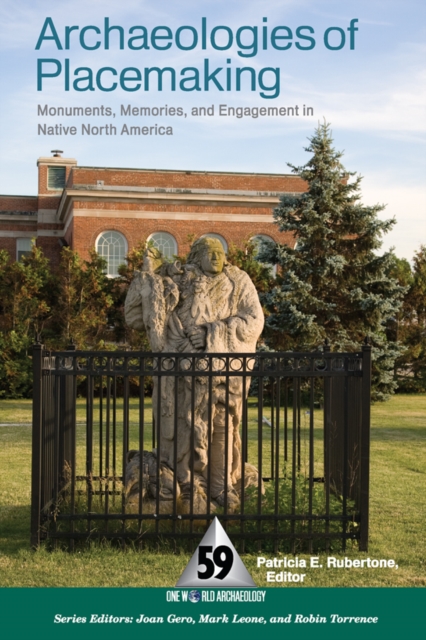
Archaeologies of Placemaking
This collection of original essays explores the tensions between prevailing regional and national versions of Indigenous pasts created, reified, and disseminated through monuments, and Indigenous peoples' memories and experiences of place. The contributors ask critical questions about historic preservation and commemoration methods used by modern societies and their impact on the perception and identity of the people they supposedly remember, who are generally not consulted in the commemoration process. They discuss dichotomies of history and memory, place and displacement, public spectacle and private engagement, and reconciliation and re-appropriation of the heritage of indigenous people shown in these monuments. While the case studies deal with North American indigenous experience-from California to Virginia, and from the Southwest to New England and the Canadian Maritime-they have implications for dealings between indigenous peoples and nation states worldwide. Sponsored by the World Archaeological Congress.
eBook

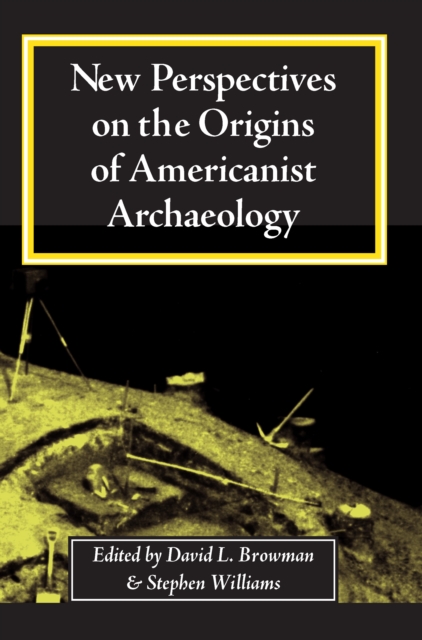
New perspectives on the origins of Americanist archaeology
In this landmark book, experienced scholars take a retrospective look at the developing routes that have brought American archaeologists into the 21st century.In 1996, the Society for American Archaeology's Committee on the History of Archaeology established a biennial symposiumnamed after Gordon R. Willey, one of the fathers of American archaeology, to focus on the history of the discipline. This volume grew out of thesecond symposium, presented at the 1998 meeting of the Society for American Archaeology.Interest in the intellectual history of the field is certainly nothing new-the first such volume appeared in 1856-but previously, focus has been on individuals and their theories and methods, or on various government agencies that supported, developed, or mandatedexcavations in North America. This volume, however, focuses on the roots of Americanist archaeology, including its pre-1915 European connections, and on some of the earliest work by women archaeologists, which has been largely overlooked.Full of valuable insights for archaeologists and anthropologists-both professional and amateur-into the history anddevelopment of Americanist archaeology, New Perspectives will also inspire and serve as a model for future research. David Browman is Professor of Anthropology and Chair of the Interdisciplinary Program in Archaeology at Washington University. Stephen Williams is Professor Emeritus of Anthropology at Harvard University.
eBook
Philadelphia and the development of Americanist archaeology
For two and a half centuries, Philadelphians have been actively involved in archaeological research. In particular, three vital and venerable cultural institutions - the American Philosophical Society (founded 1743), the Academy of Natural Sciences (founded 1812), and the University Museum of the University of Pennsylvania (founded 1893) - have nurtured the \"\"systematic study of antiquitics.\"\" The ten essays in this volume focus on Philadelphians who were concerned with Americanist archaeology, or the \"\"archaeology of the New World.\"\" As Europeans, and later, Euroamericans, spread across North, Central, and South America in the 16th through the 19th centuries, they encountered a bewildering variety of native peoples, customs, and languages, as well as tens of thousands of ancient ruins attesting to a long endemic culture history of obvious complexity. The essays examine most of the key players in the development of the methods to study these phenomena. Enlightenment scholars such as Benjamin Smith Barton, Peter S. Duponceau, Thomas Jefferson, Daniel Garrison Brinton, John Wesley Powell, and Benjamin Rush all contributed to the surge of scientific study of America's prehistoric cultures. So did two pioneering women who have received scant attention to date - Sara Yorke Stevenson and Lucy W. Wilson - but whose work is well treated in this study. Other essays detail the varied contributions of C. C. Abbott, Frank Hamilton Cushing, Clarence B. Moore, Edgar Lee Hewett, and John L. Cotter. This volume should stimulate continued interest in the origins and history of archaeology and the relationship of Philadelphia patrons and institutions to scientific inquiry.
eBook

New Perspectives on the Origins of Americanist Archaeology
In this landmark book, experienced scholars take a retrospective look at the developing routes that have brought American archaeologists into the 21st century. In 1996, the Society for American Archaeology's Committee on the History of Archaeology established a biennial symposium named after Gordon R. Willey, one of the fathers of American archaeology, to focus on the history of the discipline. This volume grew out of the second symposium, presented at the 1998 meeting of the Society for American Archaeology. Interest in the intellectual history of the field is certainly nothing new—the first such volume appeared in 1856—but previously, focus has been on individuals and their theories and methods, or on various government agencies that supported, developed, or mandated excavations in North America. This volume, however, focuses on the roots of Americanist archaeology, including its pre-1915 European connections, and on some of the earliest work by women archaeologists, which has been largely overlooked. Full of valuable insights for archaeologists and anthropologists—both professional and amateur—into the history and development of Americanist archaeology, New Perspectives will also inspire and serve as a model for future research. David Browman is Professor of Anthropology and Chair of the Interdisciplinary Program in Archaeology at Washington University. Stephen Williams is Professor Emeritus of Anthropology at Harvard University.
eBook

Philadelphia and the development of Americanist archaeology
For two and a half centuries, Philadelphians have been actively involved in archaeological research. In particular, three vital and venerable cultural institutions—the American Philosophical Society (founded 1743), the Academy of Natural Sciences (founded 1812), and the University Museum of the University of Pennsylvania (founded 1893)—have nurtured the "systematic study of antiquities." The ten essays in this volume focus on Philadelphians who were concerned with Americanist archaeology, or the "archaeology of the New World." As Europeans, and later, Euroamericans, spread across North, Central, and South America in the 16th through the 19th centuries, they encountered a bewildering variety of native peoples, customs, and languages, as well as tens of thousands of ancient ruins attesting to a long endemic culture history of obvious complexity. The essays examine most of the key players in the development of the methods to study these phenomena. Enlightenment scholars such as Benjamin Smith Barton, Peter S. Duponceau, Thomas Jefferson, Daniel Garrison Brinton, John Wesley Powell, and Benjamin Rush all contributed to the surge of scientific study of America's prehistoric cultures. So did two pioneering women who have received scant attention to date—Sara Yorke Stevenson and Lucy W. Wilson—but whose work is well treated in this study. Other essays detail the varied contributions of C. C. Abbott, Frank Hamilton Cushing, Clarence B. Moore, Edgar Lee Hewett, and John L. Cotter. This volume should stimulate continued interest in the origins and history of archaeology and the relationship of Philadelphia patrons and institutions to scientific inquiry.
eBook
Early native Americans : prehistoric demography, economy, and technology
No detailed description available for \"Early Native Americans\".
eBook

Archaeologies of Placemaking
This collection of original essays explores the tensions between prevailing regional and national versions of Indigenous pasts created, reified, and disseminated through monuments, and Indigenous peoples' memories and experiences of place. The contributors ask critical questions about historic preservation and commemoration methods used by modern societies and their impact on the perception and identity of the people they supposedly remember, who are generally not consulted in the commemoration process. They discuss dichotomies of history and memory, place and displacement, public spectacle and private engagement, and reconciliation and re-appropriation of the heritage of indigenous people shown in these monuments. While the case studies deal with North American indigenous experience-from California to Virginia, and from the Southwest to New England and the Canadian Maritime-they have implications for dealings between indigenous peoples and nation states worldwide. Sponsored by the World Archaeological Congress.
eBook