
Catalogue Search | MBRL


Are you sure you want to remove the book from the shelf?

{{itemTitle}}
4
result(s) for
"Indians of North America -- First contact with Europeans -- California"
Sort by:
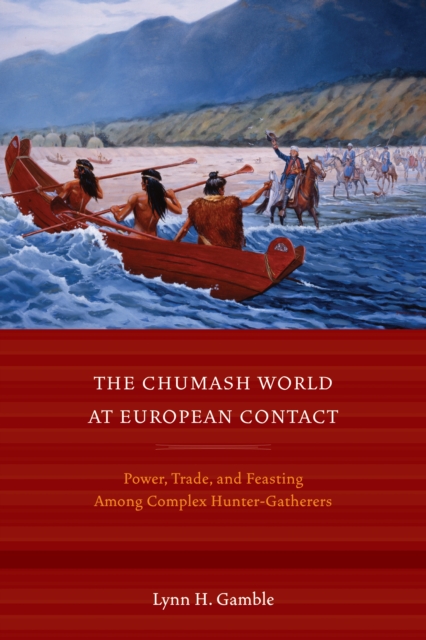
The Chumash world at European contact
When Spanish explorers and missionaries came onto Southern California's shores in 1769, they encountered the large towns and villages of the Chumash, a people who at that time were among the most advanced hunter-gatherer societies in the world. The Spanish were entertained and fed at lavish feasts hosted by chiefs who ruled over the settlements and who participated in extensive social and economic networks. In this first modern synthesis of data from the Chumash heartland, Lynn H. Gamble weaves together multiple sources of evidence to re-create the rich tapestry of Chumash society. Drawing from archaeology, historical documents, ethnography, and ecology, she describes daily life in the large mainland towns, focusing on Chumash culture, household organization, politics, economy, warfare, and more.
eBook

Children of coyote, missionaries of Saint Francis : Indian-Spanish relations in colonial California, 1769-1850
Recovering lost voices and exploring issues intimate and institutional, this sweeping examination of Spanish California illuminates Indian struggles against a confining colonial order and amidst harrowing depopulation.To capture the enormous challenges Indians confronted, Steven W.
eBook

Children of Coyote, Missionaries of Saint Francis
Recovering lost voices and exploring issues intimate and
institutional, this sweeping examination of Spanish California
illuminates Indian struggles against a confining colonial order and
amidst harrowing depopulation. To capture the enormous challenges
Indians confronted, Steven W. Hackel integrates textual and
quantitative sources and weaves together analyses of disease and
depopulation, marriage and sexuality, crime and punishment, and
religious, economic, and political change.
As colonization reduced their numbers and remade California,
Indians congregated in missions, where they forged communities
under Franciscan oversight. Yet missions proved disastrously
unhealthful and coercive, as Franciscans sought control over
Indians' beliefs and instituted unfamiliar systems of labor and
punishment. Even so, remnants of Indian groups still survived when
Mexican officials ended Franciscan rule in the 1830s. Many regained
land and found strength in ancestral cultures that predated the
Spaniards' arrival.
At this study's heart are the dynamic interactions in and around
Mission San Carlos Borromeo between Monterey region Indians (the
Children of Coyote) and Spanish missionaries, soldiers, and
settlers. Hackel places these local developments in the context of
the California mission system and draws comparisons between
California and other areas of the Spanish Borderlands and colonial
America. Concentrating on the experiences of the Costanoan and
Esselen peoples during the colonial period, Children of
Coyote concludes with an epilogue that carries the story of
their survival to the present day.
eBook
\Times are altered with us\
\"Times Are Altered with Us\": American Indians from Contact to the New Republic offers a concise and engaging introduction to the turbulent 300-year-period of the history of Native Americans and their interactions with Europeans-and then Americans-from 1492 to 1800. Considers the interactions of American Indians at many points of \"First Contact\" across North America, from the Gulf of Mexico to the Pacific and Atlantic Coasts Explores the early years of contact, trade, reciprocity, and colonization, from initial engagement of different Indian and European peoples-Spanish, French, Dutch, English, and Russian-up to the start of tenuous and stormy relations with the new American government Charts the rapid decline in American Indian populations due to factors including epidemic Old World diseases, genocide and warfare by explorers and colonists, tribal warfare, and the detrimental effects of resource ruination and displacement from traditional lands Features a completely up-to-date synthesis of the literature of the field Incorporates useful student features, including maps, illustrations, and a comprehensive and evaluative Bibliographical Essay Written in an engaging style by an expert in Native American history and designed for use in both the U.S. history survey as well as dedicated courses in Native American studies.
eBook