
Catalogue Search | MBRL


Are you sure you want to remove the book from the shelf?

{{itemTitle}}
238
result(s) for
"Indians of North America -- United States -- Antiquities"
Sort by:


Plundered skulls and stolen spirits : inside the fight to reclaim native America's culture
A leading anthropologist \"explores the fraught project of repatriating Native American sacred objects in this moving and thoughtful work\" ( Publishers Weekly).
Who own the objects that connect us to history? And who has the right to decide, particularly when the objects are sacred or, in the case of skeletal remains, human? As senior curator of anthropology at the Denver Museum of Nature & Science, Chip Colwell has navigated questions like these firsthand. In Plundered Skulls and Stolen Spirits, he examines how to weigh the religious freedom of Native Americans against the academic freedom of scientists—and whether the emptying of museum shelves elevates human rights or destroys a common heritage.
Today, hundreds of tribes use the Native American Graves Protection and Repatriation Act to recover their looted heritage from museums across the country. Colwell shares a personal account of this process, following the trail of four objects as they were created, collected, and ultimately returned to their sources: a sculpture that is a living god, the scalp of a massacre victim, a ceremonial blanket, and a skeleton from a tribe considered by some to be extinct.
These stories reveal a dramatic process that involves not merely obeying the law, but negotiating the blurry lines between identity and morality, spirituality and politics. Repatriation, Colwell argues, is a difficult but vitally important way for museums and tribes to heal the wounds of the past while creating a respectful approach to caring for these rich artifacts of history.
eBook

Archaeological oddities : a field guide to forty claims of lost civilizations, ancient visitors, and other strange sites in North America
\"This book is an offbeat field guide for sites in North America that reflect the rejection of the facts of prehistory and history. Though fake, the forty sites Feder highlights are fascinating and fun places to visit. Feder provides an entertaining summary of those forty sites along with the practical information you'll need to visit them\"--Provided by publisher.
Book

Archaeological Theory and the Politics of Cultural Heritage
This controversial book is a survey of how relationships between indigenous peoples and the archaeological establishment have got into difficulty, and a crucial pointer to how to move forward from this point.
With lucid appraisals of key debates such as NAGPRA, Kennewick and the repatriation of Tasmanian artefacts, Laurajane Smith dissects the nature and consequences of this clash of cultures.
Smith explores how indigenous communities in the USA and Australia have confronted the pre-eminence of archaeological theory and discourse in the way the material remains of their past are cared for and controlled, and how this has challenged traditional archaeological thought and practice.
Essential reading for all those concerned with developing a just and equal dialogue between the two parties, and the role of archaeology in the research and management of their heritage.
1. Introduction 2 . The Cultural Politics of Identity: Defining the Problem 3. Archaeological Theory and the 'Politics' of the Past 4. Archaeology and the Context of Governance: Expertise and the State 5. Archaeological Stewardship: The Rise of Cultural Resource Management and the 'Scientific Professional' arcHaeologist 6. Significance Concepts and the Embedding of Processual Discourse in Cultural Resource Management 7. The Role of Legislation in the Governance of Material Culture in America and Australia 8. NAGPRA and Kennewick: Contesting Archaeological Govrnance in America 9. The 'Death of Archaeology': Contesting Archaeological Covernance in Australia 10. Conclusion
Laurajane Smith is Lecturer in cultural heritage studies and archaeology at the University of York, UK. She previously taught Indigenous Studies at the University of New South Wales, Sydney and worked as a cultural heritage consultant for many years. Her research interests include heritage and the construction and negotiation of cultural and social identities, and public policy and heritage management, archaeological theory and politics, feminist archaeology.
'Essential reading ... Well-written [and] easy to follow ... a useful companion volume.' - Rodney Harrison, The Australian National University
'Laurajane Smith has produced a significant work that will hopefully stimulate archaeological departments in South African universities to pay more attention to educating future CRM practitioners. This book is compulsory reading for CRM practitioners, archaeology students and their professors alike.' – South African Archaeological Bulletin
eBook

Relic Hunters : Archaeology and the Public in Nineteenth-Century America
\"Relic Hunters is a study of the complex relationship between the people of 19th century America with the material antiquities of North America's indigenous past. As scholars struggled to explain their existence, farmers in Ohio were plowing up arrowheads, building their houses atop burial mounds, and developing their own ideas about antiquity. They experienced the new country as a \"place with history\" reflected in material traces that became important touch points for scientific knowledge, but for American cultural identity as well.\"--Jacket.
Book
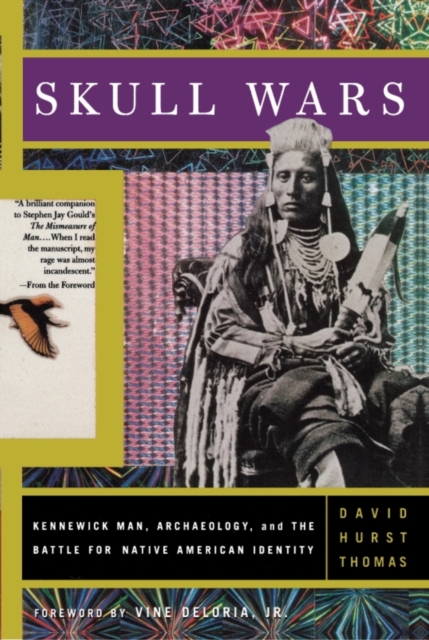
Skull wars : Kennewick Man, archaeology, and the battle for Native American identity
The 1996 discovery, near Kennewick, Washington, of a 9,000-year-old Caucasoid skeleton brought more to the surface than bones. The explosive controversy and resulting lawsuit also raised a far more fundamental question: Who owns history? Many Indians see archeologists as desecrators of tribal rites and traditions; archeologists see their livelihoods and science threatened by the 1990 Federal reparation law, which gives tribes control over remains in their traditional territories.In this new work, Thomas charts the riveting story of this lawsuit, the archeologists' deteriorating relations with American Indians, and the rise of scientific archeology. His telling of the tale gains extra credence from his own reputation as a leader in building cooperation between the two sides.
eBook

Personalities and places
A guide to the regions and sites where Native Americans lived and the individuals who shaped their culture.
Book

Community-based archaeology
Archaeology impacts the lives of indigenous, local, or descendant communities. Yet often these groups have little input to archaeological research, and its results remain inaccessible. As archaeologists consider the consequences and benefits of research, the skills, methodologies, and practices required of them will differ dramatically from those of past decades. As an archaeologist and a Native American, Sonya Atalay has investigated the rewards and complex challenges of conducting research in partnership with indigenous and local communities. In Community-Based Archaeology, she outlines the principles of community-based participatory research and demonstrates how CBPR can be effectively applied to archaeology. Drawing on her own experiences with research projects in North America and the Near East, Atalay provides theoretical discussions along with practical examples of establishing and developing collaborative relationships and sharing results. This book will contribute to building an archaeology that is engaged, ethical, relevant, and sustainable.
eBook


Winds from the north : Tewa origins and historical anthropology
The “abandonment” of Mesa Verde and the formation of the Rio Grande Pueblos represent two classic events in North American prehistory. Yet, despite a century of research, no consensus has been reached on precisely how, or even if, these two events were related. In this landmark study, Scott Ortman proposes a novel and compelling solution to this problem through an investigation of the genetic, linguistic, and cultural heritage of the Tewa Pueblo people of New Mexico.
Integrating data and methods from human biology, linguistics, archaeology, and cultural anthropology, Ortman shows that a striking social transformation took place as Mesa Verde people moved to the Rio Grande, such that the resulting ancestral Tewa culture was a unique hybrid of ideas and practices from various sources. While addressing several long-standing questions in American archaeology, Winds from the North also serves as a methodological guidebook, including new approaches to integrating archaeology and language based on cognitive science research. As such, it will be of interest to researchers throughout the social and human sciences.
eBook