
Catalogue Search | MBRL


Are you sure you want to remove the book from the shelf?

{{itemTitle}}
79
result(s) for
"Indians of North America Canada Economic conditions."
Sort by:


Living Rhythms
Wuttunee states: \"As Aboriginal peoples, we may not want to completely mirror mainstream business choices. We may choose to bring emotion, spirit, and caring in addition to strong business skills. We may choose a package of strategies that in the end provides balance in ways that vary across Aboriginal nations but maintains an integrity that is not often seen in the business world.\"
eBook

The Canadian Fur Trade in the Industrial Age
Ray's study is the first to make extensive use of the Hudson's Bay Company archives dealing with the period between 1870 and 1945. These and other documents reveal a great deal about the decline of the company, and thus about a key element in the history of the modern Canadian fur trade.
eBook

Subarctic Fur Trade
Intro -- Contents -- Maps and Tables -- Introduction -- 1. Periodic Shortages, Native Welfare, and the Hudson's Bay Company 1670-1930 -- 2. The First Century: Adaptive Changes among the Western James Bay Cree between the Early Seventeenth and Early Eighteenth Centuries -- 3. Economic and Social Accommodations of the James Bay Inlanders to the Fur Trade -- 4. Sakie, Esquawenoe, and the Foundation of a Dual-Native Tradition at Moose Factory -- 5. The Trade of the Slavey and Dogrib at Fort Simpson in the Early Nineteenth Century -- 6. The Microeconomics of Southern Chipewyan Fur-Trade History -- Notes on Contributors -- Index -- A -- B -- C -- D -- E -- F -- G -- H -- I -- J -- K -- L -- M -- N -- O -- P -- R -- S -- T -- U -- W -- X -- Y.
Book
The Subarctic fur trade : native social and economic adaptations
No detailed description available for \"The Subarctic Fur Trade\".
eBook

Assimilation and economic development: the case of federal Indian policy
Throughout the nineteenth century, federal Indian policy oscillated between two extreme positions: assimilation versus isolation. While scholars have often been interested in the impact of past federal policy on current levels of economic development among American Indian tribes, none have explicitly examined the influence of federal assimilation policy on long-run economic development. In this paper, I take advantage of tribal-level variation in the application of federal policies to estimate the effect of assimilation on long-run economic performance. To quantify the impact of such policies, I introduce a novel measure of cultural assimilation: the prevalence of traditional indigenous names relative to common American first names. To calculate the distribution of name types, I have gathered the names and locations for all American Indians enumerated in the 1900 United States census. After classifying each name, I calculated the reservation-specific share of non-indigenous names. I estimate the relationship between cultural assimilation in 1900 and per capita income from 1970 through 2020. I find that historical levels of assimilation are consistently associated with higher levels of per capita income in all census years. The results are robust to the inclusion of a variety of cultural and institutional controls and regional fixed effects.
Journal Article

Our box was full : an ethnography for the Delgamuukw plaintiffs
Daly explores the central meaning of the notion of land in the determination of Aboriginal rights with particular reference to the landmark Delgamuukw case that occupied the British Columbia courts from 1987 to 1997.
eBook
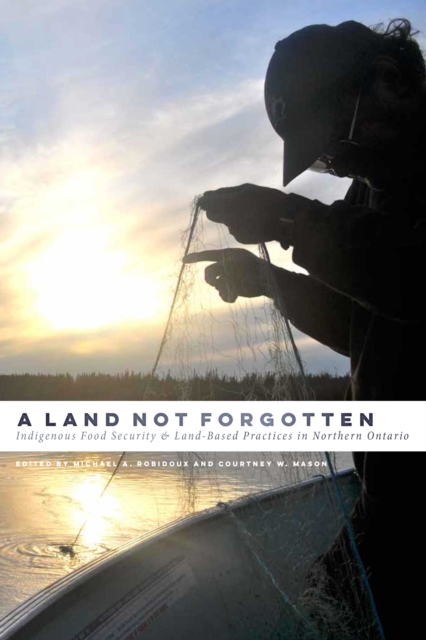
A Land Not Forgotten
Food insecurity takes a disproportionate toll on the health of Canada's Indigenous people. A Land Not Forgotten examines the disruptions in local food practices as a result of colonization and the cultural, educational, and health consequences of those disruptions.
eBook
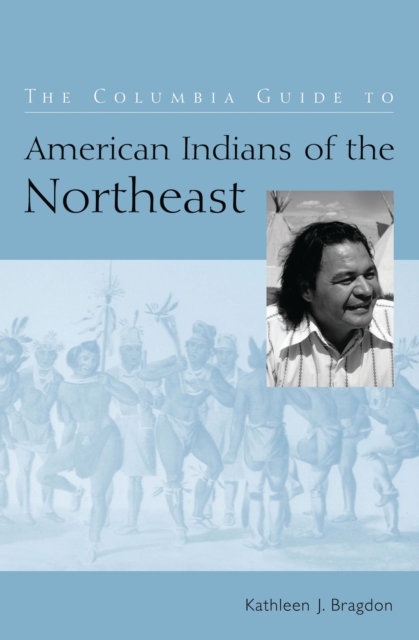
The Columbia Guide to American Indians of the Northeast
Descriptions of Indian peoples of the Northeast date to the Norse sagas, centuries before permanent European settlement, and the region has been the setting for a long history of contact, conflict, and accommodation between natives and newcomers. The focus of an extraordinarily vital field of scholarship, the Northeast is important both historically and theoretically: patterns of Indian-white relations that developed there would be replicated time and again over the course of American history. Today the Northeast remains the locus of cultural negotiation and controversy, with such subjects as federal recognition, gaming, land claims, and repatriation programs giving rise to debates directly informed by archeological and historical research of the region. The Columbia Guide to American Indians of the Northeast is a concise and authoritative reference resource to the history and culture of the varied indigenous peoples of the region. Encompassing the very latest scholarship, this multifaceted volume is divided into four parts. Part I presents an overview of the cultures and histories of Northeastern Indian people and surveys the key scholarly questions and debates that shape this field. Part II serves as an encyclopedia, alphabetically listing important individuals and places of significant cultural or historic meaning. Part III is a chronology of the major events in the history of American Indians in the Northeast. The expertly selected resources in Part IV include annotated lists of tribes, bibliographies, museums and sites, published sources, Internet sites, and films that can be easily accessed by those wishing to learn more.
eBook

Navigating neoliberalism : self-determination and the Mikisew Cree First Nation
This remarkable book argues that neoliberalism, which drives government policy concerning First Nations in Canada, can also drive self-determination -- including the Mikisew First Nation, which successfully exploited opportunities for greater autonomy and well-being that the current political and economic climate has presented.
eBook