
Catalogue Search | MBRL


Are you sure you want to remove the book from the shelf?

{{itemTitle}}
17
result(s) for
"Indians of North America Canada Residential schools."
Sort by:

Words have a past : the English language, colonialism, and the newspapers of Indian boarding schools
\"For nearly 100 years, Indian boarding schools in Canada and the US produced newspapers read by white settlers, government officials, and Indigenous parents. These newspapers were used as a settler colonial tool, yet within these tightly controlled narratives there also existed sites of resistance. This book traces colonial narratives of language, time, and place from the nineteenth-century to the present day, post-Truth and Reconciliation Commission.\"-- Provided by publisher.
Book
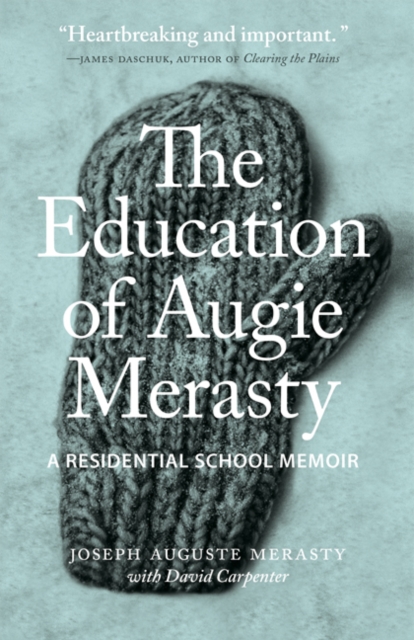
The Education of Augie Merasty
The Education of Augie Merasty offers a courageous and intimate chronicle of life in a residential school. Now a retired fisherman and trapper, Joseph A. (Augie) Merasty was one of an estimated 150,000 First Nations, Inuit, and Metis children who were taken from their families and sent to government-funded, church-run schools, where they were subjected to a policy of \"aggressive assimiliation.\" As Merasty recounts, these schools did more than attempt to mold children in the ways of white society. They were taught to be ashamed of their native heritage and, as he experienced, often suffered physical and sexual abuse. Even as he looks back on this painful part of his childhood, Merasty's generous and authentic voice shines through.
eBook

Power through Testimony : Reframing Residential Schools in the Age of Reconciliation
\"Power through Testimony documents how survivors are remembering and reframing our understanding of residential schools in the wake of the 2007 Indian Residential Schools Settlement Agreement, which includes the Truth and Reconciliation Commission, a forum for survivors, families, and communities to share their memories and stories with the Canadian public. The commission closed and reported in 2015, and this timely volume reveals what was happening on the ground. Drawing on field research during the commission and in local communities, the contributors reveal how survivors are unsettling colonial narratives about residential schools and how churches and former school staff are receiving or resisting the new 'residential school story'.\"-- Provided by publisher.
Book

Coyote raven go canoeing
In a gesture toward traditional First Nations orality, Peter Cole blends poetic and dramatic voices with storytelling. A conversation between two tricksters, Coyote and Raven, and the colonized and the colonizers, his narrative takes the form of a canoe journey. Cole draws on traditional Aboriginal knowledge to move away from the western genres that have long contained, shaped, and determined ab/originality. Written in free verse, Coyote and Raven Go Canoeing is meant to be read aloud and breaks new ground by making orality the foundation of its scholarship. Cole moves beyond the rhetoric and presumption of white academic (de/re)colonizers to aboriginal spaces recreated by aboriginal peoples. Rather than employing the traditional western practice of gathering information about exoticized other, demonized other, contained other, Coyote and Raven Go Canoeing is a celebration of aboriginal thought, spirituality, and practice, a sharing of lived experience as First Peoples.
eBook

The Holy Spirit and the Eagle Feather
Pentecostalism is one of the fastest-growing religious movements
in the world. In Canada, it is the most rapidly growing Christian
group among Indigenous people, with approximately one in ten
Pentecostals in the country being Indigenous. Pentecostalism has
become a religious force in many Indigenous communities, where
congregations are most often led by Indigenous ministers - an
achievement that took many decades. The Holy Spirit and the
Eagle Feather traces the development of Indigenous
Pentecostalism in Canada. Exploring the history of
twentieth-century missionization, with particular attention to the
Pentecostal Assemblies of Canada's Northland Mission, founded in
1943, Aaron Ross shows how the denomination's Euro-Canadian
leaders, who believed themselves to be supporters of Indigenous-led
churches, struggled to relinquish control of mission management and
finances. Drawing on interviews with contemporary figures in the
movement, he describes how Indigenous Pentecostals would come to
challenge the mission's eurocentrism over decades, eventually
entering positions of leadership in the church. This process
required them to confront the painful vestiges of colonialism and
to grapple with the different philosophies and theologies of
Pentecostalism and Indigenous traditional spiritualities. In doing
so they indigenized the movement and forged a new identity, as
Indigenous and Pentecostal. Indigenous Pentecostals now occupy key
roles in the church and serve as political, cultural, and economic
leaders in their communities. The Holy Spirit and the Eagle
Feather tells the story of how they overcame the church's
colonial impulses to become religious leaders, as well as agents
for decolonization and reconciliation.
eBook
A Knock on the Door: The Essential History of Residential Schools from the Truth and Reconciliation Commission of Canada
\"It can start with a knock on the door one morning. It is the local Indian agent, or the parish priest, or, perhaps, a Mounted Police officer.\" So began the school experience of many Indigenous children in Canada for more than a hundred years, and so begins the history of residential schools prepared by the Truth econciliation Commission of Canada (TRC). Between 2008 and 2015, the TRC provided opportunities for individuals, families, and communities to share their experiences of residential schools and released several reports based on 7000 survivor statements and five million documents from government, churches, and schools, as well as a solid grounding in secondary sources. A Knock on the Door, published in collaboration with the National Research Centre for Truth econciliation, gathers material from the several reports the TRC has produced to present the essential history and legacy of residential schools in a concise and accessible package. Survivor and former National Chief of the Assembly First Nations, Phil Fontaine, provides a Foreword, and an Afterword by Aimée Craft introduces the holdings and opportunities of the National Centre for Truth econciliation, home to the archive of recordings, and documents collected by the TRC.
eBook

A national crime
\"For over 100 years, thousands of Aboriginal children passed through the Canadian residential school system. Begun in the 1870s, it was intended, in the words of government officials, to bring these children into the \"circle of civilization.\" The results, however, were far different. More often, the schools provided an inferior education in an atmosphere of neglect, disease, and often abuse.\"--BOOK JACKET. \"\"A National Crime\" shows that the residential system was chronically underfunded and often mismanaged, and it documents in detail how this affected the health, education, and well-being of entire generations of Aboriginal children.\"--Jacket.
eBook
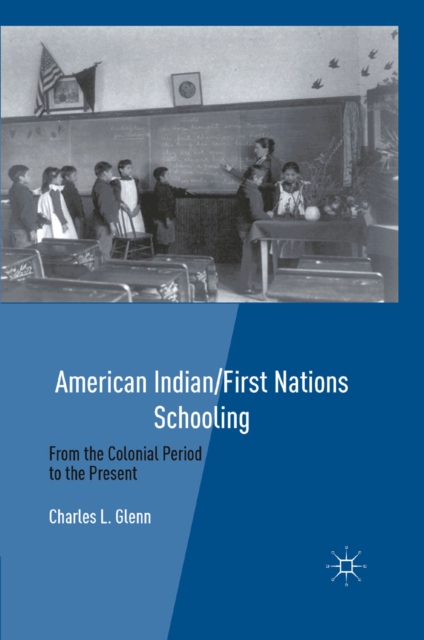
American Indian/First Nations Schooling
Tracing the history of Native American schooling in North America, this book emphasizes factors in society at large - and sometimes within indigenous communities - which led to Native American children being separate from the white majority. Charles L. Glenn examines the evolving assumptions about race and culture as applied to schooling,.
eBook
A Knock on the Door
\"It can start with a knock on the door one morning. It is the local Indian agent, or the parish priest, or, perhaps, a Mounted Police officer.\" So began the school experience of many Indigenous children in Canada for more than a hundred years, and so begins the history of residential schools prepared by the Truth & Reconciliation Commission of Canada (TRC). Between 2008 and 2015, the TRC provided opportunities for individuals, families, and communities to share their experiences of residential schools and released several reports based on 7000 survivor statements and five million documents from government, churches, and schools, as well as a solid grounding in secondary sources. A Knock on the Door, published in collaboration with the National Research Centre for Truth & Reconciliation, gathers material from the several reports the TRC has produced to present the essential history and legacy of residential schools in a concise and accessible package that includes new materials to help inform and contextualize the journey to reconciliation that Canadians are now embarked upon. Survivor and former National Chief of the Assembly First Nations, Phil Fontaine, provides a Foreword, and an Afterword introduces the holdings and opportunities of the National Centre for Truth & Reconciliation, home to the archive of recordings, and documents collected by the TRC. As Aimée Craft writes in the Afterword, knowing the historical backdrop of residential schooling and its legacy is essential to the work of reconciliation. In the past, agents of the Canadian state knocked on the doors of Indigenous families to take the children to school. Now, the Survivors have shared their truths and knocked back. It is time for Canadians to open the door to mutual understanding, respect, and reconciliation.
eBook