
Catalogue Search | MBRL


Are you sure you want to remove the book from the shelf?

{{itemTitle}}
81
result(s) for
"Indians of North America Juvenile literature."
Sort by:

The very first Americans
Briefly describes some of the hundreds of Indian tribes that lived across America before the arrival of Europeans.
Book

American Military Leaders: From Colonial Times to the Present
A comprehensive collection of biographies of the most prominent military leaders in American history. American Military Leaders contains over 400 A–Z biographies of individuals such as Admiral Elmo Zumwalt, who ended hundreds of years of tradition by allowing women to serve on Navy ships; and, Francis Marion, the Swamp Fox, whose rules of clandestine warfare are still followed by the U.S. Special Forces. Coverage centers on the outstanding generals, sergeants, fighter aces, militiamen, theorists, doctors, and nurses who make up America's military history. This volume presents their backgrounds, contributions, and significance to America's fortunes in war. This title also cites works for further research, includes a list of leaders organized by their military titles, and a comprehensive index.
eBook

Turtle Island : the story of North America's first people
Presents the story of the Indigenous peoples of the Americas from the end of the Ice Age to the arrival of the Europeans.
Book
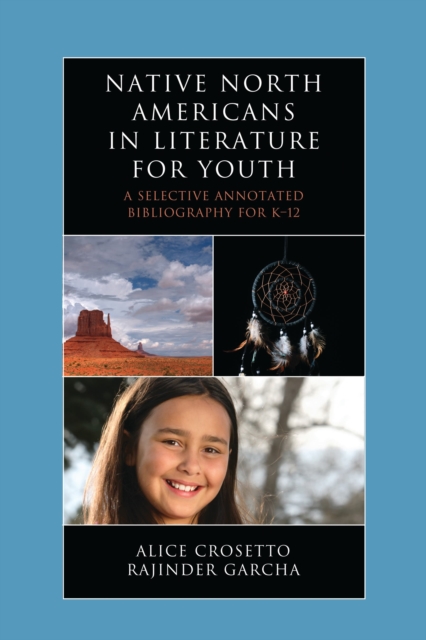
Native North Americans in literature for youth
Native North Americans have rich and diverse cultures and traditions. However, many misconceptions, prejudices, and stereotypes exist due to the lack of understanding and ignorance of these cultures. It is important that children and adolescents learn about and appreciate the invaluable contributions that North American Native groups have made to American society. Equally important is the availability of resources that accurately and objectively portray the historical events that occurred when European settlers displaced thousands of Native North Americans from their ancestral homelands. In Native North Americans in Literature for Youth, Alice Crosetto and Rajinder Garcha identify hundreds of appropriate and quality resources, including books, Internet sites, and media titles for K-12 students and educators. Entries are subdivided into chapters covering geographic regions, history, religions, social life, customs and traditions, nations, oral tradition, biographies, and fiction. Additionally, there are chapters for general reference resources, curricular resources for educators, media, and Internet sites. Annotations provide complete bibliographical descriptions of the entries, and each entry is identified with the grade level for which it is best suited. Reviews, awards, series, and URLs for supplemental online resources are also included. Anyone—especially students, teachers, librarians, and parents—interested in locating useful and accurate resources regarding Native North Americans will find this reference book a helpful and essential tool.
eBook


Chaco Canyon
New Mexico, northwestern corner. Here, amidst the greasewood bushes and clouds of dry, sandy soil, are the silent ruins of colossal mud and wooden houses, a mysterious remnant of an ancient civilization. In Chaco Canyon, readers learn about the discovery of these amazing structures and follow generations of archaeologists as they uncover the secrets of the canyon's past. A veritable early Native American detective story, the book includes numerous sidebars on archaeological techniques, timelines, related sites, photographs and illustrations of the sites and artifacts, and a fascinating interview with archaeologist Gwinn Vivian who grew up in the canyon. Series copy: Buried treasure, high adventure, lost civilizations--Join archaeologists as they dig for the past at exciting sites around the world. From the first excitement of the original find to the excavation and scientific breakthrough, these richly illustrated books team professional archaeologists with established science writers to bring the fascinating world of the archaeological process to life.
eBook

Were Native Americans the victims of genocide?
\"European destiny in the Americas came at the expense of the Native peoples. On this point, most knowledgeable people would agree. Where there is disagreement is in determining the intent of the white Europeans who sought to make the Americas their new home. The question of intent, still contentious today, is the focus of the new book Were Native Americans the Victims of Genocide?\"--Publisher's website.
Book

Alanis Obomsawin : the vision of a native filmmaker
In more than twenty powerful films, Abenaki filmmaker Alanis Obomsawin has waged a brilliant battle against the ignorance and stereotypes that Native Americans have long endured in cinema and television. In this book, the first devoted to any Native filmmaker, Obomsawin receives her due as the central figure in the development of indigenous media in North America. Incorporating history, politics, and film theory into a compelling narrative, Randolph Lewis explores the life and work of a multifaceted woman whose career was flourishing long before Native films such as Smoke Signals reached the screen. He traces Obomsawin’s path from an impoverished Abenaki reserve in the 1930s to bohemian Montreal in the 1960s, where she first found fame as a traditional storyteller and singer. Lewis follows her career as a celebrated documentary filmmaker, citing her courage in covering, at great personal risk, the 1991 Oka Crisis between Mohawk warriors and Canadian soldiers. We see how, since the late 1960s, Obomsawin has transformed documentary film, reshaping it for the first time into a crucial forum for sharing indigenous perspectives. Through a careful examination of her work, Lewis proposes a new vision for indigenous media around the globe: a “cinema of sovereignty” based on what Obomsawin has accomplished.
eBook

Children of native America today
Text and photographs introduce traditions, activities, and lifestyles of children from various North American tribes.
Book

Incarcerating Exceptional Pupils: Is There a School-to-Prison Pipeline in Eastern Oklahoma?
The school-to-prison pipeline metaphor represents an educational environment that allows public schools to push many at-risk children out of school and into the juvenile justice system or even worse, the adult criminal justice system (Wald and Losen, 2003; Lynn, 2010; Tuzzolo and Hewitt, 2006). The purpose of this study is to examine whether a school-to-prison pipeline exists in eastern Oklahoma, and if so, to better understand the characteristics of the public schools that may be contributing to it. The school-to-prison pipeline metaphor guided three research questions regarding whether certain public schools in eastern Oklahoma referred greater percentages of their students, special needs students, and special needs population to the Oklahoma Office of Juvenile Affairs (OJA), the juvenile authority in Oklahoma. To answer these questions a survey was conducted during the 2011 and 2012 academic school year that measured public school referrals of students, particularly special needs students, to the OJA in ten eastern Oklahoma counties. Further data were collected from the Oklahoma Department of Education on nine specific demographic variables to create a profile of each of the 154 schools in the sample population. Multiple regression analysis indicate that greater percentages of students referred by public schools to the OJA are related to (1) higher percentages of African Americans, (2) higher percentages of Native Americans, (3) higher percentages of students receiving a free or subsidized lunch, (4) higher percentages of male students, and (5) higher percentages of special needs students in the public school. The study provides policy recommendations that focus on intervention strategies that might prevent unnecessary (1) referrals to juvenile justice and (2) recommendations for future research.
Dissertation