
Catalogue Search | MBRL


Are you sure you want to remove the book from the shelf?

{{itemTitle}}
172,634
result(s) for
"Indians."
Sort by:


A History in Indigenous Voices
A history of Wisconsin's Indigenous past, present, and future--in Native peoples' own words. Treaties made in the 1800s between the United States and the Indigenous nations of what is now Wisconsin have had profound influence on the region's cultural and political landscape.
eBook

Social skins of the head : body beliefs and ritual in ancient Mesoamerica and the Andes
\"The meanings of ritualized head treatments among ancient Mesoamerican and Andean peoples is the subject of this book, the first overarching coverage of an important subject. Heads are sources of power that protect, impersonate, emulate sacred forces, distinguish, or acquire identity within the native world. The essays in this book examine these themes in a wide array of indigenous head treatments, including facial cosmetics and hair arrangements, permanent cranial vault and facial modifications, dental decorations, posthumous head processing, and head hunting. They offer new insights into native understandings of beauty, power, age, gender, and ethnicity. The contributors are experts from such diverse fields as skeletal biology, archaeology, aesthetics, forensics, taphonomy, and art history\"-- Provided by publisher.
Book

To Come to a Better Understanding
To Come to a Better Understanding analyzes the cultural encounters of the medicine men and clergy meetings held on Rosebud Reservation in St. Francis, South Dakota, from 1973 through 1978. Organized by Father Stolzman, a Catholic priest studying Lakota religious practice, the meetings fit the goal of the recently formed Medicine Men's Association to share its members' knowledge about Lakota thought and ritual. Both groups stated that the purpose of the historic theological discussions was \"to come to a better understanding.\" Though the groups ended their formal discussions after eighty-four meetings, Sandra L. Garner shows how this cultural exchange reflects a rich Native intellectual tradition and articulates the multiple meanings of \"understanding\" that necessarily characterize intercultural encounters. Garner examines the exchanges of these two very different cultures, which share a history of inequitable power relationships, to explore questions of cultural ownership and activism. These meetings were another form of activism, a \"quiet side\" without the militancy of the American Indian Movement. Based on ethnographic fieldwork and archival analysis, this volume focuses on the medicine men participants—who served as translators, interpreters, and cultural mediators—to explore how modern political, social, and religious issues were negotiated from an indigenous perspective that valued experience as critical to understanding.
eBook

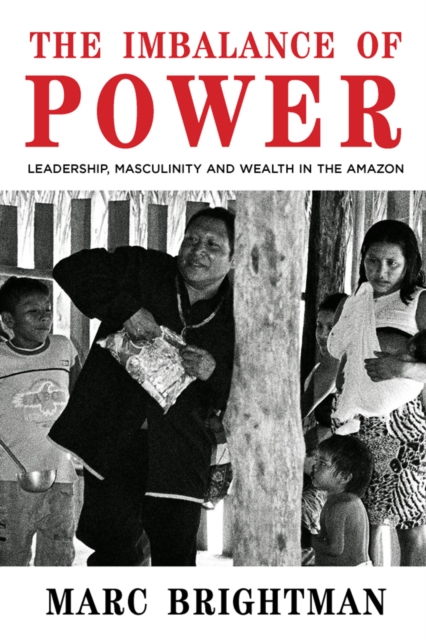
The imbalance of power
The Imbalance of Power demonstrates that the indigenous societies of the Guiana region of Amazonia do not fit conventional characterizations of 'simple' political units with 'egalitarian' political ideologies and 'harmonious' relationships with nature.
eBook

The Cherokee diaspora : an indigenous history of migration, resettlement, and identity
The Cherokee are one of the largest Native American tribes in the United States, with more than three hundred thousand people across the country claiming tribal membership and nearly one million people internationally professing to have at least one Cherokee Indian ancestor. In this revealing history of Cherokee migration and resettlement, Gregory Smithers uncovers the origins of the Cherokee Diaspora and explores how communities and individuals have negotiated their Cherokee identities, even when geographically removed from the Cherokee Nation headquartered in Tahlequah, Oklahoma. Beginning in the eighteenth century, the author transports the reader back in time to tell the poignant story of the Cherokee people migrating throughout North America, including their forced exile along the infamous Trail of Tears (1838-39). Smithers tells a remarkable story of courage, cultural innovation, and resilience, exploring the importance of migration and removal, land and tradition, culture and language in defining what it has meant to be Cherokee for a widely scattered people.
Book

Seeing Red
Against long odds, the Anishinaabeg resisted removal, retaining
thousands of acres of their homeland in what is now Michigan,
Wisconsin, and Minnesota. Their success rested partly on their
roles as sellers of natural resources and buyers of trade goods,
which made them key players in the political economy of plunder
that drove white settlement and U.S. development in the Old
Northwest. But, as Michael Witgen demonstrates, the credit for
Native persistence rested with the Anishinaabeg themselves.
Outnumbering white settlers well into the nineteenth century, they
leveraged their political savvy to advance a dual citizenship that
enabled mixed-race tribal members to lay claim to a place in U.S.
civil society. Telling the stories of mixed-race traders and
missionaries, tribal leaders and territorial governors, Witgen
challenges our assumptions about the inevitability of U.S.
expansion. Deeply researched and passionately written, Seeing
Red will command attention from readers who are invested in
the enduring issues of equality, equity, and national belonging at
its core.
eBook


Treaty No. 9
For more than a century, the vast lands of Northern Ontario have been shared among the governments of Canada, Ontario, and the First Nations who signed Treaty No. 9 in 1905. For just as long, details about the signing of the constitutionally recognized agreement have been known only through the accounts of two of the commissioners appointed by the Government of Canada. Treaty No. 9 provides a truer perspective on the treaty by adding the neglected account of a third commissioner and tracing the treaty’s origins, negotiation, explanation, interpretation, signing, implementation, and recent commemoration.
eBook