
Catalogue Search | MBRL


Are you sure you want to remove the book from the shelf?

{{itemTitle}}
18
result(s) for
"Indigenous people-South Africa"
Sort by:

Genocide on Settler Frontiers: When Hunter-Gatherers and Commercial Stock Farmers Clash
European colonial conquest included many instances of indigenous peoples being exterminated. Cases where invading commercial stock farmers clashed with hunter-gatherers were particularly destructive, often resulting in a degree of dispossession and slaughter that destroyed the ability of these societies to reproduce themselves. The experience of aboriginal peoples in the settler colonies of southern Africa, Australia, North America, and Latin America bears this out. The frequency with which encounters of this kind resulted in the annihilation of forager societies raises the question of whether these conflicts were inherently genocidal, an issue not yet addressed by scholars in a systematic way.
eBook

A common hunger : land rights in Canada and South Africa
Geographically, demographically, and politically, South Africa and Canada are two countries that are very far apart. What they have in common are indigenous populations, which, because of their historical and ongoing experience of colonization and dispossession, share a hunger for land and human dignity. Based on extensive research carried out in both countries, A Common Hunger is a comparative work on the history of indigenous land rights in Canada and post-apartheid South Africa. Joan Fairweather has constructed a balanced examination of the impact of land dispossession on the lives of indigenous peoples in both countries and their response to centuries of European domination. By reclaiming rights to the land and an equitable share in the wealth-producing resources they contain, the first peoples of Canada and South Africa are taking important steps to confront the legacies of poverty that characterize many of their communities. A Common Hunger provides historical context to the current land claim process in these two former British colonies and examines the efforts of governments and the courts to ensure that justice is done.
eBook

Global White Supremacy
Knowledge is more expansive than the boundaries of the Western university model and its claim to be the dominant-or only-rigorous house of knowledge. In the former colonies of Europe (e.g., South Africa, Brazil, and Oceania), the curriculum, statues, architectures, and other aspects of the university demonstrate the way in which it is a fixture in empire maintenance. The trajectory of global White supremacy is deeply historical and contemporary-it is a global, transnational, and imperial phenomenon. White supremacy is sustained through the construction of inferiority and anti-Blackness. The context, history, and perspective offered by Collins, Newman, and Jun should serve as an introduction to the disruption of the ways in which university and academic dispositions have and continue to serve as sites of colonial and White supremacist preservation-as well as sites of resistance.
eBook

Natures of Colonial Change
In this groundbreaking study, Jacob A. Tropp explores the interconnections between negotiations over the environment and an emerging colonial relationship in a particular South African context-the Transkei-subsequently the largest of the notorious \"homelands\" under apartheid.In the late nineteenth century, South Africa's Cape Colony completed its incorporation of the area beyond the Kei River, known as the Transkei, and began transforming the region into a labor reserve. It simultaneously restructured popular access to local forests, reserving those resources for the benefit of the white settler economy. This placed new constraints on local Africans in accessing resources for agriculture, livestock management, hunting, building materials, fuel, medicine, and ritual practices.Drawing from a diverse array of oral and written sources, Tropp reveals how bargaining over resources-between and among colonial officials, chiefs and headmen, and local African men and women-was interwoven with major changes in local political authority, gendered economic relations, and cultural practices as well as with intense struggles over the very meaning and scope of colonial rule itself.Natures of Colonial Changesheds new light on the colonial era in the Transkei by looking at significant yet neglected dimensions of this history: how both \"colonizing\" and \"colonized\" groups negotiated environmental access and how such negotiations helped shape the broader making and meaning of life in the new colonial order.
eBook
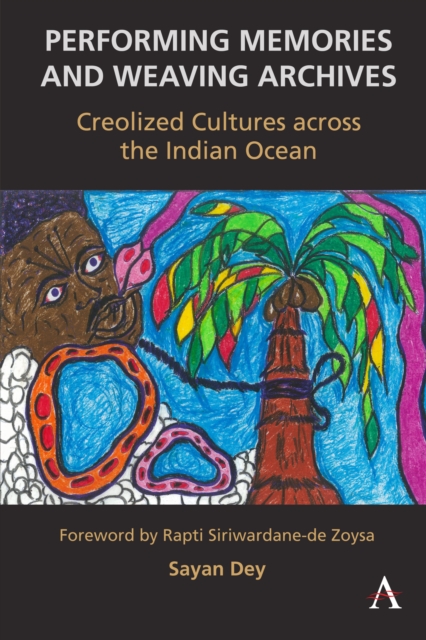
Performing Memories and Weaving Archives
This book engages with how the South African Indians in South Africa and Siddis in Gujarat perform creolized musical, spiritual, and culinary practices in their respective geopolitical spaces in the contemporary era.
eBook

The Musical Instruments of the Indigenous People of South Africa
Percival Kirby was a musician and ethnomusicologist and for many years head of the music department at the University of the Witwatersrand, Johannesburg. Between 1923 and 1933 he undertook more than nine expeditions as well as many shorter excursions around South Africa. He was hosted by local chiefs and taught to play the instruments he encountered. He managed to purchase many of them, and this collection, now known as the Kirby Collection, is housed at the South African College of Music, University of Cape Town. First published as Musical Instruments of the Native Races of South Africa in 1934, the book was the culmination of research trips undertaken by Percival Kirby. It became the standard reference on indigenous South African musical instruments. The bulk of the material is concerned with detailed information on the making and playing of each instrument, and is accompanied by a large number of musical examples. This third edition contains an introduction by Mike Nixon, Head of the Ethnomusicology and African Music at the South African College of Music, and new reproductions of the valuable historic photographs, but leaves Kirby’s original text unchanged.
eBook
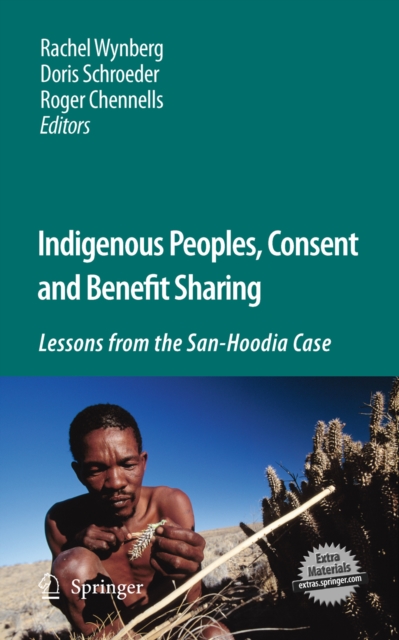
Indigenous peoples, consent and benefit sharing : lessons from the San-Hoodia case
This book offers an in-depth study of a benefit-sharing case that has captured great attention: the use of San knowledge to develop anti-obesity products, and places it in the global context of indigenous peoples' rights, consent and benefit-sharing.
eBook

Western Civilization and the Natives of South Africa
The book is structured as follows:
An introduction of old Bantu culture
An account of modern Bantu life
Discussion of the influence exerted by Christianity and Education upon communal life of the Bantu
Examination of special aspects of Bantu culture as they have been modified by Western civilization: language and music
The economic, political and legal positions of the native tribes in South Africa are also covered. First published in 1934.
eBook

The Mural Art of Basotho Women
Examines the decorated mud houses of the Basotho women from the Free State province, South Africa. Van Wyk discusses his photographic project which began in 1988 and was completed in 1994 with a dissertation on the murals and life of the women. He describes the origins of the mural tradition called `litema', meaning `to cultivate', and explains their function as a form of worship to the ancestors. He explores the techniques which include engraved pattern, bas-relief and stone mosaic, painted with ochres and pigments or more recently with less expensive powder paints. The author examines the importance of symbolism including colour, flowers and Christian symbols in the murals. He considers the changes in Basotho architecture and the role of Basotho women during the last 200 years, noting the poverty of the recently dispossessed Basotho population and the violence associated with South Africa's apartheid regime.
Journal Article
S. Africa Tribal Chiefs Assert Power
\"South Africa plans to complete the most tangible part of its democratic transformation with the election of municipal councilors to represent every village from the Kalahari Desert in the north to the winelands in the south.\" (CHRISTIAN SCIENCE MONITOR) Learn how these democratically-elected leaders will challenge traditional tribal leaders' authority. Comments from leaders on both sides of this debate are presented and the power struggle between democracy and tribal culture in South Africa is explained.
Newspaper Article