
Catalogue Search | MBRL


Are you sure you want to remove the book from the shelf?

{{itemTitle}}
7
result(s) for
"Indigenous peoples -- Ethiopia -- Politics and government"
Sort by:

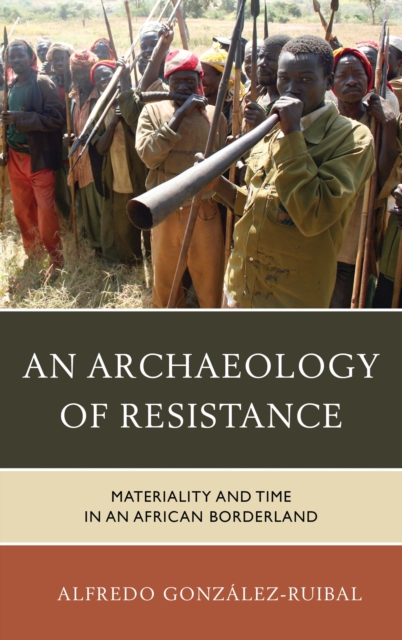
An Archaeology of Resistance
An Archaeology of Resistance: Materiality and Time in an African Borderland studies the tactics of resistance deployed by a variety of indigenous communities in the borderland between Sudan and Ethiopia. The Horn of Africa is an early area of state formation and at the same time the home of many egalitarian, small scale societies, which have lived in the buffer zone between states for the last three thousand years. For this reason, resistance is not something added to their sociopolitical structures: it is an inherent part of those structures—a mode of being. The main objective of the work is to understand the diverse forms of resistance that characterizes the borderland groups, with an emphasis on two essentially archaeological themes, materiality and time, by combining archaeological, political and social theory, ethnographic methods and historical data to examine different processes of resistance in the long term.
eBook

Fifteen Years of India’s NREGA: Employer of the Last Resort?
For the last decade, India’s National Rural Employment Guarantee Act (NREGA, 2005) has been the world’s largest public works programme. This legal entitlement provided employment to 28 per cent of rural Indian households in 2019–2020. After the COVID-19 pandemic, NREGA is increasingly emerging as an invaluable employer of the last resort. However, longitudinal data of implementation in its first fifteen years reveal distinctive trends. On the one hand, since inception, NREGA has rendered greater benefits to women and marginalised communities. But on the other, since 2014 till before the pandemic, the present National Democratic Alliance (NDA) regime has reduced NREGA coverage compared to its implementation during the previous United Progressive Alliance (UPA) coalition government which had enacted the legislation. Nevertheless, in light of the pandemic and based on international experiences in public work programmes, there is an urgent need for the expansion of the employment guarantee.
Journal Article

Along Ethiopia's western frontier: Gambella and Benishangul in transition
The lowland Ethiopian regions of Gambella and Benishangul, bordering
Sudan, form a classic frontier zone. ‘Modern’ politics dates from the 1974
Ethiopian revolution, and has been shaped by developments on either side
of the frontier, as well as by the complex relations among indigenous peoples,
and between them and immigrants and officials from highland areas of Ethiopia.
The implementation of the post-1991 Ethiopian government's programme of ethnic
regionalism has intensified local rivalries, and regional governments remain weak,
being highly dependent on professionals from highland Ethiopia. Education,
transport links, and other indicators of development remain poor. None the less,
local political power, in sharp contrast to
earlier periods, has to an appreciable extent passed into the hands of indigenous leaders.
Journal Article

New Approaches to State Building in Africa: The Case of Ethiopia's Ethnic-Based Federalism
The end of the Cold War and the crisis of socialism (statism) have ushered in the emergence of a “new” cycle of capitalism, which is characterized by wide ranging deregulation, privatization and vigorous globalization of capital (Cox 1994; Bienefeld 1994; Barber 1995). With this unfolding order, the role of the state in economic activity, including its protection of the vulnerable segments of society either through direct redistributive welfare mechanisms or by encouraging poverty-reducing and labor-absorbing economic activities, has come under serious attack. An ideology of free market and open global competition that increasingly limits the role of the state in economic activity has risen to prominence. According to some, a unified global economy has emerged and the global system has already entered a postnational stage (Barber 1995). While recognizing the intensification of interdependence among countries, many disagree that such a transformation has already taken place in the global system (Underhill 1994; Holm and Sorensen 1995; Boyer and Drache 1996). In most developing countries, however, the role of the state has been reduced to essentially adjusting national economies to the global economy instead of autonomously charting its own development strategy. Under the new global order, development in Africa and in the rest of the countries of the South is widely viewed to rest largely on integration with the global economy. Policy measures that are believed to advance integration with the global economy, including promotion of exports, attraction of foreign investments, correction of macroeconomic imbalances and decontrols of prices, exchange rates and imports are almost universally promoted in these countries.
Journal Article

Conquest, Tyranny, and Ethnocide against the Oromo: A Historical Assessment of Human Rights Conditions in Ethiopia, ca. 1880s-2002
This article attempts to assess the human rights conditions of the Oromo people under four Ethiopian regimes. Beginning with the conquest and incorporation of Oromia into the Ethiopian empire, it provides an overview of the brutality and depredations that Oromos suffered at the hands of Ethiopian soldiers and administrators under Menelik (r. 1880s-1913) and the concerted attacks on the Oromo cultural heritage, language, and national identity during the six decades when Haile Sellassie dominated the Ethiopian political landscape (1916-74).
Journal Article

THE POLITICS OF LINGUISTIC HOMOGENIZATION IN ETHIOPIA AND THE CONFLICT OVER THE STATUS OF AFAAN OROMOO
The suppression of ethnic identities in order to create homogeneous nation-states is an old strategy used by rulers of multi-ethnic and multilingual states. Perceived as salient markers of ethnic identities and as obstacles to the cultivation of the feeling of belonging and loyalty to the state by the policy makers, minority languages become the objects of suppression and replacement by the languages of the dominant groups. However, the attempt to homogenize such states, has, in many cases, faced both overt and covert resistance from the targeted groups. Ethnic opposition to linguistic homogenization is triggered by objective as well as subjective existential concerns. Putting the Oromo in focus, this essay examines the links between state language policy and ethnic conflict in Ethiopia. It sheds light on the history of Oromo literacy from the 1880s to the present decade and explores the role of language in the ‘nationbuilding’ strategies of various Ethiopian regimes. Furthermore, the essay addresses the socio-psychological and integrational consequences of, and Oromo response to, the language policies of these regimes as well as the intermittent attempts made by the Oromo intelligentsia to resist them and to develop and use afaan Oromoo as a medium for education, administration, mass media, and the arts.
Journal Article