
Catalogue Search | MBRL


Are you sure you want to remove the book from the shelf?

{{itemTitle}}
90
result(s) for
"Indigenous peoples Africa, Southern."
Sort by:

Ubuntu relational love : decolonizing Black masculinities
\"Ubuntu is a Bantu term meaning humanity. It is also a philosophical and ethical system of thought, from which definitions of humanness, togetherness, and social politics of difference arise. Devi Dee Mucina is a Black Indigenous Ubuntu man. In Ubuntu Relational Love, he uses Ubuntu oratures as tools to address the impacts of Euro-colonialism while regenerating relational Ubuntu governance structures. Called 'millet granaries' to reflect the nourishing and sustaining nature of Indigenous knowledges, and written as letters addressed to his mother, father, and children, Mucina's oratures take up questions of geopolitics, social justice, and resistance. Working through personal and historical legacies of dispossession and oppression, he challenges the fragmentation of Indigenous families and cultures and decolonizes impositions of white supremacy and masculinity.\"--Back cover
Book

Grappling with the Beast
This volume contributes rich, new material to provide insights into indigenous responses to the colonial empires of Great Britain and Germany (Namibia) and explore the complex intellectual, cultural, literary, and political borders and identities that emerged across these spaces.
eBook

Indigenous Knowledge System and Intellectual Property Rights in the Twenty-First Century. Perspectives from Southern Africa
This volume discusses a number of issues on the contested nature of intellectual property rights (IPR) and Indigenous Knowledge Systems (IKS) in the context of Southern Africa. The issues addressed include the protection of folklore, IKS in a digital era, the valuation and safeguard of heritage sites, the need for appropriate IKS legislation, community based control of natural resources and the role played by traditional music in the maintenance of community. It is this extensive exploration of IKS from the vantage points of communication and culture, and explored in terms of policy, cultural survival, international as well as intra-national politics, economics, philosophy and ethics that makes this empirical grounded collection of papers unique, a distinctive contribution to the literature and 'cause' of IKS. The specific IKS-related issues raised and dealt with in this volume are generic in the sense that the very same issues are being contested in different parts of the world. In this respect, this book highlights the particular as a means of comprehending the universal.
eBook

Indigenous Peoples and Religious Change
\"This book explores a range of societies in and around the Pacific and southern Africa in the nineteenth and twentieth centuries that encountered religions introduced from elsewhere, or fashioned their own responses to already established religious traditions. These changes observed through the responses of the receiving societies indicate that religious change is a creative dynamic, rather than a passive acceptance of new ideas, beliefs and practices.\"--BOOK JACKET. Source: National Library of New Zealand Te Puna Matauranga o Aotearoa, licensed by the Department of Internal Affairs for re-use under the Creative Commons Attribution 3.0 New Zealand Licence.
eBook
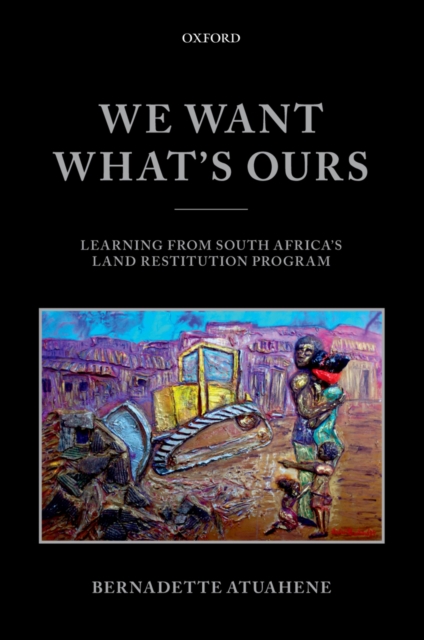
We want what's ours : learning from South Africa's land restitution program
Under the colonial and apartheid regime thousands of people in South Africa had their property and land taken from them. This book investigates the attempts by the post-apartheid government to provide redress for this, demonstrating that the restitution must go beyond financial compensation to address the social impact of confiscation of land.
eBook

Khoe-San Genomes Reveal Unique Variation and Confirm the Deepest Population Divergence in Homo sapiens
The southern African indigenous Khoe-San populations harbor the most divergent lineages of all living peoples. Exploring their genomes is key to understanding deep human history. We sequenced 25 full genomes from five Khoe-San populations, revealing many novel variants, that 25% of variants are unique to the Khoe-San, and that the Khoe-San group harbors the greatest level of diversity across the globe. In line with previous studies, we found several gene regions with extreme values in genome-wide scans for selection, potentially caused by natural selection in the lineage leading to Homo sapiens and more recent in time. These gene regions included immunity-, sperm-, brain-, diet-, and muscle-related genes. When accounting for recent admixture, all Khoe-San groups display genetic diversity approaching the levels in other African groups and a reduction in effective population size starting around 100,000 years ago. Hence, all human groups show a reduction in effective population size commencing around the time of the Out-of-Africa migrations, which coincides with changes in the paleoclimate records, changes that potentially impacted all humans at the time.
Journal Article

Education, Indigenous Knowledges, and Development in the Global South
The book's focus is the hegemonic role of so-called modernist, Western epistemology that spread in the wake of colonialism and the capitalist economic system, and its exclusion and othering of other epistemologies. Through a series of case studies the book discusses how the domination of Western epistemology has had a major impact on the epistemological foundation of the education systems across the globe. The book queries the sustainability of hegemonic epistemology both in the classrooms in the global South as well as in the face of the imminent ecological challenges of our common earth, and discusses whether indigenous knowledge systems would better serve the pupils in the global South and help promote sustainable development.
eBook

Bibliometric Analysis and Systematic Review of Indigenous Knowledge from a Comparative African Perspective: 1990–2020
Globally, indigenous knowledge (IK) has been shown to be a critical factor in economic growth and sustainable development and is as important as scientific knowledge. However, when it comes to the African narrative, IK research still seems to fall short, even with the great recognition and interest it is attracting. IK has always been underprivileged and marginalized, treated as an unsubstantiated type of knowledge that cannot provide any scientific solutions. Consequently, the aim of this paper is to provide an insight into the importance of IK research from a comparative African perspective from 1990 to 2020. The paper used a combination of bibliometric analysis and the Preferred Reporting Items for Systematic Reviews and Meta-Analysis (PRISMA) protocol to provide a comprehensive view of IK research. The VOSviewer software was used to provide a visualization of the bibliometric analysis through network maps. The findings suggest that while IK is a globally recognized concept, the African narrative is missing and not told by Africans. Most researched studies on IK in Africa are on ethnobotany, customs, traditions, agroforestry, and agriculture. Moreover, most of the IK research is from Southern Africa. There is a need for the integration of IK and scientific knowledge to develop well-informed approaches, methodologies, and frameworks that cater to indigenous communities and resilient ecological development. The research outcomes provide valuable insights for future research trends; they further highlight opportunities for building research partnerships for strengthening policy generation and implementation.
Journal Article
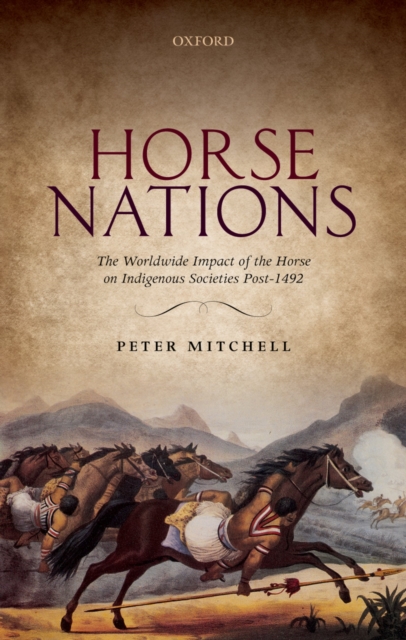
Horse Nations
Horse Nations provides the first globally comparative study of the impact of the horse on the Indigenous societies of North and South America, southern Africa, and Australasia following its (re-)introduction as a result of European contacts and settlement after Columbus' first voyage to the Americas in 1492.
eBook

Climate change adaptation strategies of small-scale farmers in Ngamiland East, Botswana
Climate change and variability threaten the sustainability of agricultural and food production, especially in agrarian communities. In Southern Africa, rainfall is expected to decline by almost 10% by the year 2050 and the largest increase in temperature can be experienced. Despite the potential risks of climate change on agricultural productivity, Botswana does not have a dedicated policy to respond to climate change. Furthermore, there is a dearth of research done in Botswana to provide an understanding of factors that shape farmers’ adaptation to climate change and institutional link to the adaptive capacity of farming households. Therefore, the aim of this article is to analyse institutions that influence farmers’ adaptation strategies of farmers in Botswana, using Ngamiland East as a case study. The paper relies on empirical data collected from purposively selected key informants and 300 households. The results show that the majority of farmers who have climate variability adaptation strategies in place are largely influenced by indigenous knowledge. Women and low-income earners are less likely to employ climate change adaptation strategies in order to improve their agricultural productivity. This article gives a better perspective of the strengths, weaknesses, opportunities and threats facing institutions designed to enable agricultural productivity. It recommends that macro-level and local government institutions should acknowledge the indigenous knowledge, community-level institutions and farmers’ adaptive capacity in policy formulation processes.
Journal Article