
Catalogue Search | MBRL


Are you sure you want to remove the book from the shelf?

{{itemTitle}}
8,365
result(s) for
"Indigenous peoples Language."
Sort by:
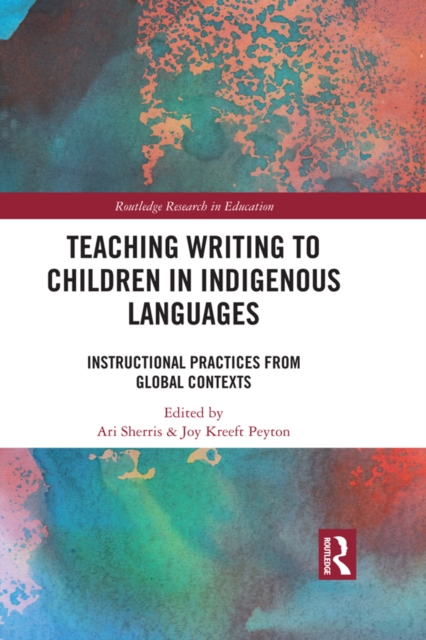
Teaching Writing to Children in Indigenous Languages
iiiThis volume brings together studies of instructional writing practices and the products of those practices from diverse Indigenous languages and cultures. By analyzing a rich diversity of contexts-Finland, Ghana, Hawai'i, Mexico, Papua New Guinea, and more-through biliteracy, complexity, and genre theories, this book explores and demonstrates critical components of writing pedagogy and development. Because the volume focuses on Indigenous languages, it questions center-margin perspectives on schooling and national language ideologies, which often limit the number of Indigenous languages taught, the domains of study, and the age groups included.
eBook
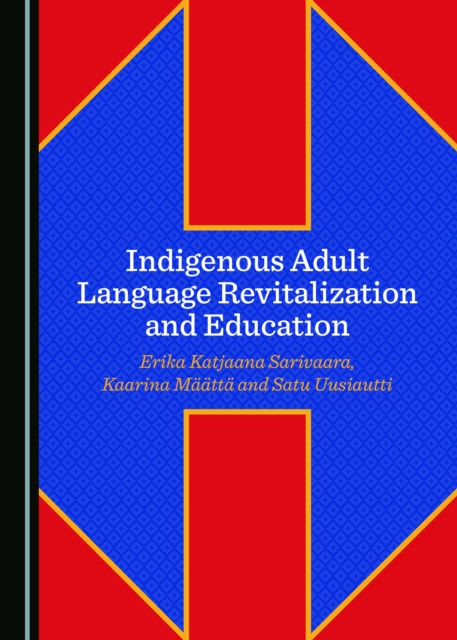
Indigenous Adult Language Revitalization and Education
Indigenous languages are endangered and questions of revitalization are topical in today's climate. This book deals with adult education and the topic of adults reclaiming their ancestral language. The themes addressed here cover indigeneity, and identification with, and membership in, indigenous groups on an individual level. The volume contemplates the preconditions of belonging to an indigenous people and the definitions of indigeneity. It also contains discussions of indigenous research, and provides new perspectives on methods suitable for recording indigenous people's voices and experiences. The text uses the Sámi people in Finland as the example, focusing on political identity and indigenous Sámi status.
eBook
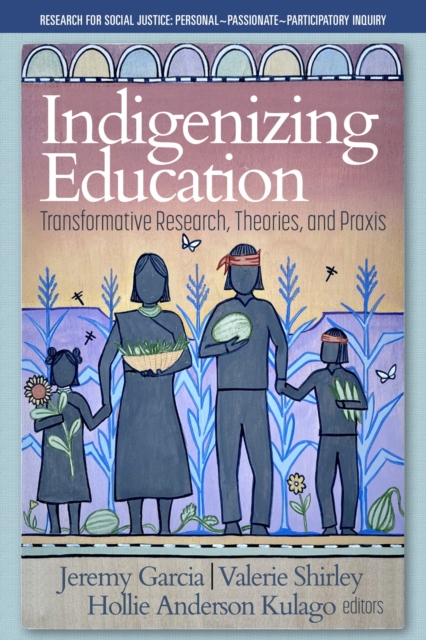
Indigenizing Education
Indigenizing Education: Transformative Research, Theories, and Praxis brings various scholars, educators, and community voices together in ways that reimagines and recenters learning processes that embody Indigenous education rooted in critical Indigenous theories and pedagogies. The contributing scholar-educators speak to the resilience and strength embedded in Indigenous knowledges and highlight the intersection between research, theories, and praxis in Indigenous education. Each of the contributors share ways they engaged in transformative praxis by activating a critical Indigenous consciousness with diverse Indigenous youth, educators, families, and community members. The authors provide pathways to reconceptualize and sustain goals to activate agency, social change, and advocacy with and for Indigenous peoples as they enact sovereignty, selfeducation, and Native nation-building. The chapters are organized across four sections, entitled Indigenizing Curriculum and Pedagogy, Revitalizing and Sustaining Indigenous Languages, Engaging Families and Communities in Indigenous Education, and Indigenizing Teaching and Teacher Education. Across the chapters, you will observe dialogues between the scholar-educators as they enacted various theories, shared stories, indigenized various curriculum and teaching practices, and reflected on the process of engaging in critical dialogues that generates a (re)new(ed) spirit of hope and commitment to intellectual and spiritual sovereignty. The book makes significant contributions to the fields of critical Indigenous studies, critical and culturally sustaining pedagogy, and decolonization.
eBook


Ways of identifying lichen and plant species by the Nenets reindeer herders in Yamal
Yamal Nenets herders have historically developed a rich knowledge of lichens and vascular plants, which feature in the diet of their migratory reindeer herds in the tundra zone of northwest Siberia. In the Nenets language there are native names for certain species of lichens and other reindeer forage plants, including graminoids, herbs, shrubs, berries, and mushrooms. During participant fieldwork together with nomadic tundra Nenets herders, we documented names and definitions of reindeer food on herding territories during their long migration routes from the northern forest-tundra transition zone to the northern coastal tundra. Like many other Indigenous peoples of Siberia, Nenets have noticed that the Arctic is changing and some of its recent dynamics are seriously affecting their livelihood. The degradation of some lichen composition and cover on tundra pastures has also contributed to a decrease of herders’ linguistic palette for describing these losses in a concrete manner. Since the Nenets language is on the list of endangered languages of the world, this has an especially negative impact on the language skills and traditional knowledge of the younger generations of Nenets people, who may not know what these lichens look like and why they are important for the Nenets reindeer herding culture.
Journal Article


The Method of the Propositional Frame Modeling in Teaching a Foreign Language
The article describes the method of the propositional frame modeling and its application in teaching a foreign language, including the languages of the indigenous minorities of Russia. The material of the frame \"berry\" offers guidelines for its use in the classroom for studying foreign languages. The use of this method in teaching foreign languages helps pupils to more accurately and more deeply understand the structural, substantive and functional patterns that dominate them, helps students develop language guessing based on word formation, which is a universal way of expanding their potential vocabulary. Derived and non-derivative words are built according to the same deep structural-logical schemes – propositional structures, on the basis of which propositions are created. Propositional structures have a universal nature for all natural languages, but they are implemented quite specifically in sentences in a given language under the influence of territory, climate, life experience, and established cultural traditions of a people. Recognition of propositional structures and propositions within the frames in the semantics of derivatives of the native language and a foreign language makes it possible to see what is common in the knowledge of the world of all nations and to reveal the unique \"world\" of the language.
Journal Article