
Catalogue Search | MBRL


Are you sure you want to remove the book from the shelf?

{{itemTitle}}
42,874
result(s) for
"Indigenous population"
Sort by:


An Abecedarian Approach with Aboriginal Families and Their Young Children in Australia: Playgroup Participation and Developmental Outcomes
New approaches to support the early learning for young Indigenous children are important to government policies across Australia. This study explores whether the Abecedarian Approach Australia (3a) intervention, with strong cultural adaptations, can boost young Aboriginal children’s early language and learning skills, prior to preschool. Participants in this study were Aboriginal children attending playgroups, Families as First Teachers, in school settings in two remote communities in the Northern Territory. Implementation data on two components (Conversational Reading and LearningGames) of the Abecedarian Approach Australia (3a) intervention are reported, and the level of exposure the children had to the programme during the study period is analysed. Child outcomes were assessed on the Brigance Early Childhood Screen II for 149 children aged from 24 to 56 months. Children’s language and early learning were associated with intervention dosage. Higher exposure to Conversational Reading and LearningGames predicted stronger language and overall development for young children. This study demonstrates that this intervention can be delivered effectively in playgroups in remote settings and is a meaningful and robust strategy to support early childhood learning, with potential to improve educational outcomes for young Aboriginal children in remote communities.
Journal Article

Therapeutic Nations
Self-determination is on the agenda of Indigenous peoples all over the world. This analysis by an Indigenous feminist scholar challenges the United Nations-based human rights agendas and colonial theory that until now have shaped Indigenous models of self-determination. Gender inequality and gender violence, Dian Million argues, are critically important elements in the process of self-determination.Million contends that nation-state relations are influenced by a theory of trauma ascendant with the rise of neoliberalism. Such use of trauma theory regarding human rights corresponds to a therapeutic narrative by Western governments negotiating with Indigenous nations as they seek self-determination.Focusing on Canada and drawing comparisons with the United States and Australia, Million brings a genealogical understanding of trauma against a historical filter. Illustrating how Indigenous people are positioned differently in Canada, Australia, and the United States in their articulation of trauma, the author particularly addresses the violence against women as a language within a greater politic. The book introduces an Indigenous feminist critique of this violence against the medicalized framework of addressing trauma and looks to the larger goals of decolonization. Noting the influence of humanitarian psychiatry, Million goes on to confront the implications of simply dismissing Indigenous healing and storytelling traditions.Therapeutic Nationsis the first book to demonstrate affect and trauma's wide-ranging historical origins in an Indigenous setting, offering insights into community healing programs. The author's theoretical sophistication and original research make the book relevant across a range of disciplines as it challenges key concepts of American Indian and Indigenous studies.
eBook

Tobacco, alcohol and marijuana use among Indigenous youth attending off-reserve schools in Canada: cross-sectional results from the Canadian Student Tobacco, Alcohol and Drugs Survey
Ongoing surveillance of youth substance use is essential to quantify harms and to identify populations at higher risk. In the Canadian context, historical and structural injustices make monitoring excess risk among Indigenous youth particularly important. This study updated national prevalence rates of tobacco, alcohol, and marijuana use among Indigenous and non-Indigenous students.
Differences in tobacco, alcohol, and marijuana use were examined, using logistic regression, among 1700 Indigenous and 22 800 non-Indigenous youth in Grades 9-12 who participated in the 2014/15 Canadian Student Tobacco, Alcohol and Drugs Survey. Differences by sex were also examined. Mean age of first alcohol and marijuana use was compared in the two populations using OLS regression. Results were compared to 2008/09 data.
While smoking, alcohol, and marijuana rates have decreased compared to 2008/09 in both populations, the gap between the populations has mostly not. In 2014/15, Indigenous youth had higher odds of smoking (odds ratio [OR]: 5.26; 95% confidence interval [CI]: 3.54-7.81) and past-year drinking (OR: 1.43; 95% CI: 1.16- 1.76) than non-Indigenous youth. More Indigenous than non-Indigenous youth attempted quitting smoking. Non-Indigenous males were less likely to have had at least one drink in the past-year compared to non-Indigenous females. Indigenous males and females had higher odds of past-year marijuana use than non-Indigenous males (OR: 1.84; 95% CI: 1.32-2.56) and females (OR: 2.87; 95% CI: 2.15-3.84). Indigenous youth, especially males, drank alcohol and used marijuana at younger ages.
Additional policies and programs are required to help Indigenous youth be successful in their attempts to quit smoking, and to address high rates of alcohol and marijuana use.
Journal Article

The association between cold extremes and neonatal mortality in Swedish Sápmi from 1800 to 1895
Background: Studies in which the association between temperature and neonatal mortality (deaths during the first 28 days of life) is tracked over extended periods that cover demographic, economic and epidemiological transitions are quite limited. From previous research about the demographic transition in Swedish Sápmi, we know that infant and child mortality was generally higher among the indigenous (Sami) population compared to non-indigenous populations.
Objective: The aim of this study was to analyse the association between extreme temperatures and neonatal mortality among the Sami and non-Sami population in Swedish Sápmi (Lapland) during the nineteenth century.
Methods: Data from the Demographic Data Base, Umeå University, were used to identify neonatal deaths. We used monthly mean temperature in Tornedalen and identified cold and warm month (5th and 95th) percentiles. Monthly death counts from extreme temperatures were modelled using negative binomial regression. We computed relative risks (RR) with 95% confidence intervals (CI), adjusting for time trends and seasonality.
Results: Overall, the neonatal mortality rate was higher among Sami compared to non-Sami infants (62/1,000 vs 35/1,000 live births), although the differences between the two populations decreased after 1860. For the Sami population prior 1860, the results revealed a higher neonatal incidence rate during cold winter months (<−15.4°C, RR = 1.60, CI 1.14-2.23) compared to infants born during months of medium temperature. No association was found between extreme cold months and neonatal mortality for non-Sami populations. Warm months (+15.1°C) had no impact on Sami or non-Sami populations.
Conclusions: This study revealed the role of environmental factors (temperature extremes) on infant health during the demographic transition where cold extremes mainly affected the Sami population. Ethnicity and living conditions contributed to differential weather vulnerability.
Journal Article

Improving Health Research on Small Populations
The increasing diversity of population of the United States presents many challenges to conducting health research that is representative and informative. Dispersion and accessibility issues can increase logistical costs; populations for which it is difficult to obtain adequate sample size are also likely to be expensive to study. Hence, even if it is technically feasible to study a small population, it may not be easy to obtain the funding to do so. In order to address the issues associated with improving health research of small populations, the National Academies of Sciences, Engineering, and Medicine convened a workshop in January 2018. Participants considered ways of addressing the challenges of conducting epidemiological studies or intervention research with small population groups, including alternative study designs, innovative methodologies for data collection, and innovative statistical techniques for analysis.
eBook
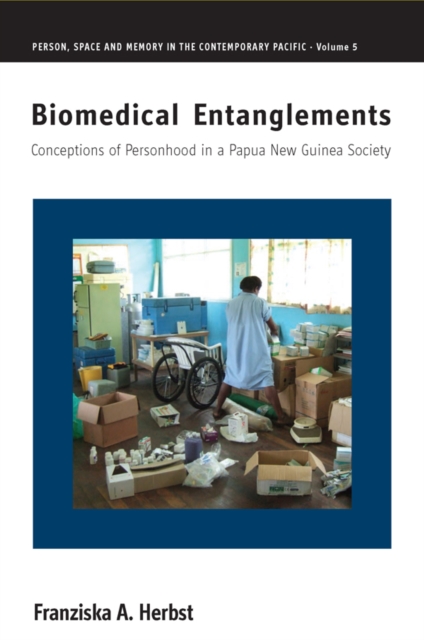
Biomedical entanglements
Biomedical Reproductive Health Care Meaningful Conclusion Glossary References Biomedical Entanglements is an ethnographic study of the Giri people of Papua New Guinea, focusing on the indigenous population's interaction with modern medicine. In her fieldwork, Franziska A. Herbst follows the Giri people as they circulate within and around ethnographic sites that include a rural health center and an urban hospital. The study bridges medical anthropology and global health, exploring how the 'biomedical' is imbued with social meaning and how biomedicine affects Giri ways of life.
eBook

Indigenous Systems of Management for Culturally and Ecologically Resilient Pacific Salmon (Oncorhynchus spp.) Fisheries
Pacific salmon (Oncorhynchus spp.) are at the center of social–ecological systems that have supported Indigenous peoples around the North Pacific Rim since time immemorial. Through generations of interdependence with salmon, Indigenous Peoples developed sophisticated systems of management involving cultural and spiritual beliefs, and stewardship practices. Colonization radically altered these social–ecological systems, disrupting Indigenous management, consolidating authority within colonial governments, and moving most harvest into mixed-stock fisheries. We review Indigenous management of salmon, including selective fishing technologies, harvest practices, and governance grounded in multigenerational place-based knowledge. These systems and practices showcase pathways for sustained productivity and resilience in contemporary salmon fisheries. Contrasting Indigenous systems with contemporary management, we document vulnerabilities of colonial governance and harvest management that have contributed to declining salmon fisheries in many locations. We suggest that revitalizing traditional systems of salmon management can improve prospects for sustainable fisheries and healthy fishing communities and identify opportunities for their resurgence.
Journal Article