
Catalogue Search | MBRL


Are you sure you want to remove the book from the shelf?

{{itemTitle}}
5,164
result(s) for
"Indigenous status"
Sort by:


Therapeutic Nations
Self-determination is on the agenda of Indigenous peoples all over the world. This analysis by an Indigenous feminist scholar challenges the United Nations-based human rights agendas and colonial theory that until now have shaped Indigenous models of self-determination. Gender inequality and gender violence, Dian Million argues, are critically important elements in the process of self-determination.Million contends that nation-state relations are influenced by a theory of trauma ascendant with the rise of neoliberalism. Such use of trauma theory regarding human rights corresponds to a therapeutic narrative by Western governments negotiating with Indigenous nations as they seek self-determination.Focusing on Canada and drawing comparisons with the United States and Australia, Million brings a genealogical understanding of trauma against a historical filter. Illustrating how Indigenous people are positioned differently in Canada, Australia, and the United States in their articulation of trauma, the author particularly addresses the violence against women as a language within a greater politic. The book introduces an Indigenous feminist critique of this violence against the medicalized framework of addressing trauma and looks to the larger goals of decolonization. Noting the influence of humanitarian psychiatry, Million goes on to confront the implications of simply dismissing Indigenous healing and storytelling traditions.Therapeutic Nationsis the first book to demonstrate affect and trauma's wide-ranging historical origins in an Indigenous setting, offering insights into community healing programs. The author's theoretical sophistication and original research make the book relevant across a range of disciplines as it challenges key concepts of American Indian and Indigenous studies.
eBook

We are we : Indigenizing the truth and reconciliation process : climate crisis resolution through Indigenous law
\"This is a book of hope. As we sit on the brink of extinction due to our creation of the climate crisis, We Are We serves as an instruction manual on how all of us can reconcile with our Mother Earth and save the future for our children. Wanmbli Chante Winan provides insights into Indigenous cultures, their Essential Laws, and Traditional Ways of Knowing woven through the spiritual framework of the Medicine Wheel. This book can be used as a platform from which to create Truth and Reconciliation with the First Peoples of this continent now called 'Canada.' We Are We: Indigenizing the Truth and Reconciliation Process - Climate crisis resolution through Indigenous Law is a must read for everyone who wants a starting place in learning practical solutions to complex environmental problems and social justice issues. We Are We is a gift, promise, and hope for future generations\"-- Provided by publisher.
Book

Say We Are Nations
In this wide-ranging and carefully curated anthology, Daniel M. Cobb presents the words of Indigenous people who have shaped Native American rights movements from the late nineteenth century through the present day. Presenting essays, letters, interviews, speeches, government documents, and other testimony, Cobb shows how tribal leaders, intellectuals, and activists deployed a variety of protest methods over more than a century to demand Indigenous sovereignty. As these documents show, Native peoples have adopted a wide range of strategies in this struggle, invoking \"American\" and global democratic ideas about citizenship, freedom, justice, consent of the governed, representation, and personal and civil liberties while investing them with indigenized meanings.The more than fifty documents gathered here are organized chronologically and thematically for ease in classroom and research use. They address the aspirations of Indigenous nations and individuals within Canada, Hawaii, and Alaska as well as the continental United States, placing their activism in both national and international contexts. The collection's topical breadth, analytical framework, and emphasis on unpublished materials offer students and scholars new sources with which to engage and explore American Indian thought and political action.
eBook


Reflections on the UN Declaration on the Rights of Indigenous Peoples
The adoption of the Declaration on the Rights of Indigenous Peoples, by the United Nations General Assembly in September 2007, was acclaimed as a major success for the UN system, given the extent to which it consolidates and develops the international corpus of indigenous rights. This is the first in-depth academic analysis of this far-reaching instrument. Indigenous representatives have argued that the rights contained in the Declaration, and the processes by which it was formulated, obligate affected States to accept the validity of its provisions and its interpretation of contested concepts, such as 'culture,' 'land,' 'ownership,' and 'self-determination.' This edited collection contains essays written by the main protagonists in the development of the Declaration, indigenous representatives, and field-leading academics. It offers comprehensive institutional, thematic, and regional analysis of the Declaration. In particular, it explores the Declaration's normative resonance for international law and considers the ways this international instrument could be a catalyst for institutional action and influence the development of national laws and policies on indigenous issues. It will be invaluable to legal scholars of indigenous and minority rights, political theorists, human rights activists, and human rights practitioners.
eBook


Indigenous People, Crime and Punishment
Indigenous People, Crime and Punishment examines criminal sentencing courts' changing characterisations of Indigenous peoples' identity, culture and postcolonial status. Focusing largely on Australian Indigenous peoples, but drawing also on the Canadian experiences, Thalia Anthony critically analyses how the judiciary have interpreted Indigenous difference. Through an analysis of Indigenous sentencing remarks over a fifty year period in a number of jurisdictions, the book demonstrates how judicial discretion is moulded to dominant white assumptions about Indigeneity. More specifically, Indigenous People, Crime and Punishment shows how the increasing demonisation of Indigenous criminality and culture in sentencing has turned earlier 'gains' in the legal recognition of Indigenous peoples on their head. The recognition of Indigenous difference is thereby revealed as a pliable concept that is just as likely to remove concessions as it is to grant them. Indigenous People, Crime and Punishment suggests that Indigenous justice requires a two-way recognition process where Indigenous people and legal systems are afforded greater control in sentencing, dispute resolution and Indigenous healing.
eBook

21 things you may not know about the Indian Act : helping Canadians make reconciliation with Indigenous Peoples a reality
A guide to understanding the Indian Act and its impact on generations of Indigenous Peoples, as well as an examination of how Indigenous Peoples can return to self-government, self-determination, and self-reliance.
Book
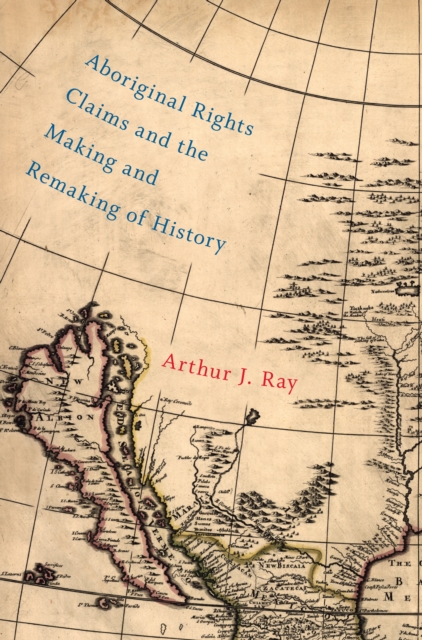
Aboriginal rights claims and the making and remaking of history
Forums such as commissions, courtroom trials, and tribunals that have been established through the second half of the twentieth century to address aboriginal land claims have consequently created a particular way of presenting aboriginal, colonial, and national histories. The history that emerges from these land-claims processes is often criticized for being \"presentist\" - inaccurately interpreting historical actions and actors through the lens of present-day values, practices, and concerns. In Aboriginal Rights Claims and the Making and Remaking of History, Arthur Ray examines how claims-oriented research is often fitted to the existing frames of indigenous rights law and claims legislation and, as a result, has influenced the development of these laws and legislation. Through a comparative study encompassing the United States, Canada, South Africa, Australia and New Zealand, Ray also explores the ways in which various procedures and settings for claims adjudication have influenced and changed the use of historical evidence, made space for indigenous voices, stimulated scholarly debates about the cultural and historical experiences of indigenous peoples at the time of initial European contact and afterward, and have provoked reactions from politicians and scholars. While giving serious consideration to the flaws and strengths of presentist histories, Aboriginal Rights Claims and the Making and Remaking of History provides communities with essential information on how history is used and how methods are adapted and changed.
eBook