
Catalogue Search | MBRL


Are you sure you want to remove the book from the shelf?

{{itemTitle}}
4,797
result(s) for
"Indigenous youth."
Sort by:


Land and nature as sources of health and resilience among Indigenous youth in an urban Canadian context: a photovoice exploration
Background
Population and environmental health research illustrate a positive relationship between access to greenspace or natural environments and peoples’ perceived health, mental health, resilience, and overall well-being. This relationship is also particularly strong among Canadian Indigenous populations and social determinants of health research where notions of land, health, and nature can involve broader spiritual and cultural meanings. Among Indigenous youth health and resilience scholarship, however, research tends to conceptualize land and nature as rural phenomena without any serious consideration on their impacts within urban cityscapes. This study contributes to current literature by exploring Indigenous youths’ meaning-making processes and engagements with land and nature in an urban Canadian context.
Methods
Through photovoice and modified Grounded Theory methodology, this study explored urban Indigenous youth perspectives about health and resilience within an inner-city Canadian context. Over the course of one year, thirty-eight in-depth interviews were conducted with Indigenous (Plains Cree First Nations and Métis) youth along with photovoice arts-based and talking circle methodologies that occurred once per season. The research approach was also informed by
Etuaptmumk
or a “two-eyed seeing” framework where Indigenous and Western “ways of knowing” (worldviews) can work alongside one another.
Results
Our strength-based analyses illustrated that engagement with and a connection to nature, either by way of being present in nature and viewing nature in their local urban context, was a central aspect of the young peoples’ photos and their stories about those photos. This article focuses on three of the main themes that emerged from the youth photos and follow-up interviews: (1) nature as a calming place; (2) building metaphors of resilience; and (3) providing a sense of hope. These local processes were shown to help youth cope with stress, anger, fear, and other general difficult situations they may encounter and navigate on a day-to-day basis.
Conclusions
This study contributes to the literature exploring Indigenous youths’ meaning-making process and engagements with land and nature in an urban context, and highlights the need for public health and municipal agencies to consider developing more culturally safe and meaningful natural environments that can support the health, resilience, and well-being of Indigenous youth within inner-city contexts.
Journal Article


RADICAL CARE AND DECOLONIAL FUTURES: CONVERSATIONS ON IDENTITY, HEALTH, AND SPIRITUALITY WITH INDIGENOUS QUEER, TRANS, AND TWO-SPIRIT YOUTH
The spirituality and health of Indigenous queer, trans, and two-spirit people occurs within and responds to contexts of extreme colonial violence. However, few studies have examined the relationships among the identity, health, and spirituality of Indigenous queer, trans, and two-spirit youth and their perspectives and activism work in relation to the context of this violence. This study aims to better understand the importance of the connections among identity, health, and spirituality and their role in supporting Indigenous queer, trans, and two-spirit leadership in the enactment of care practices to promote health amidst colonial violence and the worlding of decolonial futures beyond and outside it. Informed by key insights from the grassroots movements and fields of Indigenous feminism, Indigenous queer thought, and radical resurgence, this study brings these insights into conversation, via qualitative interviews with five Indigenous youth activists (18 to 35 years old) from across the part of Turtle Island now known as Canada. Our analysis results in four themes: (1) identity, (2) spirituality, (3) the multidimensional nature of colonial violence, and (4) radical care. We delineate activating practices for decolonial futures, and signal the value of grounded, context-reflective, culturally safe, and intersectional health and youth services. This research demonstrates that spirituality is constitutive of and foundational to the identity and health of Indigenous queer, trans, and two-spirit youth, and shows that health promotion and youth services must address the multidimensional nature of these needs if they are to truly support Indigenous young people, their movements of radical care, and the creation of a decolonial elsewhere marked by belonging, love, self-determinism, responsibility, and joy.
Journal Article

Warrior girl unearthed
With the rising number of missing Indigenous women, her family's involvement in a murder investigation, and grave robbers profiting off her Anishinaabe tribe, Perry takes matters into her own hands to solve the mystery and reclaim her people's inheritance.
Book

Exploring Mental Health and Holistic Healing through the Life Stories of Indigenous Youth Who Have Experienced Homelessness
Indigenous youth are the fastest growing population in Canada, yet are marked by profound and disproportionate personal, societal, political, and colonial barriers that predispose them to mental health challenges, employment and educational barriers, and experiences of housing insecurity and homelessness. It is only from the perspectives and experiences of Indigenous community members themselves that we can gain appropriate insights into effective supports, meaningful interventions, and accessible pathways to security. This paper will explore the mental health of Indigenous youth who are at risk of, or who have experienced, homelessness, as well as the lifelong perspectives, teachings, and guidance from Indigenous Elders and traditional knowledge keepers; their perspectives are weaved throughout, in order to provide a more effective means to addressing holistic healing and the mental health needs of Indigenous homeless youth. As educators, researchers and clinicians who have sought to understand this issue in more depth, our analysis aims to raise awareness about the complexities of Indigenous youth homelessness and push back against systemic barriers that contribute to homelessness, fail young people, and subject them to oppression. We also offer recommendations from a clinical perspective in order for clinicians, researchers and those working within communities to serve our Indigenous youth with a diverse set of methods that are tailored and ethical in their approach.
Journal Article

The Climate Crisis and Indigenous Youths' Mental Health: The Pilot Project
The climate crisis significantly and disproportionately impacts Indigenous Peoples across Turtle Island, and worldwide. Some major issues faced are threats to reserve lands, food sovereignty, and traditional employment. The harms caused by climate change have been uniquely placed on Indigenous youth as both the future and current caretakers and land defenders of Turtle Island, impacting the mental health of our youth. Yet, their perspectives are rarely included in scholarly literature, research, or decision-making on environmental policy. This article outlines findings from initial pilot phases of a climate crisis research project regarding the perspectives of Indigenous youth on the impacts of the climate crisis on their mental health and recommendations for service providers. The findings outline themes and perspectives from Talking Circles with youth and Elders, as well as the development of a play created and performed in collaboration with an Indigenous theatre expert and our community partner, 2-Spirited People of the 1st Nations, in Toronto. Additionally, a quantitative survey was conducted to gather audience feedback on the performance. 4 qualitative themes emerged: anxiety, fear and powerlessness; finding voice & using voice; autonomy & decolonization in government; education, educating & training youth. Audience feedback was mainly positive, impactful and inspiring. 6 main recommendations for policy and service delivery shifts were also acquired. This research responds to the emergent need for the inclusion and empowerment of Indigenous youth voices on the ongoing climate crisis and investigates its impacts on Indigenous youth mental health. Overall, the study had a positive impact on Indigenous youth mental health, with future research underway. Recommendations for programming and policy changes provided to continue supporting positive Indigenous youth mental health and wellness.
Journal Article
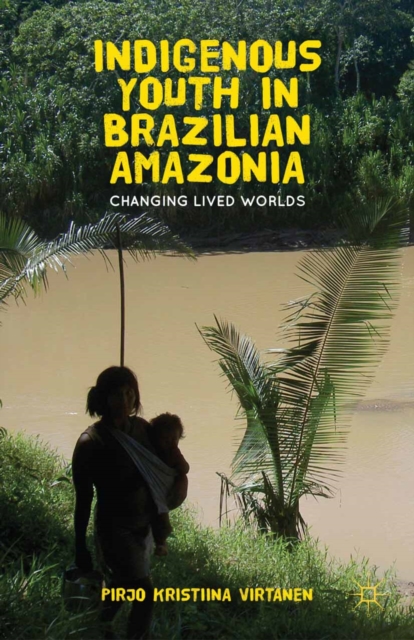
Indigenous youth in Brazilian Amazonia : changing lived worlds
How do Amazonian native young people perceive, question, and negotiate the new kinds of social and cultural situations in which they find themselves? Virtanen looks at how current power relations constituted by ethnic recognition, new social contacts, and cooperation with different institutions have shaped the current native youth in Amazonia.
eBook

Outside Looking In: Inspiring Indigenous Youth with Innovative Programming
After a career as a professional dancer, Tracee Smith was looking for her next challenge in her mid-20s. Upon obtaining her MBA, Smith, a member of Missanabie Cree First Nation in northern Ontario, had to decide whether to completely leave her previous dance life behind. She chose not to. That proved to be a wise decision indeed, as for the past 16 years Smith has been serving as the CEO of Outside Looking In (OLI), a charity she founded. OLI has various components, but it is primarily known for its dance program. It will work with students in various Indigenous communities and then invite them to Toronto to showcase their dance program in front of an audience.
Journal Article

“Community Envelops Us in This Grey Landscape of Obstacles and Allows Space for Healing”: The Perspectives of Indigenous Youth on Well-Being
This paper presents Indigenous youths’ perspectives on well-being. Using Indigenous youth participatory action research with the Indigenous youth advisory committee of the Québec Youth Research Network Chair (Canada), community care emerged as the central feature of well-being and was then visually presented in the form of a postcard. We discuss the meaning given to community care, the factors that support it, and the role that a visual illustration can play in promoting change. The article is informed by the co-creation of the postcard, an online luncheon conversation, and several debriefing/reflexive sessions with the Indigenous youth co-authors. Emphasis is placed on cultural continuity, relational agency, and solidarity, offering an alternative point of view to the prevalent and damaging decontextualized, deficit-based, and individualized approaches to well-being.
Journal Article