
Catalogue Search | MBRL


Are you sure you want to remove the book from the shelf?

{{itemTitle}}
7
result(s) for
"Indogermanen"
Sort by:

Language and prehistory of the Indo-European peoples : a cross-disciplinary perspective
Our knowledge of neolithic and bronze age Europe is growing rapidly, and this book offers a major contribution to our understanding of the language and history of the peoples of that period. The editors have taken a deliberately cross-disciplinary approach, bringing in historical linguists, archaeologists, geneticists, and more to both examine specific questions in the field and to analyze the basic methodology in use. The book is the result of a Scandinavian conference, the first dedicated to this approach to the field.
Book
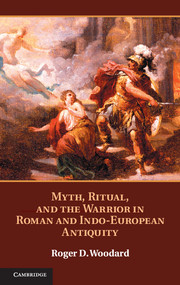
Myth, Ritual, and the Warrior in Roman and Indo-European Antiquity
This book examines the figure of the returning warrior as depicted in the myths of several ancient and medieval Indo-European cultures. In these cultures, the returning warrior was often portrayed as a figure rendered dysfunctionally destructive or isolationist by the horrors of combat. This mythic portrayal of the returned warrior is consistent with modern studies of similar behavior among soldiers returning from war. Roger Woodard's research identifies a common origin of these myths in the ancestral proto-Indo-European culture, in which rites were enacted to enable warriors to reintegrate themselves as functional members of society. He also compares the Italic, Indo-Iranian and Celtic mythic traditions surrounding the warrior, paying particular attention to Roman myth and ritual, notably to the etiologies and rites of the July festivals of the Poplifugia and Nonae Caprotinae and to the October rites of the Sororium Tigillum.
eBook

Religion of the gods : ritual, paradox, and reflexivity
In many of the world's religions, both polytheistic and monotheistic, a seemingly enigmatic and paradoxical image is found—that of the god who worships. Various interpretations of this seeming paradox have been advanced. Some suggest that it represents sacrifice to a higher deity. Proponents of anthropomorphic projection say that the gods are just “big people” and that images of human religious action are simply projected onto the deities. However, such explanations do not do justice to the complexity and diversity of this phenomenon. This book takes up anew a longstanding challenge in ancient Greek religious iconography: why are the Olympian gods depicted on classical pottery making libations? The sacrificing gods in ancient Greece are compared to gods who perform rituals in six other religious traditions: the Vedic gods, the heterodox god Zurvan of early Zoroastrianism, the Old Norse god Odin, the Christian God and Christ, the God of Judaism, and Islam's Allah. The book examines the comparative evidence from a cultural and historical perspective, uncovering deep structural resonances while also revealing crucial differences. Instead of looking for invisible recipients or lost myths, the book proposes the new category of “divine reflexivity.” Divinely performed ritual is a self-reflexive, self-expressive action that signals the origin of ritual in the divine and not the human realm. Above all, divine ritual is generative, both instigating and inspiring human religious activity. The religion practiced by the gods is both like and unlike human religious action. Seen from within the religious tradition, gods are not “big people,” but other than human. Human ritual is directed outward to a divine being, but the gods practice ritual on their own behalf. “Cultic time,” the symbiotic performance of ritual both in heaven and on earth, collapses the distinction between cult and theology each time ritual is performed.
eBook
The Oxford introduction to Proto-Indo-European and the Proto-Indo-European world
This book introduces Proto-Indo-European, describes how it was reconstructed from its descendant languages, and shows what it reveals about the people who spoke it between 5,500 and 8,000 years ago. Using related evidence from archaeology and natural history the authors explore the lives, thoughts, passions, culture, society, economy, history, and environment of the Proto-Indo-Europeans. They include chapters on fauna, flora, family and kinship, clothing and textiles, food and drink, space and time, emotions, mythology, and religion, and describe the quest to discover the Proto-Indo-European homeland.
eBook

How to kill a dragon : aspects of Indo-European poetics
Watkins demonstrates the continuity of poetic formulae in Indo-European languages from Old Hittite to medieval Irish. Using the comparative method, he shows how traditional poetry formulae of considerable complexity can be reconstructed as far back as the original common languages, thus revealing the antiquity and tenacity of the poetic tradition.
eBook
