
Catalogue Search | MBRL


Are you sure you want to remove the book from the shelf?

{{itemTitle}}
78,323
result(s) for
"Industrial efficiency"
Sort by:
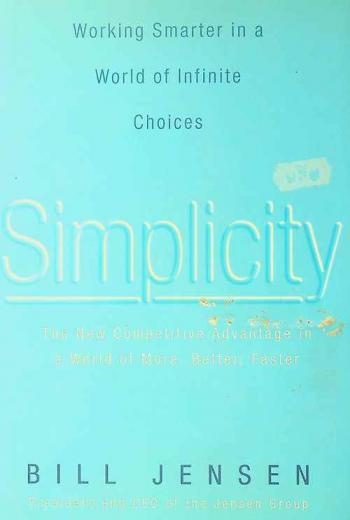
Simplicity : the new competitive advantage in a world of more, better, faster
The greatest challenge that people and companies face isn't from the competition, the marketplace or anything else out there. It is from confusion within organizations. Simplicity, outlined here, is the disciplined use of one skill and one tool.
Book

Analysis on Spatio-Temporal Characteristics and Influencing Factors of Industrial Green Innovation Efficiency—From the Perspective of Innovation Value Chain
Green innovation has become an important combination of high-quality economic growth and ecological sustainability. In this paper, the super-efficiency network SBM model was used to measure the two-stage green innovation efficiency of the industrial technology research and development (R&D) stage and achievement transformation stage in China (30 provinces and cities) from 2009 to 2019. The results show the following points. Firstly, in terms of temporal series, the efficiency of technology R&D and achievement transformation has experienced three stages of “upward-declining-revitalized period”. Secondly, in terms of spatial trend, the industrial green innovation efficiency gradually increases from northwest to southeast. The high-efficiency areas are still concentrated in the eastern coastal region, with a clear trend towards balanced development in the central and western regions. Finally, openness, industrial structure, government technical expenditures, enterprise scale, and environmental regulation all have different degrees of impact on the efficiency of green innovation in the two stages. Based on the above, this paper is helpful for the government to formulate laws and regulations and coordinate the level of regional economic development and clarify the spatio-temporal characteristics and influencing factors of the efficiency of green innovation.
Journal Article

The efficiency paradox : what big data can't do
\"A bold challenge to our obsession with efficiency--and a new understanding of how to benefit from the powerful potential of serendipity\"-- Provided by publisher.
Book
Challenges for Sustainable Water Use in the Urban Industry of Korea Based on the Global Non-Radial Directional Distance Function Model
Since water stress and industrial water pollution pose a huge threat to South Korea’s sustainable water use, it is an urgent task to assess industrial water green use efficiency (GUEIW). Based on the global non-radial directional distance function (GNDDF) model, this paper calculated GUEIW in 16 Korean local governments from 2006 to 2015 using two decomposition indicators: Economic efficiency of industrial water use (ECEIW) and environmental efficiency of industrial water use (ENEIW). The growth of GUEIW is mainly driven by ECEIW, and subsequent environmental problems are obstacles to achieving green use of Korean industrial water. The regional heterogeneity of GUEIW is so important that the downstream region outperformed the upstream region in all three indicators. The government’s efforts to ensure water quality inhibits industrial development in upstream areas, where incomes are much lower than in downstream areas, and downstream industrial areas have to pay upstream industrial areas extra for water. However, regarding upstream industrial areas, low prices easily promote water waste. Because of relatively high water use costs, downstream producers are encouraged to save water. To improve the economic efficiency of industrial water use in upstream areas, advanced water technology should be developed or introduced to make full use of water resources in industrial production.
Journal Article

Resources, efficiency and globalisation
\"International business for the modern firm has to compromise the need to use limited resources and achieve efficiency in the global marketplace. This book examines these issues from the viewpoint of the internationalized SME, the big multinational and the local subsidiary drawing on research conducted in different countries\"-- Provided by publisher.
Book
The Impact of the Digital Economy on Industrial Eco-Efficiency in the Yangtze River Delta (YRD) Urban Agglomeration
Enhancing industrial eco-efficiency (IEE) represents an inherent imperative in the pursuit of green, low-carbon, and high-quality development. The burgeoning digital economy (DE) contributes to the digitization and intelligent integration and transformation of production and consumption, which contributes to enhancing economic efficiency and resource utilization efficiency while reducing carbon emissions and the environmental pollution associated with industrial production and providing important support for the ecological transformation of industries. In this context, using data from the YRD urban agglomeration and employing the Tobit model and the spatio-temporal correlation model, this study analyzes the impact of the digital economy on industrial eco-efficiency. The findings are as follows: (1) The correlation over time between IEE and the DE followed an inverted V-shaped trend, while the relationship between the DE and pure technical efficiency (PTE) exhibited a fluctuating W-shaped pattern. The spatial correlation revealed Zhejiang province as the primary concentration of positive correlation between the DE and both IEE and PTE. (2) The development of the DE had a significant positive impact on IEE, not only directly but also indirectly through promoting green technological innovation and advancing industrial structure. (3) The analysis of regional heterogeneity showed that the development of the DE in core cities played a catalytic role in improving IEE, whereas the impact of the DE on IEE was not significant in outer cities. This research not only offers new views on how to develop industry in more environmentally friendly ways, but it also sheds light on the real effects of the digital economy on high-quality urban development.
Journal Article

Modernism and the Culture of Efficiency
Cobley's close readings of modernist British fiction by writers as diverse as Aldous Huxley, Joseph Conrad, and E.M. Forster identify characters whose attitudes and behaviour patterns indirectly manifest cultural anxieties that can be traced to the conflicted logic of efficiency.
eBook


The mantra of efficiency : from waterwheel to social control
Winner, 2010 Edelstein Prize, Society for the History of Technology
Efficiency—associated with individual discipline, superior management, and increased profits or productivity—often counts as one of the highest virtues in Western culture. But what does it mean, exactly, to be efficient? How did this concept evolve from a means for evaluating simple machines to the mantra of progress and a prerequisite for success?
In this provocative and ambitious study, Jennifer Karns Alexander explores the growing power of efficiency in the post-industrial West. Examining the ways the concept has appeared in modern history—from a benign measure of the thermal economy of a machine to its widespread application to personal behaviors like chewing habits, spending choices, and shop floor movements to its controversial use as a measure of the business success of American slavery—she argues that beneath efficiency's seemingly endless variety lies a common theme: the pursuit of mastery through techniques of surveillance, discipline, and control.
Six historical case studies—two from Britain, one each from France and Germany, and two from the United States—illustrate the concept's fascinating development and provide context for the meanings of, and uses for, efficiency today and in the future.
eBook