
Catalogue Search | MBRL


Are you sure you want to remove the book from the shelf?

{{itemTitle}}
28
result(s) for
"Industrial hygiene Law and legislation United States."
Sort by:

The cancer factory : industrial chemicals, corporate deception, and the hidden deaths of American workers
\"The story of a group of Goodyear Tire and Rubber workers fatally exposed to toxic chemicals, the lawyer who sought justice on their behalf, and the shameful lack of protection our society affords all workers. A gripping narrative in the tradition of A Civil Action and Toms River\"-- Provided by publisher.
BOOK

Legal Liabilities in Safety and Loss Prevention
The goal of every safety professional and safety program is to be proactive and to identify problems while complying within safety guidelines. This book clarifies basic questions about legal liability, how to minimize, prevent, and identify legal risks. Appendices, case studies, and sample forms are included in this resource. The whole book will be revised due to the laws and regulations in the workplace changing. This revised edition will address all of the changes in the laws as well as providing guidance on how to achieve and maintain compliance.
Features
Covers methods to achieve and maintain compliance
Includes new standards and regulations
Discusses defense, rights, and responsibilities
Provides a guide to professionals who are unfamiliar with reviewing, analyzing, and briefing a court decision
Offers a new chapter on environmental and labor
Overview and History. OSHA Enforcement. OSHA Requirements. Employer's Rights. Managing an Effective Safety and Loss Prevention Program. Criminal Sanctions. OSHA Standards and Requirements. Legislation and Trends. Safety and Loss Prevention and the Americans with Disabilities Act. Legal Liabilities Under Workers' Compensation Laws. Protecting Your Organization or Company. Personal Liability for Safety and Loss Prevention Professionals. Other Legal Considerations. Safety and Labor. Other Laws Impacting the Safety Function. References. Appendix A: Occupational Safety and Health Act of 1970. Appendix B: OSHA Severe Violator Enforcement Program (SVEP). Appendix C: OSHA Penalties. Appendix D: Filing a Charge of Discrimination. Appendix E: OSHA Online Complaint Form.
Thomas D. Schneid is the Chair of the Department of Safety and Security and a tenured professor in the School of Safety, Security and Emergency Management in the college of Justice and Safety at Eastern Kentucky University. In his 25 years at EKU, Tom has served in many capacities including Chair of the Department of Safety and Security, interim chair for SSEM Graduate Studies and Research; graduate program director for the online and on campus Master of Science degree in Safety, Security and Emergency Management; Coordinator of the Fire and Safety Engineering program; and SSEM Career and Cooperative Education Coordinator.
Tom has worked in the safety and human resource fields for over 30 years at various levels including corporate safety director and industrial relations director. In Tom’s legal practice, he has represented numerous corporations in OSHA and labor related litigations throughout the United States. Tom has earned a B.S. in education, M.S. and CAS in safety as well as his Juris Doctor (J.D. in law) from West Virginia University and LL.M. (Graduate Law) from the University of San Diego. Tom is a member of the bar for the U.S. Supreme Court, 6th Circuit Court of Appeals and a number of federal districts as well as the Kentucky and West Virginia Bar.
Tom has authored and/or co-authored numerous texts on including Corporate Safety Compliance: Law, OSHA and Ethics (2008); Americans With Disabilities Act: A Compliance Guide (1994); ADA: A Manager’s Guide (1993); Legal Liabilities for Safety and Loss Prevention Professionals (2010); Fire and Emergency Law Casebook (1996); Creative Safety Solutions (1998); Occupational Health Guide to Violence in the Workplace (1999); Legal Liabilities in Emergency Management (2001) and Fire Law (1995). Tom has also co-authored several texts including Food Safety Law (1997), Legal Liabilities for Safety and Loss Prevention Professionals (1997), Physical Hazards in the Workplace (2001) and Disaster Management and Preparedness (2000) as well as over 100 articles on safety and legal topics. Tom recently completed work on a new text titled “Labor and Employment Issues for Safety Professionals” and is currently working on a text on legal issues in safety and security.
eBook


Occupational safety and health simplified for the industrial workplace
Occupational Safety and Health Simplified for the Industrial Workplace serves industrial businesses, workplaces, and managers who want quick answers to complicated questions.It is an essential reference for everyone involved with the safety and health of workers in the industrial workplace.
eBook

Black Lung
In the definitive history of a twentieth-century public health disaster, Alan Derickson recounts how, for decades after methods of prevention were known, hundreds of thousands of American miners suffered and died from black lung, a respiratory illness caused by the inhalation of coal mine dust. The combined failure of government, medicine, and industry to halt the spread of this disease-and even to acknowledge its existence-resulted in a national tragedy, the effects of which are still being felt.
The book begins in the late nineteenth century, when the disorders brought on by exposure to coal mine dust were first identified as components of a debilitating and distinctive illness. For several decades thereafter, coal miners' dust disease was accepted, in both lay and professional circles, as a major industrial disease. Derickson describes how after the turn of the century medical professionals and industry representatives worked to discredit and supplant knowledge about black lung, with such success that this disease ceased to be recognized. Many authorities maintained that breathing coal mine dust was actually beneficial to health.
Derickson shows that activists ultimately forced society to overcome its complacency about this deadly and preventable disease. He chronicles the growth of an unprecedented movement-from the turn-of-the-century miners' union, to the social medicine activists in the mid-twentieth century, and the black lung insurgents of the late sixties-which eventually won landmark protections and compensation with the enactment of the Federal Coal Mine Health and Safety Act in 1969. An extraordinary work of scholarship,Black Lungexposes the enormous human cost of producing the energy source responsible for making the United States the world's preeminent industrial nation.
eBook

Beyond the factory gates : asbestos and health in twentieth century America
Beyond the Factory Gates examines the issue of asbestos and health in the USA between the early 1900's to the mid-1970s.Areas covered include the emergence of medical concern about the three fatal diseases related to asbestos (asbestosis, lung cancer and mesothelioma); the actions of the US Navy (the main consumer of asbestos-based insulation.
eBook


Dying inside
Dying Inside brings the reader face-to-face with the nightmarish conditions inside Limestone Prison's Dorm 16—the segregated HIV ward. Here, patients chained to beds share their space with insects and vermin in the filthy, drafty rooms, and contagious diseases spread like wildfire through a population with untreated—or poorly managed at best—HIV. While Dorm 16 is a particularly horrific human rights tragedy, it is also a symptom of a disease afflicting the entire U.S. prison system. In recent decades, prison populations have exploded as Americans made mass incarceration the solution to crime, drugs, and other social problems even as privatization of prison services, especially health care, resulted in an overcrowded, underfunded system in which the most marginalized members of our society slowly wither from what the author calls \"lethal abandonment.\" This eye-opening account of one prison's failed health-care standards is a wake-up call, asking us to examine how we treat our forgotten citizens and compelling us to rethink the American prison system in this increasingly punitive age.
eBook
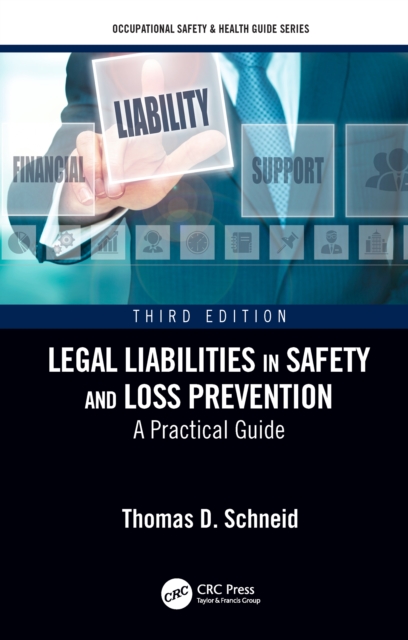
Legal Liabilities in Safety and Loss Prevention
The goal of every safety professional and safety programme is to be proactive and to identify problems while complying within safety guidelines. This book clarifies basic questions about legal liability, how to minimise, prevent, and identify legal risks. Appendices, case studies, and sample forms are included in this resource.
eBook
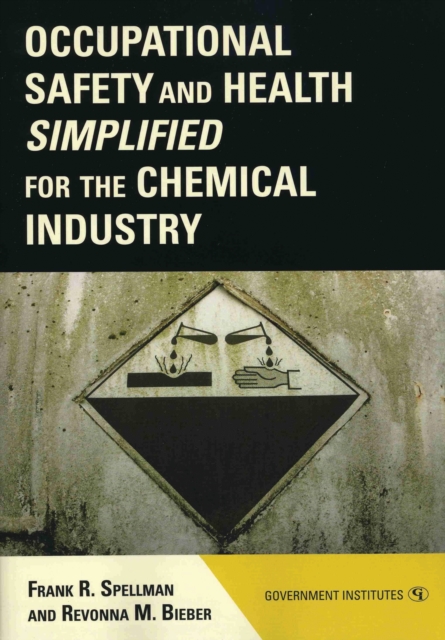
Occupational Safety and Health Simplified for the Chemical Industry
Identifying safety risks inherent to the chemical industry, this new book identifies steps that safety managers can implement in their facilities to minimize the occurrence and severity of accidents. Drawing together in one volume everything employers need to know about applicable OSHA (Occupational Safety and Health Administration) standards, this book provides expert, easy-to-read insight into interpreting OSHA's chemical manufacturing standards, training requirements, and Hazard Communication Standard. Intended as a reference tool for use in the office and on the production floor, this book allows safety managers to quickly understand complicated OSHA requirements. It removes much of the confusion and stress from the compliance process by providing detailed examples of various required documents and processes. For added convenience, the authors include a sample Hazard Communication Program, a comprehensive and easy-to-use sample chemical hygiene plan, a sample chemical safety program, and a sample chemical industry emergency response plan, all of which conform to OSHA standards.
eBook