
Catalogue Search | MBRL


Are you sure you want to remove the book from the shelf?

{{itemTitle}}
99,486
result(s) for
"Industrial sites"
Sort by:


Efficient simultaneous removal of heavy metals and polychlorobiphenyls from a polluted industrial site by washing the soil with natural humic surfactants
We evaluated the effectiveness of natural organic surfactants such as humic acids (HA) from lignite to simultaneously wash heavy metals (HM) and polychlorobiphenyls (PCB) from a heavily contaminated industrial soil of northern Italy. Supramolecular HA promote in solution a micelle-like structure, where recalcitrant apolar organic xenobiotics are repartitioned from surfaces of soil particles during soil washing process. Concomitantly, the HA acidic functional groups enable a simultaneous complexation of HM. A single soil washing with HA removed 68 and 75% of PCB congeners for 1:1 and 10:1 solution/soil ratios, respectively. The same HA washing simultaneously and efficiently removed a cumulative average of 47% of total HM, with a maximum of 57 and 67% for Hg and Cu, respectively. We showed that washing a highly polluted soil with HA solution not only is an effective and rapid soil remediation technique but also simultaneously removes both HM and persistent organic pollutants (POP). Soil washing by humic biosurfactants is also a sustainable and eco-friendly technology, since, contrary to synthetic surfactants and solvents used in conventional washing techniques, it preserves soil biodiversity, promotes natural attenuation of unextracted POP, and accelerates further soil reclamation techniques such as bio- or phytoremediation.
Journal Article

Industrial heritage sites in transformation : clash of discourses
\"The management of industrial heritage sites requires rethinking in the context of urban change, and the issue of how to balance protection, preservation/conservation, and development becomes all the more crucial as industrial heritage sites grow in number. This brings into play new challenges--not only through the known conflicts between monument preservation and contemporary architecture, but also with the increasing demand for economic urban development by reusing the built heritage of former industrial sites. This book explores the conservation and change of industrial heritage sites in transformation, presenting and examining ten European and Asian case studies. The interdisciplinary approach of the book connects a diversity of rationales and discourses, including monument protection, World Heritage conventions, urban regeneration, urban planning and design, architecture, and politics. This is the first book to deepen the understanding of industrial heritage site management as a networked, multi-dimensional task involving diverse social agents and societal discourses. \"-- Provided by publisher.
Book

Applications of analytical hierarchy process (AHP) and analytical network process (ANP) for industrial site selections in Isfahan, Iran
Industrial sites are key factors in urban and regional land use planning. Therefore, determining the location of industrial areas is a critical and complex process for development and success. Industrial site selection aims in identifying the most suitable sites for industry creation, considering a set of influential criteria. Therefore, site selection generally and industrial site selection specifically can be categorised as a multi-criteria decision-making (MCDM) problem that requires detailed evaluation of various dimensions. This study developed a set of clusters containing 10 selection criteria for industrial site selection in Isfahan metropolitan area, Iran. The relationships between the criteria and clusters were modelled and analysed using analytical hierarchy process (AHP) and analytical network process (ANP). AHP and ANP agree in finding distance to water bodies and distance to other industries as the most and least important selection criteria. Four patches have been identified as suitable alternatives for industrial construction. While AHP found Borkhar Patch 1 as the most appropriate alternative, ANP demonstrated the superiority of Ardestan Patch over others. Conducting a sensitivity analysis for the models confirmed both models robustness in industrial site selection decisions.
Journal Article

The rule of logistics : Walmart and the architecture of fulfillment
\"Every time you wheel a shopping cart through one of Walmart's more than 10,000 stores worldwide, or swipe your credit card or purchase something online, you enter a mind-boggling logistical regime. Even if you've never shopped at Walmart, its logistics have probably affected your life.The Rule of Logistics makes sense of its spatial and architectural ramifications by analyzing the stores,distribution centers, databases, and inventory practices of theworld's largest corporation. The Rule of Logistics tells the story of Walmart's buildings in the context of the corporation's entire operation, itself characterized by an obsession with logistics. Beginning with the company's founding in 1962, Jesse LeCavalier reveals how logistics--as a branch of knowledge, an area of work, and a collection of processes--takes shape and changes our built environment. Weaving together archival material with original drawings, LeCavalier shows how a diverse array of ideas, people, and things--military theory and chewing gum, Howard Dean and satellite networks, Hudson River School painters and real estate software, to name a few--are all connected through Walmart's logistical operations and in turn are transforming how its buildings are conceptualized, located, built, and inhabited. A major new contribution to architectural history and theory, The Rule of Logistics helps us understand how retailing today is changing our bodies, brains, buildings, and cities and predicts what future forms architecture might take when shaped by systems that exceed its current capacities\"-- Provided by publisher.
Book
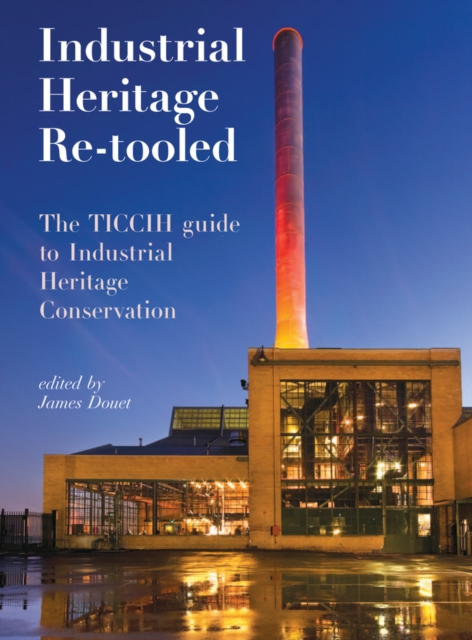
Industrial Heritage Re-tooled
This volume comprises the authoritative work from the International Committee for the Conservation of the Industrial Heritage - the international group dedicated to industrial archaeology and heritage - detailing the latest approaches to the conservation of the global industrial heritage. With contributions from over thirty specialists in archaeology and industrial heritage, Industrial Heritage Re-tooled establishes the first set of comprehensive best practices for the management, conservation, and interpretation of historical industrial sites. This book:-defines the meaning and scope of industrial heritage within an international context;-addresses the identification and conservation of the material remains of industry;-covers subjects as diverse as documentation and recording of industrial heritage, industrial tourism, and the teaching of industrial heritage in museums, schools, and universities.
eBook

Quantitative evaluation of carbon emissions with mining technology development: a case study of an iron mine in China
To quantitatively evaluate the carbon emission effects of various underground mining schemes in metal mines, a carbon emission calculation model specifically for underground metal mines was established. The carbon emissions stemming from the mine’s production process were categorized into three components: carbon emissions from the production of consumed materials, fuel, and electricity; carbon emissions resulting from fuel combustion and explosive explosions, and the reduction of CO
2
absorption due to the occupation of the surface industrial site. Subsequently, the carbon emission impact of underground metal mines was assessed using an example from an iron mine in Anhui Province, China. The results showed: (1) Among the underground mining processes, electricity consumption emerged as the primary source of carbon emissions. This underscores the potential for significant carbon emission reduction through the implementation of innovative electric power technologies in underground metal mines. (2) Mining methods with higher productivity showed clear advantages. They not only contribute to the reduction of carbon emissions per kiloton of ore from multiple perspectives but also led to a shorter mine lifespan and decreased CO
2
absorption by woodlands occupied by the surface industrial site. Furthermore, these methods resulted in lower carbon emissions throughout the mine’s lifespan. (3) Backfill mining proved to be effective in curbing tailings emissions and reducing the required area for a tailings pond. Consequently, this approach minimizes the CO
2
absorption by woodlands occupied by the tailings pond.
Journal Article

‘Archeology’ of Hidden Values of Underutilized Historic Industrial Sites in Context of Urban Regeneration and Nature-Based Solutions
Today, cities and their heritage function under so-called BANI (Brittle, Anxious, Nonlinear, and Incomprehensible) conditions. Climate change, military conflicts, and the urge to comply with sustainability requirements and to implement green transformation and urban regeneration cause a threat to rapid decision making, which may result in the loss of more subtle, intangible values in the urban environment. Such loss may particularly affect industrial heritage with its contested values and identities. This encourages searching for approaches to capture, analyze, and employ these invisible values for future developments. The methods of research used in this study include qualitative analysis of the literature, the theoretical conceptualization and development of a methodology to capture and record these invisible and intangible values, and the application of the developed methodology to the case study of a historical industrial site in Kaunas (Lithuania). The main findings of this research include a theoretical framework for the analysis of hidden values of historic industrial sites revolving around the concepts of place identity, spirit of place, symbolic potential of place, embedded values, and time depth and its application to the case study of the historic industrial site in Kaunas. This research has demonstrated that historic industrial sites existing in urban settings contain a multiplicity of aspects and meanings, which are not visible at first glance and require thorough qualitative analysis. These invisible aspects constitute important resources for the future development of the site and can contribute to the identity and local character of regeneration efforts and nature-based solutions.
Journal Article
Additional disturbances as a beneficial tool for restoration of post-mining sites: a multi-taxa approach
Open interior sands represent a highly threatened habitat in Europe. In recent times, their associated organisms have often found secondary refuges outside their natural habitats, mainly in sand pits. We investigated the effects of different restoration approaches, i.e. spontaneous succession without additional disturbances, spontaneous succession with additional disturbances caused by recreational activities, and forestry reclamation, on the diversity and conservation values of spiders, beetles, flies, bees and wasps, orthopterans and vascular plants in a large sand pit in the Czech Republic, Central Europe. Out of 406 species recorded in total, 112 were classified as open sand specialists and 71 as threatened. The sites restored through spontaneous succession with additional disturbances hosted the largest proportion of open sand specialists and threatened species. The forestry reclamations, in contrast, hosted few such species. The sites with spontaneous succession without disturbances represent a transition between these two approaches. While restoration through spontaneous succession favours biodiversity in contrast to forestry reclamation, additional disturbances are necessary to maintain early successional habitats essential for threatened species and open sand specialists. Therefore, recreational activities seem to be an economically efficient restoration tool that will also benefit biodiversity in sand pits.
Journal Article

Contamination Analysis of an Old Croatian Industrial Site and Proposals for Its Planned Remediation and Repurposing
The location of the decommissioned factory of plastics and chemical products Jugovinil, City of Kaštela, Croatia, has gained significant attention for urban development and the establishment of tourist facilities over the past three decades. Since the site is on the coast of the Adriatic Sea, on the shore of Kaštela Bay, where nautical tourism is already developed, plans for a five-star tourism complex were initiated. Given that the former industrial plant, its coal-powered power plant, and other later industrial activities (small shipyards) caused a certain degree of contamination with NORM (naturally occurring radioactive material) residues and heavy metals, an on-site detailed investigation was conducted into the spatial distribution and concentration evaluation of contaminants within dozens of soil samples, and the distributions of contaminants in the area of interest were shown in the form of maps. This study applies an integrated GIS and geostatistical framework to analyze the spatial distribution of multiple contaminants. Maps highlighting polluted zones are included, along with maps indicating areas with higher cumulative concentrations of contaminants. This paper provides an overview of potential issues related to the detected contaminants, as well as proposals for remediation methods before repurposing the site using retrospective data about sources of residues and contaminants.
Journal Article