
Catalogue Search | MBRL


Are you sure you want to remove the book from the shelf?

{{itemTitle}}
61,476
result(s) for
"Industries Forecasting"
Sort by:


Forecasting for the Pharmaceutical Industry
In virtually every decision, a pharmaceutical executive considers some type of forecast.
eBook


Advancing the Competitiveness and Efficiency of the U.S. Construction Industry
Construction productivity-how well, how quickly, and at what cost buildings and infrastructure can be constructed-directly affects prices for homes and consumer goods and the robustness of the national economy. Industry analysts differ on whether construction industry productivity is improving or declining. Still, advances in available and emerging technologies offer significant opportunities to improve construction efficiency substantially in the 21st century and to help meet other national challenges, such as environmental sustainability.
Advancing the Competitiveness and Efficiency of the U.S. Construction Industry identifies five interrelated activities that could significantly improve the quality, timeliness, cost-effectiveness, and sustainability of construction projects.
These activities include widespread deployment and use of interoperable technology applications; improved job-site efficiency through more effective interfacing of people, processes, materials, equipment, and information; greater use of prefabrication, preassembly, modularization, and off-site fabrication techniques and processes; innovative, widespread use of demonstration installations; and effective performance measurement to drive efficiency and support innovation. The book recommends that the National Institute of Standards and Technology work with industry leaders to develop a collaborative strategy to fully implement and deploy the five activities
eBook
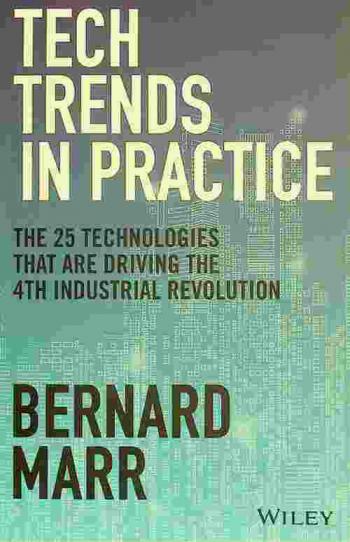
Tech trends in practice : the 25 technologies that are driving the 4th industrial revolution
\"Technology Trends in Practice features real world existing and upcoming technology trends, and explains how these can be successfully integrated into businesses for business growth & success. Best-selling author and renowned futurist Bernard Marr reveals how technology continues to provide innovative solutions to businesses of all sizes, sectors and industries. This engaging and topical book explores a wide range of technology trends and the companies at the forefront of new and emerging technologies. In this book, you will explore: Artificial intelligence (Machine and deep learning) 3D printing & additive manufacturing Genomics and gene editing Extended reality (augmented, virtual and mixed)\"-- Provided by publisher.
Book

Hubbert’s peak
In 2001, Kenneth Deffeyes made a grim prediction: world oil production would reach a peak within the next decade--and there was nothing anyone could do to stop it. Deffeyes's claim echoed the work of geophysicist M. King Hubbert, who in 1956 predicted that U.S. oil production would reach its highest level in the early 1970s. Though roundly criticized by oil experts and economists, Hubbert's prediction came true in 1970.
In this updated edition ofHubbert's Peak, Deffeyes explains the crisis that few now deny we are headed toward. Using geology and economics, he shows how everything from the rising price of groceries to the subprime mortgage crisis has been exacerbated by the shrinking supply--and growing price--of oil. Although there is no easy solution to these problems, Deffeyes argues that the first step is understanding the trouble that we are in.
eBook

The Future of the Chemical Industry By 2050
Discussing the technological supremacy of the chemical industry, including pharmaceuticals, and how it will adopt a leading position to solve some of the largest global challenges humans have even seen, this book details how the industry will address climate change, aging populations, resource scarcity, globality, networks speed, pandemics, and.
eBook


The Global Forest Sector
This book covers a wide array of topics that have relevance to the global forest products. This managerial view, based on up-to-date scientific research, is a very important tool for forming the \"big picture\" of the current and future state of the global forest industry. This is the first book of its kind written by a global network of leaders in the field of forest products, marketing, and business development in the forest products sector in academia and industry.
eBook