
Catalogue Search | MBRL


Are you sure you want to remove the book from the shelf?

{{itemTitle}}
1,165
result(s) for
"Inertial confinement fusion"
Sort by:
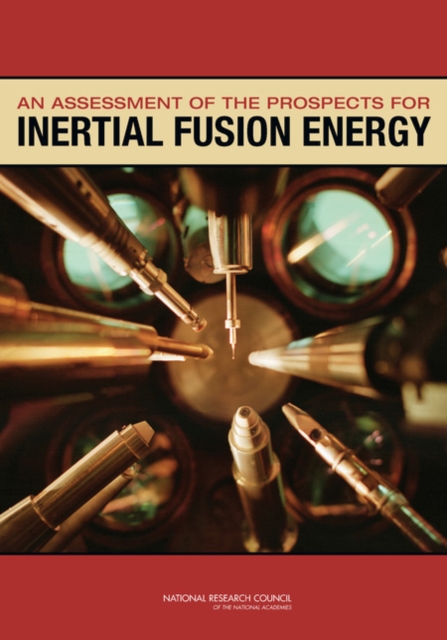
An Assessment of the Prospects for Inertial Fusion Energy
The potential for using fusion energy to produce commercial electric power was first explored in the 1950s. Harnessing fusion energy offers the prospect of a nearly carbon-free energy source with a virtually unlimited supply of fuel. Unlike nuclear fission plants, appropriately designed fusion power plants would not produce the large amounts of high-level nuclear waste that requires long-term disposal. Due to these prospects, many nations have initiated research and development (R&D) programs aimed at developing fusion as an energy source. Two R&D approaches are being explored: magnetic fusion energy (MFE) and inertial fusion energy (IFE).
An Assessment of the Prospects for Inertial Fusion Energy describes and assesses the current status of IFE research in the United States; compares the various technical approaches to IFE; and identifies the scientific and engineering challenges associated with developing inertial confinement fusion (ICF) in particular as an energy source. It also provides guidance on an R&D roadmap at the conceptual level for a national program focusing on the design and construction of an inertial fusion energy demonstration plant.
eBook

A two-layer single shell magnetized target for lessening the Nernst effect
Fuel magnetization significantly lowers the required radial convergence, enabling cylindrical implosions to become a promising approach for inertial confinement fusion. The Nernst effect on the two-layer single shell magnetized target design applied to a Z-pinch benefits from a gold layer that decreases fuel demagnetization and serves as a magnetothermal insulation layer, preventing magnetothermal losses. The resistive diffusion and Nernst advection of the magnetic field are considered in the radiation magnetohydrodynamic model, which alter the evolution of magnetic flux in the magnetized target and result in plasma demagnetization. The results demonstrate that targets with a wide range of parameters can achieve ignition conditions under a 30 MA driven current. A two-layer single shell magnetized target for lessening the Nernst effect has the potential to achieve ignition conditions. The fusion yield of the optimal target increases by 168% from 0.71 MJ to 1.90 MJ, compared to a one-layer single shell target.
Journal Article
Interim Report-Status of the Study \An Assessment of the Prospects for Inertial Fusion Energy\
The scientific and technological progress in inertial confinement fusion has been substantial during the past decade. However, many of the technologies needed for an integrated inertial fusion energy system are still at an early stage of technological maturity. For all approaches to inertial fusion energy there remain critical scientific and engineering challenges.
In this interim report of the study An Assessment of the Prospects for Inertial Fusion Energy, the Committee on the Prospects for Inertial Confinement Fusion Energy Systems outlines their preliminary conclusions and recommendations of the feasibility of inertial fusion energy. The committee also describes its anticipated next steps as it prepares its final report.
eBook

New scheme for inertial confinement fusion laser drivers based on a spatiotemporal partially coherent multi-mode source and its prospects
The traditional design of laser drivers for inertial confinement fusion (ICF) is highly dependent on coherent laser light fields, which have significant advantages in achieving harmonic conversion and enhancing amplification efficiency. However, they also bring the core challenge of achieving uniform irradiation. This paper investigates the dynamic evolution process of uniform irradiation of multi-mode spatiotemporal light fields and analyzes the influence mechanism of spatiotemporal coherence on irradiation uniformity with different integration times. By balancing the relationship between the spatiotemporal coherence of the light field and uniform irradiation, we explore a possible scheme to alleviate the beam smoothing problem while satisfying the basic requirements of laser amplification and high-efficiency harmonic conversion. Based on this scheme, the overall architecture of the ICF laser driver is constructed.
Journal Article
Ultrafast characterization of plasma critical surface evolution in inertial confinement fusion experiments with chirped laser pulses
Laser-driven inertial confinement fusion (ICF) diagnostics play a crucial role in understanding the complex physical processes governing ICF and enabling ignition. During the ICF process, the interaction between the high-power laser and ablation material leads to the formation of a plasma critical surface, which reflects a significant portion of the driving laser, reducing the efficiency of laser energy conversion into implosive kinetic energy. Effective diagnostic methods for the critical surface remain elusive. In this work, we propose a novel optical diagnostic approach to investigate the plasma critical surface. This method has been experimentally validated, providing new insights into the critical surface morphology and dynamics. This advancement represents a significant step forward in ICF diagnostic capabilities, with the potential to inform strategies for enhancing the uniformity of the driving laser and target surface, ultimately improving the efficiency of converting laser energy into implosion kinetic energy and enabling ignition.
Journal Article

Estimation of the FST-Layering Time for Shock Ignition ICF Targets
The challenge in the field of inertial confinement fusion (ICF) research is related to the study of alternative schemes for fuel ignition on laser systems of medium and megajoule scales. At the moment, it is considered promising to use the method of shock ignition of fuel in a pre-compressed cryogenic target using a focused shock wave (shock- or self-ignition (SI) mode). To confirm the applicability of this scheme to ICF, it is necessary to develop technologies for mass-fabrication of the corresponding targets with a spherically symmetric cryogenic layer (hereinafter referred to as SI-targets). These targets have a low initial aspect ratio Acl (Acl = 3 and Acl = 5) because they are expected to be more hydrodynamically stable during implosion. The paper discusses the preparation of SI-targets for laser experiments using the free-standing target (FST) layering method developed at the Lebedev Physical Institute (LPI). It is shown that, based on FST, it is possible to build a prototype layering module for in-line production of free-standing SI-targets, and the layering time, τform, does not exceed 30 s both for deuterium and deuterium-tritium fuel. Very short values of τform make it possible to obtain layers with a stable isotropic fuel structure to meet the requirements of implosion physics.
Journal Article

Double-cone ignition scheme for inertial confinement fusion
While major progress has been made in the research of inertial confinement fusion, significant challenges remain in the pursuit of ignition. To tackle the challenges, we propose a double-cone ignition (DCI) scheme, in which two head-on gold cones are used to confine deuterium–tritium (DT) shells imploded by high-power laser pulses. The scheme is composed of four progressive controllable processes: quasi-isentropic compression, acceleration, head-on collision and fast heating of the compressed fuel. The quasi-isentropic compression is performed inside two head-on cones. At the later stage of the compression, the DT shells in the cones are accelerated to forward velocities of hundreds of km s –1 . The head-on collision of the compressed and accelerated fuels from the cone tips transfer the forward kinetic energy to the thermal energy of the colliding fuel with an increased density. The preheated high-density fuel can keep its status for a period of approximately 200 ps. Within this period, MeV electrons generated by ps heating laser pulses, guided by a ns laser-produced strong magnetic field further heat the fuel efficiently. Our simulations show that the implosion inside the head-on cones can greatly mitigate the energy requirement for compression; the collision can preheat the compressed fuel of approximately 300 g cm −3 to a temperature above keV. The fuel can then reach an ignition temperature of greater than 5 keV with magnetically assisted heating of MeV electrons generated by the heating laser pulses. Experimental campaigns to demonstrate the scheme have already begun. This article is part of a discussion meeting issue ‘Prospects for high gain inertial fusion energy (part 1)’.
Journal Article
Petawatt and exawatt class lasers worldwide
In the 2015 review paper ‘Petawatt Class Lasers Worldwide’ a comprehensive overview of the current status of high-power facilities of${>}200~\\text{TW}$was presented. This was largely based on facility specifications, with some description of their uses, for instance in fundamental ultra-high-intensity interactions, secondary source generation, and inertial confinement fusion (ICF). With the 2018 Nobel Prize in Physics being awarded to Professors Donna Strickland and Gerard Mourou for the development of the technique of chirped pulse amplification (CPA), which made these lasers possible, we celebrate by providing a comprehensive update of the current status of ultra-high-power lasers and demonstrate how the technology has developed. We are now in the era of multi-petawatt facilities coming online, with 100 PW lasers being proposed and even under construction. In addition to this there is a pull towards development of industrial and multi-disciplinary applications, which demands much higher repetition rates, delivering high-average powers with higher efficiencies and the use of alternative wavelengths: mid-IR facilities. So apart from a comprehensive update of the current global status, we want to look at what technologies are to be deployed to get to these new regimes, and some of the critical issues facing their development.
Journal Article

Inertial-confinement fusion with lasers
The quest for controlled fusion energy has been ongoing for over a half century. The demonstration of ignition and energy gain from thermonuclear fuels in the laboratory has been a major goal of fusion research for decades. Thermonuclear ignition is widely considered a milestone in the development of fusion energy, as well as a major scientific achievement with important applications in national security and basic sciences. The US is arguably the world leader in the inertial confinement approach to fusion and has invested in large facilities to pursue it, with the objective of establishing the science related to the safety and reliability of the stockpile of nuclear weapons. Although significant progress has been made in recent years, major challenges still remain in the quest for thermonuclear ignition via laser fusion. Here, we review the current state of the art in inertial confinement fusion research and describe the underlying physical principles.
The quest for energy production from controlled nuclear fusion reactions has been ongoing for many decades. Here, the inertial confinement fusion approach, based on heating and compressing a fuel pellet with intense lasers, is reviewed.
Journal Article