
Catalogue Search | MBRL


Are you sure you want to remove the book from the shelf?

{{itemTitle}}
71
result(s) for
"Infanticide Fiction."
Sort by:

The angel makers
\"In Victorian England, clairvoyant flower seller Constance Piper goes searching for the truth behind a new rash of murders in London's East End. With the aid of Detective Constable Hawkins, Constance links the mysterious death of a young prostitute to Mother Delaney's vile trade as a baby farmer\"-- Provided by publisher.
Book

Two tales of one city: data, inference and Carthaginian infant sacrifice
Recent issues of Antiquity have seen much discussion on the topic of Carthaginian infant sacrifice: was it a Graeco-Roman fiction or did it really happen? There are strongly held opinions on both sides of the argument, with much resting on the age profile of the children interred at the cemetery known as the Carthage Tophet. Here, the authors respond to claims by Smith et al. (2011, 2013) that their ageing of the infants and children was incorrect, and so also by extension was their interpretation that not all interments at the Tophet were the result of sacrifice.
Journal Article

A small madness
Rose didn't tell anyone about it. She wondered if it showed. She looked at herself in the mirror and turned this way and then that way. She stood as close to the mirror as she could, leaning over the bathroom basin, looking into her own eyes until they disappeared behind the fog of her breath. Looking for something. Some evidence that she was different now. Something had shifted inside her, a gear being ratcheted over a clunky cog, gaining torque, starting her up. But it didn't show. How could all of these feelings not show? She was a woman now but it didn't show and she couldn't tell anyone.
Book

Friendly Ghosts, Horrifying Reality: Female Infanticide in Ranjit Lal's Faces in the Water
Despite horror being often deemed inappropriate for children, it can be an important genre in portraying the terrors of the real world to young readers. Horror, Jessica McCort argues, \"offers young readers...a dreamscape that parallels their reality, sometimes making it easier to cope with the monsters they must face in the real world\" (22). Within children's literature, horror allows young readers to face and experience the negative elements of reality through the grotesque in an entertaining fashion. An example of this is Ranjit Lal's Faces in the Water, an Indian children's novel addressing female infanticide through protagonist Gurmi's encounter with the ghosts of his sisters who were killed at birth. The ghosts can be seen as a reference to the 1994 introduction of an Indian government program, the \"Pre-Conception and Pre-Natal Diagnostic Techniques Act, which made it illegal to determine the sex of a foetus unless it was necessary for urgent medical reasons\" (Vaze). Despite this act, female infanticide and feticide remain a serious concern in Indian society. Comparing India's male/female ratio to the worldwide natural ratio, around sixty million women are assumed missing in India (Hundal). Allie Dichiara informs us that, in India, \"[t]he concept of daughters as 'more expensive' has been normalised throughout history.\" Lal's novel addresses this issue directly when Surinder Aunty tells Gurmi that girls \"are quite useless and then you have to get them married and all that nakhra and expense... And who will look after us when we're old? Our fine, sturdy sons of course!\" (88). The Diwanchands, Gurmi's family, commit female infanticide for economical reasons. Through the Diwanchands, Lal shows that when feticide becomes unavailable, this leads to female infanticide, signaling that the issue of child murder due to sex bias remains an issue in India despite the 1994 act.
Journal Article
Writing Fiction through the Camera Lens: Toni Morrison’s Intermedial Poetics
This paper analyzes the intermedial discourse in Morrison’s novel Beloved. It brings to the fore the cinematic tropes with which Morrison’s “politics of affect”, to borrow from Massumi’s syntagm, is interwoven. Drawing on Müller’s concept of intermediality which shows the appropriations of art forms, this paper decodes Morrison’s intermedial poetics. To engage with the trauma of history and the “Archive Fever,” Morrison resorts to a visual medium, cinema, to weave a hybrid literary discourse that lies at the heart of the postcritical turn in cultural, literary and media studies. Filmic techniques such as “show, don’t tell,” “freeze framing,” “close up,” “dissolve,” “off-stage” permeate Morrison’s text. In Beloved, the infanticide is related through an “off-stage” strategy. Drawing on all these cinematic strategies, Morrison intertwines images, sounds, and words to relate the affective experience of the Sweet Home dwellers. For example, the strategy of one way communication of the cinematic language which leads to a closed communication enables Morrison to frame the marginality of her community.
Journal Article

The Body Economic
The Body Economic revises the intellectual history of nineteenth-century Britain by demonstrating that political economists and the writers who often presented themselves as their literary antagonists actually held most of their basic social assumptions in common. Catherine Gallagher demonstrates that political economists and their Romantic and early-Victorian critics jointly relocated the idea of value from the realm of transcendent spirituality to that of organic \"life,\" making human sensations--especially pleasure and pain--the sources and signs of that value. Classical political economy, this book shows, was not a mechanical ideology but a form of nineteenth-century organicism, which put the body and its feelings at the center of its theories, and neoclassical economics built itself even more self-consciously on physiological premises. The Body Economic explains how these shared views of life, death, and sensation helped shape and were modified by the two most important Victorian novelists: Charles Dickens and George Eliot. It reveals how political economists interacted crucially with the life sciences of the nineteenth century--especially with psychophysiology and anthropology--producing the intellectual world that nurtured not only George Eliot's realism but also turn-of-the-century literary modernism.
eBook
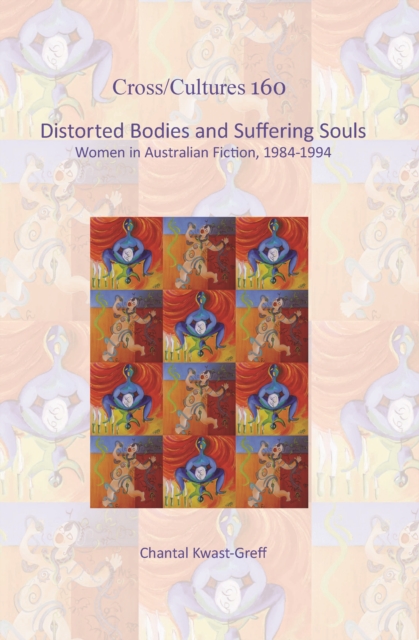
Distorted Bodies and Suffering Souls
Chaos. Pain. Self-mutilation. Women starve themselves. They burn or slash their own flesh or their babies' throats, and slam their newborns against walls. Their bodies are the canvases on which the suffering of the soul carves itself with knife and razor. In Australian fiction written by women between 1984 and 1994, female characters inscribe their inner chaos on their bodies to exert whatever power they have over themselves. Their self-inflicted pain is both reaction and language, the bodily sign not only of their enfeeblement but also to a certain extent of their empowerment, of themselves and their world. The texts considered in this book - chiefly by Margaret Coombs, Kate Grenville, Fiona Place, Penelope Rowe, Leone Sperling, and Amy Witting - function as both defiance and acceptance of prevailing discourses of femininity and patriarchy, between submission and a possible future. The narratives of anorexia, bulimia, fatness, self-mutilation, incest, and murder shock the reader into an understanding of deeper meanings of body and soul, and prompt a tentative interpretation of fiction in relation to the world of 'real' women and men in contemporary (white) Australia. This is affective literature with the reader in voyeuristic complicity. Holding up the mirror of fiction, the women writers act perforce as a social lever, their narratives as Bildungsromane. But there is a risk, that of reinforcing stereotypes and codes of conduct which, supposedly long gone, still represent women as victims. Why are the female characters (self-)destroyers and victims? Why are they not heroes, saviours or conquerors? If women read about women / themselves and feel pity for the Other they read about, they will also feel pity for themselves: there is little happiness in being a woman. But infanticide and distorting the body are problem-solving behaviours. In truth,
the bodies of the female characters bear the marks and scars of the history of their mothers and the history of their grandmothers - indeed, that of their own: the history of survivors.
eBook
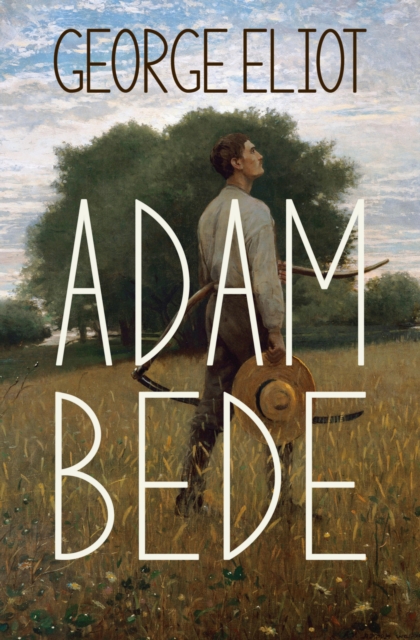
Adam Bede
George Eliot's debut novel tells a story of love in rural eighteenth-century England.
Adam Bede is an upstanding, hardworking, intelligent young man, the kind of person who knows what he wants—and what he wants is the incredibly shallow Hetty Sorrel. Though Hetty is a milkmaid, she harbors dreams of becoming a dignified member of the upper class. To that end, she has set her sights on Captain Arthur Donnithorne, a squire and heir to much of the town's wealth. Meanwhile, Dinah Morris, Hetty's compassionate cousin, harbors irrepressible romantic feelings for Adam.
This love rectangle forms the character basis for one of the greatest English novels of all time. Upon its release in 1859, Adam Bede was immediately lauded as a seminal work for its depiction of English country life at the turn of the nineteenth century, garnering the praise of Charles Dickens. Eliot's deft mixing of the fictional with the real has made Adam Bede a timeless classic.
This ebook has been professionally proofread to ensure accuracy and readability on all devices.
eBook

Ioláni; or, Tahíti as It Was
Written 150 years ago, never published, and presumed lost for nearly a century, Wilkie Collins's earliest novel now appears in print for the first time. Ioláni is a sensational romance--a tale of terror and suspense, bravery and betrayal, set against the lush backdrop of Tahiti. The book's complicated history is worthy of a writer famous for intricate plots hinging on long-kept secrets. Collins wrote the book as a young man in the early 1840s, twenty years beforeThe MoonstoneandThe Woman in Whitemade his name among Victorian novelists. He failed to find a publisher for the work, shelved the manuscript for years, and eventually gave it to an acquaintance. It disappeared into the hands of private collectors and remained there--acquiring mythical status as a lost novel--from the turn of the century until its sudden appearance on the rare book market in New York in 1991. This first edition appears with the permission of the new owners, who keep the mystery alive by remaining anonymous.
The novel is set in Tahiti prior to European contact. It tells the story of the diabolical high priest, Ioláni , and the heroic young woman, Idüa, who bears his child. Determined to defy the Tahitian custom of killing firstborn children, Idüa and her friend Aimáta flee with the baby and take refuge among Ioláni's enemies. The vengeful priest pursues them, setting into motion a plot that features civil war, sorcery, sacrificial rites, wild madmen, treachery, and love. Collins explores themes that he would return to again and again in his career: oppression by sinister, patriarchal figures; the bravery of forceful, unorthodox women; the psychology of the criminal mind; the hypocrisy of moralists; and Victorian ideas of the exotic. As Ira Nadel shows in his introduction, the novel casts new light on Collins's development as a writer and on the creation of his later masterpieces. A sample page from the manuscript appears as the frontispiece to this edition. The publication of Ioláni is a major literary event: a century and half late, Wilkie Collins makes his literary debut.
Originally published in 1999.
ThePrinceton Legacy Libraryuses the latest print-on-demand technology to again make available previously out-of-print books from the distinguished backlist of Princeton University Press. These paperback editions preserve the original texts of these important books while presenting them in durable paperback editions. The goal of the Princeton Legacy Library is to vastly increase access to the rich scholarly heritage found in the thousands of books published by Princeton University Press since its founding in 1905.
eBook

MEDIATING INFANTICIDE: Theorizing Relations between Narrative and Violence
Much anthropological research on narrative and violence treats their relationship as immanent and performative, an assumption shared by many media, legal, medical, and other professionals and lay persons. This view is predicated on constructing the production, circulation, and reception of knowledge about violence in particular ways. In this article, I examine newspaper accounts of infanticide in Venezuela, along with interviews with reporters, detectives and legal professionals and focus groups. This analysis suggests that these articles, which receive widespread attention, become stories about stories-specifically narratives that recount how the story of the crime unfolded naturally and automatically from material and corporeal evidence, and the words of relatives, neighbors, doctors, detectives, defendants, and the vox populi. These constructions of discourse about violence create a very limited range of subject positions, generate standardized scripts for persons interpellated in each slot, and make it difficult to advance counternarratives, thereby inscribing the legitimacy of state institutions during a period (the 1990s) when the nation-state project seemed to be collapsing.
Journal Article