
Catalogue Search | MBRL


Are you sure you want to remove the book from the shelf?

{{itemTitle}}
46,429
result(s) for
"Information Technology - standards"
Sort by:


ITIL® 4 Foundation Revision Guide
ITIL® 4 has evolved from the previous, ITIL v3, version by re-shaping much of the established ITSM practices in the wider context of customer experience, value streams and digital transformation, as well as embracing new ways of working such as Lean, Agile, and DevOps.
eBook

An Assessment of the National Institute of Standards and Technology Information Technology Laboratory
The report on the ITL presents a general assessment of the laboratory including a look at its research strategies, opportunities, planning for growth, research culture, and computing infrastructure; and provides assessments of the laboratory's six divisions. The report notes that the work of the ITL generally ranks at or near the top of the work being done by peer institutions.
eBook

Open standards and the digital age : history, ideology, and networks
\"How did the idea of openness become the defining principle for the twenty-first-century Information Age? This book answers this question by looking at the history of information networks and paying close attention to the politics of standardization. For much of the twentieth century, information networks such as the monopoly Bell System and the American military's Arpanet were closed systems subject to centralized control. In the 1970s and 1980s, however, engineers in the United States and Europe experimented with design strategies and coordination mechanisms to create new digital networks. In the process, they embraced discourses of \"openness\" to describe their ideological commitments to entrepreneurship, technological innovation, and participatory democracy. The rhetoric of openness has flourished - for example, in movements for open government, open-source software, and open-access publishing - but such rhetoric also obscures the ways the Internet and other \"open\" systems still depend heavily on hierarchical forms of control\"-- Provided by publisher.
Book
An Assessment of the National Institute of Standards and Technology Information Technology Laboratory
Since 1959, the National Research Council (NRC), at the request of the National Institute of Standards and Technology (NIST), has annually assembled panels of experts to assess the quality and effectiveness of the NIST measurements and standards laboratories. In 2011, the NRC evaluated three of the six NIST laboratories: the Center for Nanoscale Science and Technology (CNST), the NIST Center for Neutron Research (NCNR) and the Information Technology Laboratory (ITL). Each of these was addressed individually by a separate panel of experts; this report assesses ITL.
eBook

Effective cybersecurity : understanding and using standards and best practices
\"In Effective Cybersecurity, William Stallings introduces the technology, operational procedures, and management practices needed for successful cybersecurity. Stallings makes extensive use of standards and best practices documents that are often used to guide or mandate cybersecurity implementation. Going beyond these, he offers in-depth tutorials on the 'how' of implementation, integrated into a unified framework and realistic plan of action. Effective Cybersecurity aligns with the comprehensive Information Security Forum document 'The Standard of Good Practice for Information Security,' extending ISF's work with extensive insights from ISO, NIST, COBIT, other official standards and guidelines, and modern professional, academic, and industry literature. This knowledge is indispensable to every cybersecurity professional. Stallings presents it systematically and coherently, making it practical and actionable\"--Back cover.
Book

Trust levels within categories of information and communication technology companies
The arguable claims of levels of trust in politics and business situations motivated this study, which investigates the degree of trust within micro, small, and medium categories of Hungarian Information and Communication Technology (ICT) companies. Different sizes of companies have varying interactions between internal members and their business partners. This study concentrated on exploring Hungarian ICT companies due to their significant role in supporting Industry 4.0. The study population are active Hungarian ICT companies. This research implemented random cluster selection related to the location of ICT firms. It exploited 100 samples, including micro, small, and medium-sized companies, and implemented discriminant analysis to examine the description and hypotheses. First, this study found that the level of trust in institutions within micro, small, and medium-sized companies varies significantly. The level of trust in institutions proliferates within corporations due to the capability of the formal institution to provide fair public services. This research additionally underlined that the performance of the Hungarian government would improve trust amongst the companies. Second, this study concluded that the level of interpersonal trust within three categories of companies was similar. A high level of interpersonal trust would expand internal engagement among the members of companies. Finally, the level of trust in business partners varied significantly within the distinct sizes of Hungarian ICT companies. A high level of trust in corporate associates improves business collaboration, reduces uncertainty, and supports long-term business connections. Levels of institutional trust and inter-organizational trust differed amongst different categories of companies. However, the level of interpersonal trust remained similar within companies of the various sizes.
Journal Article
Challenges and practices identification in complex outsourcing relationships: A systematic literature review
Complex IT outsourcing relationships aptitude several benefits such as increased cost likelihood and lowered costs, higher scalability and flexibility upon demand. However, by virtue of its complexity, the complex outsourcing typically necessitates the interactions among various stakeholders from diverse regions and cultures, making it significantly more challenging to manage than traditional outsourcing. Furthermore, when compared to other types of outsourcing, complex outsourcing is extremely difficult because it necessitates a variety of control and coordination mechanisms for project management, which proportionally increases the risk of project failure. In order to overcome the failure of projects in complex outsourcing relationships, there is a need of robust systematic research to identify the key challenges and practices in this area. Therefore, this research implements systematic literature review as a research method and works as a pioneer attempt to accomplish the aforementioned objectives. Upon furnishing the SLR results, the authors identified 11 major challenges with 67 practices in hand from a total of 85 papers. Based on these findings, the authors intend to construct a comprehensive framework in the future by incorporating robust methodologies such as AHP and fuzzy logic, among others.
Journal Article
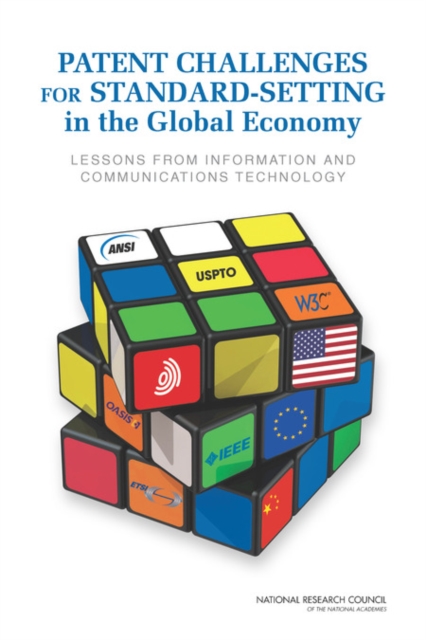
Patent Challenges for Standard-Setting in the Global Economy
Patent Challenges for Standard-Setting in the Global Economy: Lessons from Information and Communication Technology examines how leading national and multinational standard-setting organizations (SSOs) address patent disclosures, licensing terms, transfers of patent ownership, and other issues that arise in connection with developing technical standards for consumer and other microelectronic products, associated software and components, and communications networks including the Internet. Attempting to balance the interests of patent holders, other participants in standard-setting, standards implementers, and consumers, the report calls on SSOs to develop more explicit policies to avoid patent holdup and royalty-stacking, ensure that licensing commitments carry over to new owners of the patents incorporated in standards, and limit injunctions for infringement of patents with those licensing commitments. The report recommends government measures to increase the transparency of patent ownership and use of standards information to improve patent quality and to reduce conflicts of laws across countries.
eBook