
Catalogue Search | MBRL


Are you sure you want to remove the book from the shelf?

{{itemTitle}}
5,527
result(s) for
"Information display systems."
Sort by:

Screen genealogies : from optical device to environmental medium
Against the grain of the growing literature on screens, 'Screen Genealogies' argues that the present excess of screens cannot be understood as an expansion and multiplication of the movie screen, nor of the video display. Rather, screens continually exceed the optical histories in which they are most commonly inscribed. As contemporary screens become increasingly decomposed into a distributed field of technologically interconnected surfaces and interfaces, we more readily recognize the deeper spatial and environmental interventions that have long been a property of screens. For most of its history, a screen was a filter, a divide, a shelter, or a camouflage. An intermedial genealogy stressing transformation and descent rather than origins and roots emphasizes that the understanding of the screen as optical surface was but one instance in a larger set of intersecting and competing definitions.
Book
Mobile Screens
Nanna Verhoeff’s new book is a must for anybody interested in visual culture and media theory. It offers a rich and stimulating theoretical account of the central dimension of our contemporary existence – interfacing and navigating both data and physical world through a variety of screens (game consoles, mobile phones, car interfaces, GPS devices, etc.) In the process of exploring these new screen practices, Verhoeff offers fresh perspectives on many of the key questions in media and new media studies as well as a number of new original theoretical concepts. As the first theoretical manual for the society of mobile screens, this book will become an essential reference for all future investigations of our mobile screen condition. – Lev Manovich
Deze studie geeft een terugblik op vormen van schermmedia; van het negentiende-eeuwse panorama en het begin van de film, via snelwegpanorama's, schermen op straat, naar touchscreen-kunstinstallaties, draagbare spelcomputers en smartphones van vandaag de dag. Hoe kunnen we deze nieuwe technologieen bestuderen, in het licht van de voorgangers die ze hebben? Mobile Screens biedt een methodologisch voorstel van aanpak. Met een historisch-vergelijkend, theoretisch perspectief worden de intersecties tussen mobiliteit en visualiteit uitgewerkt aan de hand van een reeks case studies. Het boek vertelt ons hoe we omgaan met schermen en hoe deze als interfaces ruimtelijke, temporele en haptische ervaringen mogelijk maken: principes van navigatie vormen een visueel 'format' dat ons denken stuurt. Hoe sturen principes van navigatie onze ervaringen met hedendaagse schermmedia?
eBook

Tableau for dummies
\"Tableau For Dummies brings order to the chaotic world of data. Understanding your data and organizing it into formats and visualizations that make sense to you are crucial to making a real impact on your business with the information that's already at your fingertips. This easy-to-use reference explores the user interface, and guides you through the process of connecting your data sources to the software. Additionally, this approachable, yet comprehensive text shows you how to use graphs, charts, and other images to bring visual interest to your data, how to create dashboards from multiple data sources, and how to export the visualizations that you have developed into multiple formats that translate into positive change for your business.\"--provided by Amazon.com.
Book
Organic Light-Emitting Transistors
Provides an overview of the developments and applications of Organic Light Emitting Transistors (OLETs) science and technology This book discusses the scientific fundamentals and key technological features of Organic Light Emitting Transistors (OLETs) by putting them in the context of organic electronics and photonics.
eBook

The craft of information visualization : readings and reflections
Since the beginning of the computer age, researchers from many disciplines have sought to facilitate people's use of computers and to provide ways for scientists to make sense of the immense quantities of data coming out of them.
eBook
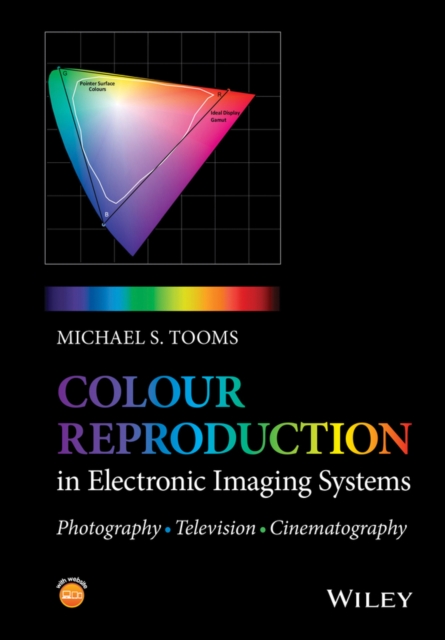
Colour Reproduction in Electronic Imaging Systems
With the move of cinema away from film, the adoption of electronic-based production throughout all media is now complete. In order to exploit its advantages, the accurate definition, measurement and reproduction of colour has become more important than ever to achieve the best fidelity of colour reproduction. This book is concerned with providing readers with all they need to know about colour: how it is perceived and described, how it is measured and generated and how it is reproduced in colour systems. It serves as both a tutorial and a reference book, defining what we mean by colour and providing an explanation of the proper derivation of chromaticity charts and through to the means of ensuring accurate colour management. Key Features: * Addresses important theory and common misconceptions in colour science and reproduction, from the perception and characteristics of colour to the practicalities of its rendering in the fields of television, photography and cinematography * Offers a clear treatment of the CIE chromaticity charts and their related calculations, supporting discussion on system primaries, their colour gamuts and the derivation of their contingent red, green and blue camera spectral sensitivities * Reviews the next state-of-the-art developments in colour reproduction beyond current solutions, from Ultra-High Definition Television for the 2020s to laser projectors with unprecedented colour range for the digital cinema * Includes a companion website hosting a workbook consisting of invaluable macro-enabled data worksheets; JPEG files containing images referred to in the book, including colour bars and grey scale charts to establish perceived contrast range under different environmental conditions; and, guides to both the workbook and JPEG files
eBook

The Art and Technique of Digital Color Correction
How to\" books are a dime a dozen. What makes this book special is that it is also a \"Why\" book. Hullfish sits down with world-class colorists and records not only what they do but why they do it. That's where the magic lies.
\"How\" is the question to ask if you want to become a craftsman. \"Why\" is the question that creates artists. I bought the first edition for \"How\" and came away with a lot of \"Why.\" This edition has lots more of both, with material from several additional world class colorists.
If you want an inside look into the art and craft of the professional colorist there's no better way to do it in book form. Whether you're learning to be a colorist or just want to understand what really happens when you decide something can be \"fixed in post,\" you need to read this book. -Art Adams, cinematographer/educator, ProVideoCoalition.com. This book just keeps getting better with each new edition. Steve Hullfish's approach is designed to teach techniques that transfer to a wide range of popular and accessible color correction tools. The intent is to demystify the process, so readers can learn the concepts and apply them, regardless of whether the software has sliders, wheels or curves. Best of all, Hullfish features extensive tips and tricks from some of the premier colorists in the country, so you can learn from the masters. If you only purchase one book on color correction, this is the essential guide to include in your library. -Oliver Peters, Oliver Peters Peters Post Production Services, LLC A terrific and much-needed book for anybody serious about digital color correction. Starting with the basics, it helps the reader work through a series of specific, well-illustrated examples, covering all the major software applications, and supports the text with insightful comments from prominent working colorists. All in all, it's essential reading for anyone who wants to improve their skills in this rapidly changing field. -Steve Cohen, editor, Emmy and ACE Eddie winner, author of Avid Agility.
eBook

Large-area display textiles integrated with functional systems
Displays are basic building blocks of modern electronics
1
,
2
. Integrating displays into textiles offers exciting opportunities for smart electronic textiles—the ultimate goal of wearable technology, poised to change the way in which we interact with electronic devices
3
–
6
. Display textiles serve to bridge human–machine interactions
7
–
9
, offering, for instance, a real-time communication tool for individuals with voice or speech difficulties. Electronic textiles capable of communicating
10
, sensing
11
,
12
and supplying electricity
13
,
14
have been reported previously. However, textiles with functional, large-area displays have not yet been achieved, because it is challenging to obtain small illuminating units that are both durable and easy to assemble over a wide area. Here we report a 6-metre-long, 25-centimetre-wide display textile containing 5 × 10
5
electroluminescent units spaced approximately 800 micrometres apart. Weaving conductive weft and luminescent warp fibres forms micrometre-scale electroluminescent units at the weft–warp contact points. The brightness between electroluminescent units deviates by less than 8 per cent and remains stable even when the textile is bent, stretched or pressed. Our display textile is flexible and breathable and withstands repeated machine-washing, making it suitable for practical applications. We show that an integrated textile system consisting of display, keyboard and power supply can serve as a communication tool, demonstrating the system’s potential within the ‘internet of things’ in various areas, including healthcare. Our approach unifies the fabrication and function of electronic devices with textiles, and we expect that woven-fibre materials will shape the next generation of electronics.
A large electronic display textile that is flexible, breathable and withstands repeated machine-washing is integrated with a keyboard and power supply to create a wearable, durable communication tool.
Journal Article
Understanding color management
An accessible but technically rigorous guide to color management for all users in all market segments Understanding Color Management, 2nd Edition explains the basics of color science as needed to understand color profiling software, color measuring instruments, and software applications, such as Adobe Photoshop and proofing RIPs.
eBook
A photophoretic-trap volumetric display
Photophoretic optical trapping of cellulose particles and persistence of vision are used to produce real-space volumetric images that can be viewed from all angles, in geometries unachievable by holograms and light-field technologies.
Displays of solidity
Three-dimensional moving images have long been the stuff of science fiction. In reality, the appearance of three dimensions is usually approximated by manipulating light, but such approaches have limitations such as narrow viewing angles and the need for special viewing headwear. Daniel Smalley and colleagues offer a solution in which a three-dimensional object can be represented in real space, viewed from any angle, and even coexist with—and wrap around—solid objects that occupy the same physical volume. A near-invisible light field traps and moves a small particle through a volume of space. As the particle moves, it is illuminated using red, green and blue laser light, producing an arbitrarily coloured point-source that maps out the surface of the object to be imaged. If the particle scanning is fast enough, persistence of vision, which results from the slower 'refresh rate' of the human eye, gives the appearance of a solid three-dimensional surface. At even faster scanning rates, the imaged object can appear to move.
Free-space volumetric displays, or displays that create luminous image points in space, are the technology that most closely resembles the three-dimensional displays of popular fiction
1
. Such displays are capable of producing images in ‘thin air’ that are visible from almost any direction and are not subject to clipping. Clipping restricts the utility of all three-dimensional displays that modulate light at a two-dimensional surface with an edge boundary; these include holographic displays, nanophotonic arrays, plasmonic displays, lenticular or lenslet displays and all technologies in which the light scattering surface and the image point are physically separate. Here we present a free-space volumetric display based on photophoretic optical trapping
2
that produces full-colour graphics in free space with ten-micrometre image points using persistence of vision. This display works by first isolating a cellulose particle in a photophoretic trap created by spherical and astigmatic aberrations. The trap and particle are then scanned through a display volume while being illuminated with red, green and blue light. The result is a three-dimensional image in free space with a large colour gamut, fine detail and low apparent speckle. This platform, named the Optical Trap Display, is capable of producing image geometries that are currently unobtainable with holographic and light-field technologies, such as long-throw projections, tall sandtables and ‘wrap-around’ displays
1
.
Journal Article