
Catalogue Search | MBRL


Are you sure you want to remove the book from the shelf?

{{itemTitle}}
18,854
result(s) for
"Information technology -- Energy consumption"
Sort by:

The green computing book : tackling energy efficiency at large scale /edited by Wu-chun Feng
\"Driven by the newly placed importance and growing search for ways to make computing greener and more efficient, this reference is the first research-level book devoted to green computing and large-scale energy efficiency. With contributions from leading experts in the field, the book presents current research and developments in hardware, systems software, run-time systems, programming languages, data center management, and applications. It also covers the emerging green movement in computing, including the Green Grid and the Green 500 list, as well as important programs in grassroots organizations and government agencies\"-- Provided by publisher.
Book

Harnessing Green IT
“Ultimately, this is a remarkable book, a practical testimonial, and a comprehensive bibliography rolled into one. It is a single, bright sword cut across the various murky green IT topics. And if my mistakes and lessons learned through the green IT journey are any indication, this book will be used every day by folks interested in greening IT.”<br /> — <i>Simon Y. Liu, Ph.D. & Ed.D., Editor-in-Chief,</i> IT Professional <i>Magazine, IEEE Computer Society, Director, U.S. National Agricultural Library</i> <p><b>This book presents a holistic perspective onGreen IT by discussing its various facets and showing how to strategically embrace it</b></p> <p><i>Harnessing Green IT: Principles and Practices</i> examines various ways of making computing and information systems greener – environmentally sustainable -, as well as several means of using Information Technology (IT) as a tool and an enabler to improve the environmental sustainability. The book focuses on both greening of IT and greening by IT – complimentary approaches to attaining environmental sustainability.   In a single volume, it   comprehensively covers several key aspects of Green IT - green technologies, design, standards, maturity models, strategies and adoption -, and presents a clear approach to greening IT encompassing green use, green disposal, green design, and green manufacturing. It also illustrates how to stratgically apply green IT in practice in several areas.</p> <p>Key Features:</p> <ul> <li>Presents a comprehensive coverage of key topics of imprortance and practical relevance  - green technologies, design, standards, maturity models, strategies and adoption</li> <li>Highlights several useful approaches to embracing green IT in several areas</li> <li>Features chapters written by accomplished experts from industry and academia who have first-hand knowledge and expertise in specific areas of green IT</li> <li>Presents a set of review and discussion questions for each chapter that will help the readers to examine and explore the green IT domain further</li> <li>Includes a companion website providing  resources for further information and presentation slides</li> </ul> <p>This book will be an invaluable resource for IT Professionals, academics, students, researchers, project leaders/managers, IT business executives, CIOs, CTOs and anyone interested in Green IT and harnessing it to enhance our environment.</p>
eBook
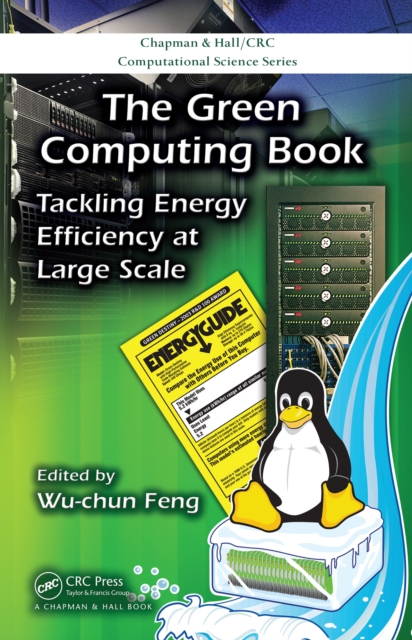
The Green Computing Book
Edited by one of the founders and lead investigator of the Green500 list, this book presents state-of-the-art approaches to advance the large-scale green computing movement. It begins with low-level, hardware-based approaches and then traverses up the software stack with increasingly higher-level, software-based approaches. The book explains how to control power across the hardware, firmware, operating system, and application levels and explores trends in server costs, energy use, and performance at high-density computing facilities. It also discusses energy management and virtualization in cloud computing.
eBook

Greening the data center: opportunities for improving data center energy efficiency
Technological advances are only part of the equation. If you want to green your data centre, you will need to come up with a plan and to be able to implement it. Involving your employees in the process is crucial, and the culture within your organisation will have to change as well. This book tells you the most important steps you have to take to make your data storage more environmentally friendly. By following the author's expert advice, you can lower your organisation's energy consumption and therefore reduce your overheads.
eBook

Green information technology : a sustainable approach
We are living in the era of \"Big Data\" and the computing power required to deal with \"Big Data\" both in terms of its energy consumption and technical complexity is one of the key areas of research and development.The U.S.
eBook

Greening the Data Center
Technological advances are only part of the equation. If you want to green your data centre, you will need to come up with a plan and to be able to implement it. Involving your employees in the process is crucial, and the culture within your organisation will have to change as well. This book tells you the most important steps you have to take to make your data storage more environmentally friendly. By following the author’s expert advice, you can lower your organisation’s energy consumption and therefore reduce your overheads.
eBook
IT sustainability for business advantage
IT Sustainability for Business Advantage speaks to modern managers in all functions as well as to IT professionals. Implementing an effective IT sustainability strategy is essential for organizations pursuing sustainability as a means of business advantage and this book shows how to do it. The critical first step is getting clear about the ends of the IT sustainability program--the mission must be to further the company's sustainability objectives and strategic intents should include: 1) Making IT operations as sustainable as possible; 2) Partnering with other functions to leverage IT in making their business processes more sustainable and to grow the business; and 3) Building a culture of sustainability within the IT organization. The next step is to implement strategies to achieve these ends and the book explores the ways and means of doing this. These include industry best practices on how to apply the processes, techniques, and technologies related to Green IT and IT for Sustainability (ITfS). They also include techniques for change management and building social capital.
eBook

The future transistors
The metal–oxide–semiconductor field-effect transistor (MOSFET), a core element of complementary metal–oxide–semiconductor (CMOS) technology, represents one of the most momentous inventions since the industrial revolution. Driven by the requirements for higher speed, energy efficiency and integration density of integrated-circuit products, in the past six decades the physical gate length of MOSFETs has been scaled to sub-20 nanometres. However, the downscaling of transistors while keeping the power consumption low is increasingly challenging, even for the state-of-the-art fin field-effect transistors. Here we present a comprehensive assessment of the existing and future CMOS technologies, and discuss the challenges and opportunities for the design of FETs with sub-10-nanometre gate length based on a hierarchical framework established for FET scaling. We focus our evaluation on identifying the most promising sub-10-nanometre-gate-length MOSFETs based on the knowledge derived from previous scaling efforts, as well as the research efforts needed to make the transistors relevant to future logic integrated-circuit products. We also detail our vision of beyond-MOSFET future transistors and potential innovation opportunities. We anticipate that innovations in transistor technologies will continue to have a central role in driving future materials, device physics and topology, heterogeneous vertical and lateral integration, and computing technologies.
The challenges and opportunities for the design of field-effect transistors are discussed and a vision of future transistors and potential innovation opportunities is provided.
Journal Article

Examining the effect of information and communication technology, innovations, and renewable energy consumption on CO2 emission: evidence from BRICS countries
The increasing use of information and communication technology (ICT) in this digital era and its interlinkage with other economic and environmental factors have gotten considerable attention from researchers. ICT tools are considered very important in economic activities such as international trade, the financial sector, and foreign direct investment. ICT is also interlinked with innovation and energy consumption. However, ICT with these activities influences ecological footprint, especially in emerging economies such as BRICS (Brazil, Russia, India, China, and South Africa) countries. Therefore, this topic has got considerable attention from researchers and policy makers on the impact of ICT and economic growth activities on environmental quality. Consequently, this study investigates the impact of information and communication technology, renewable energy consumption and innovation on carbon dioxide emission in BRICS countries from 1990 to 2019 using cointegration, generalized least square, and panel corrected standard errors models. The findings show that two ICT indicators, mobile cellular subscription and fixed broadband subscription, negatively affect carbon emission along with economic growth and financial development. Innovation and renewable energy consumption also significantly reduce emission in presence of ICT indicators, while trade openness and fixed telephone subscriptions increase it. In the case of the ICT index model, all variables are positively associated with carbon emission except renewable energy consumption, however, the square and interaction term of all indicators significantly reduce carbon emission and evidence the environmental Kuznets curve hypothesis except trade openness. ICT growth should be considered in the energy sector, innovation, and financial development to enhance environmental quality. The findings of the study have considerable policy implications for the sample countries.
Journal Article

Advancing ensemble learning techniques for residential building electricity consumption forecasting: Insight from explainable artificial intelligence
Accurate electricity consumption forecasting in residential buildings has a direct impact on energy efficiency and cost management, making it a critical component of sustainable energy practices. Decision tree-based ensemble learning techniques are particularly effective for this task due to their ability to process complex datasets with high accuracy. Furthermore, incorporating explainable artificial intelligence into these predictions provides clarity and interpretability, allowing energy managers and homeowners to make informed decisions that optimize usage and reduce costs. This study comparatively analyzes decision tree–ensemble learning techniques augmented with explainable artificial intelligence for transparency and interpretability in residential building energy consumption forecasting. This approach employs the University Residential Complex and Appliances Energy Prediction datasets, data preprocessing, and decision-tree bagging and boosting methods. The superior model is evaluated using the Shapley additive explanations method within the explainable artificial intelligence framework, explaining the influence of input variables and decision-making processes. The analysis reveals the significant influence of the temperature-humidity index and wind chill temperature on short-term load forecasting, transcending traditional parameters, such as temperature, humidity, and wind speed. The complete study and source code have been made available on our GitHub repository at https://github.com/sodayeong for the purpose of enhancing precision and interpretability in energy system management, thereby promoting transparency and enabling replication.
Journal Article