
Catalogue Search | MBRL


Are you sure you want to remove the book from the shelf?

{{itemTitle}}
11,532
result(s) for
"Infrastructure (Economics) -- Developing countries"
Sort by:

Critical perspectives on suburban infrastructures : contemporary international cases
\"Most new urban growth takes place in the suburbs; consequently, infrastructures are in a constant state of playing catch-up, creating repeated infrastructure crises in these peripheries. However, the push to address the tensions stemming from this rapid growth also allow the suburbs to be a major source of urban innovation. Taking a critical social science perspective to identify political, economic, social, and environmental issues related to suburban infrastructures, this book highlights the similarities and differences between suburban infrastructure conditions encountered in the Global North and Global South. Adopting an international approach grounded in case studies from three continents, this book discusses infrastructure issues within different suburban and societal contexts: lowdensity infrastructure-rich Global North suburban areas, rapidly developing Chinese suburbs, and the deeply socially stratified suburbs of poor Global South countries. Despite stark differences between types of suburbs, there are features common to all suburban areas irrespective of their location, and similarities in the infrastructure issues confronting these different categories of suburbs.\"-- Provided by publisher.
Book
Beyond the gap : how countries can afford the infrastructure they need while protecting the planet
Beyond the Gap: How Countries Can Afford the Infrastructure They Need while Protecting the Planet aims to shift the debate regarding investment needs away from a simple focus on spending more and toward a focus on spending better on the right objectives, using relevant metrics. It does so by offering a careful and systematic approach to estimating the funding needs to close the service gaps in water and sanitation, transportation, electricity, irrigation, and flood protection. Exploring thousands of scenarios, this report finds that funding needs depend on the service goals and policy choices of low- and middle-income countries and could range anywhere from 2 percent to 8 percent of GDP per year by 2030. Beyond the Gap also identifies a policy mix that will enable countries to achieve key international goals—universal access to water, sanitation, and electricity; greater mobility; improved food security; better protection from floods; and eventual full decarbonization—while limiting spending on new infrastructure to 4.5 percent of GDP per year. Importantly, the exploration of thousands of scenarios shows that infrastructure investment paths compatible with full decarbonization in the second half of the century need not cost more than more-polluting alternatives. Investment needs remain at 2 percent to 8 percent of GDP even when only the decarbonized scenarios are examined. The actual amount depends on the quality and quantity of services targeted, the timing of investments, construction costs, and complementary policies. Finally, investing in infrastructure is not enough; maintaining it also matters. Improving services requires much more than capital expenditure. Ensuring a steady flow of resources for operations and maintenance is a necessary condition for success. Good maintenance also generates substantial savings by reducing the total life-cycle cost of transport and water and sanitation infrastructure by more than 50 percent.
eBook

Granting and renegotiating infrastructure concessions : doing it right
Little over a decade ago, infrastructure concessions promised to solve Latin America's endemic infrastructure deficit. Awarded in competitive auctions, these concessions were supposed to combine private sector efficiency with rent dissipation brought about by competition. Yet something did not go quite right, as concessions were plagued with opportunistic renegotiations, most of them at the expense of taxpayers. This book is a major contribution toward understanding what went wrong and what should be done differently in the future to reap the potential benefits of infrastructure reform and private participation in infrastructure provision. It begins by analyzing a rich data set on more than 1,000 infrastructure concessions, uncovering a series of puzzling stylized facts. It then considers alternative explanations for the patterns it has uncovered, and concludes with a series of insightful policy proposals aimed at avoiding the common mistakes and make concessions to efficiently contribute to economic growth and poverty reduction.
eBook

Problem-driven political economy analysis
Problem-driven political economy analysis holds considerable promise to help development practitioners identify what policies and strategies are most likely to succeed in addressing difficult and persistent development challenges. This volume is the result of a systematic effort to take stock of what the World Bank has learned from efforts to mainstream this approach. The eight cases presented here are good practice examples that illustrate and reflect on what the Bank has been able to achieve in this area so far. Each chapter begins with a discussion of the specific development challenge that prompted and drove the analysis. These challenges include a mining resource boom in Mongolia, a subsidy reform in Morocco, an electricity sector reform in the Dominican Republic, an electricity and telecommunications reform in Zambia, the development of inclusive commercial agriculture in Ghana, an infrastructure provision at subnational levels in Sierra Leone, a local infrastructure provision in Papua New Guinea, and a local roads and health provision in the Philippines. Summarizing the key findings and feasible policy recommendations proposed by the analysis, each chapter provides examples of how donors can adapt to existing political economy conditions or expand the space for reform in the countries and sectors where they work. Recommendations range from designing politically responsive policy to enhancing the information available to local actors to fostering multistakeholder engagement. Finally, each chapter reflects on the uptake and impact of the problem-driven analysis on Bank operations and policy dialogue. Given these examples, it is possible to conclude that a stronger focus on how politics and economics intersect to shape particular development issues can change the way donors design and implement projects.
eBook


Handbook for evaluating infrastructure regulatory systems
More than 200 new infrastructure regulators have been created around the world in the last 15 years. They were established to encourage clear and sustainable long-term economic and legal commitments by governments and investors to encourage new investment to benefit existing and new customers. There is now considerable evidence that both investors and consumersthe two groups that were supposed to have benefited from these new regulatory systemshave often been disappointed with their performance. The fundamental premise of this book is that regulatory systems can be successfully reformed only if there are independent, objective and public evaluations of their performance. Just as one goes to a medical doctor for a regular health checkup, it is clear that infrastructure regulation would also benefit from periodic checkups. This book provides a general framework as well as detailed practical guidance on how to perform such regulatory checkups..
eBook
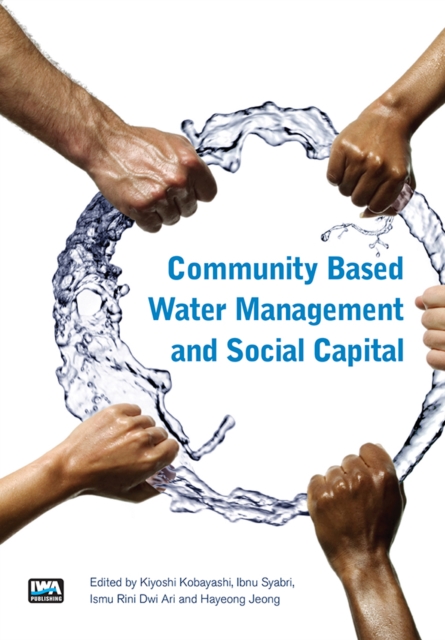
Community based water management and social capital
Community Based Water Management and Social Capitalprovides scientific understanding of community based water management and how to secure responsible management to satisfy quality and quantity requirements. It shows how community based water management can be synchronized with public water service, by introducing the most recent field experiments and theoretical studies in economics, social science, engineering, and regional planning which include game theory, microeconomics, econometric, statistics, social network analysis, social choice, and micro finance.
Community Based Water Management and Social Capital presents field experiments and theoretical studies in economics, social science, engineering, and regional planning to investigate important questions: what motivates people involve in voluntary water management what is the effect of participatory approach in water management how does social capital work in the voluntary actions what are key factors for effective governance for water management with diverse actors - local people, enterprise, and government; what is necessary for proper water allocation; vi) how to synchronize public water service with community based water management.
The book provides students, researchers, practitioners and governments with a comprehensive account of the current situation and perspectives on voluntary water management. It delivers a new scientific understanding on sustainable water management schemes and appropriate institutional social structures to secure inalienable rights to access to water.
Author: Kiyoshi Kobayashi, Kyoto University, Japan, Ibnu Syabri Institute of Technology Bandung, Indonesia, Ismu Rini Dwi Ari, Brawijaya University, East Java, Hayeong Jeong, Isabel C Escobar, Andrea Schaefer.
eBook

Infrastructure at the crossroads : lessons from 20 years of World Bank experience
'Infrastructure at the Crossroads' brings together lessons from the last two decades of World Bank engagement in infrastructure.It analyzes trends in the Bank's infrastructure lending, describes the evolution of the external environment and the Bank's own strategic priorities, and presents lessons about project design and appraisal, poverty.
eBook

Poverty and the environment : understanding linkages at the household level
Drawing upon recent analytical work prepared inside and outside the World Bank, this report identifies key lessons concerning the linkages between poverty and the environment. With a focus on the contribution of environmental resources to household welfare, the analysis increases our understanding of how specific reforms and interventions can have an impact on the health and livelihoods of poor people. \"Scholars and development practitioners increasingly recognize that in low-income countries there are inextricable links between poverty reduction and natural resources management. Demand has grown immensely for not only more, but better empirical evidence on those links. This volume offers a careful synthesis of key findings from growing literature on the environmental determinants of household welfare, as reflected by indicators of consumption, health, and income. The primary contribution of this study is that is has drawn out vital policy conclusions that will be of value to organizations and governments concerned about poverty and the environment in the developing world.\".
eBook