
Catalogue Search | MBRL


Are you sure you want to remove the book from the shelf?

{{itemTitle}}
1,407
result(s) for
"Inland water transportation"
Sort by:

Facilitating trade through competitive, low-carbon transport
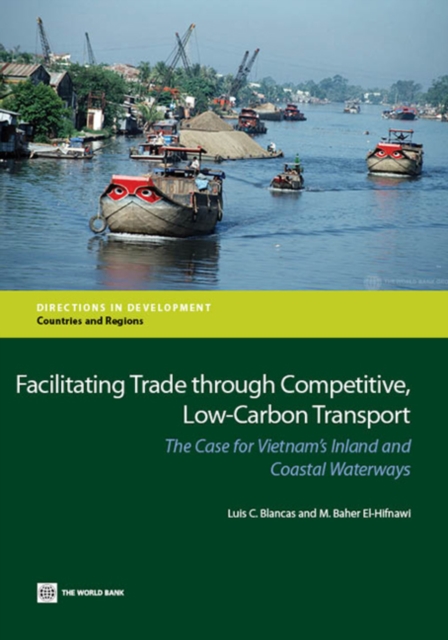
In Vietnam, sustained high rates of growth in gross domestic product (GDP) averaging 7.2 percent per year over the past 20 years have resulted in higher demand for freight transport. As Vietnam looks to continue on a path of sustained economic growth, it faces the challenge of better aligning demand and supply of logistics services and improving the overall efficiency of its freight transport system. Given the existence of capacity constraints in the country's road network and the increasingly costly environmental impact of road use for freight movements, it is desirable for Vietnam to develop and maintain viable, competitive alternatives to road freight transport. A more intense use of waterborne freight transport can be a particularly effective way of both promoting growth and reducing emissions. The report has three objectives. The first is to identify targeted policy and infrastructure interventions in inland waterway transport (IWT) and coastal shipping that can enhance the competitiveness and environmental sustainability characteristics of Vietnam's freight transport system. The second objective of the report is to estimate the economic benefits and costs associated with the interventions identified, and to use that information to produce a prioritized list of evaluated recommendations for implementation. Finally, the report seeks to inform interested stakeholders, including public sector authorities, the shipper and carrier community, donors, academia, and the general public about the current status, composition, and key challenges and opportunities facing Vietnam's domestic waterborne transport sector. The report's scope comprises the three most important sources of freight activity in Vietnam, namely, road, IWT, and coastal shipping transportation. This report is structured as follows: chapter one gives introduction; chapter two gives stock taking of current developments and expected trends in IWT and coastal shipping from the perspective of market demand; and market supply is discussed in chapter three. Chapter four assesses, on an indicative basis, the environmental implications of transport trends. Chapter five defines and assesses the main bottlenecks impacting the development of inland and coastal waterborne transport. A preliminary strategy for developing IWT and coastal shipping is presented in chapter six. A set of specific IWT and coastal shipping interventions informed by the latter analysis, are developed and evaluated in chapter seven.
eBook


Reliability of Inland Water Transportation Complex Network Based on Percolation Theory: An Empirical Analysis in the Yangtze River
Inland water transportation is regarded as a crucial component of global trade, yet its reliability has been increasingly challenged by uncertainties such as extreme weather, port congestion, and geopolitical tensions. Although substantial research has focused on the structural characteristics of inland water transportation networks, the dynamic responses of these networks to disruptions remain insufficiently explored. This gap in understanding is critical for enhancing the resilience of global transportation systems as trade volumes grow and risks intensify. In this study, percolation theory was applied to evaluate the reliability of the Yangtze River transportation network. Ship voyage data from 2019 were used to construct a complex network model, and simulations of node removal were performed to identify key vulnerabilities within the network. The results showed that the failure of specific nodes significantly impacts the network’s connectivity, suggesting which nodes should be prioritized for protection. This research offers a dynamic framework for the assessment of inland water transportation network reliability and provides new insights that could guide policy decisions to improve the resilience of critical waterway systems. By identifying potential points of failure, this study contributes to the development of a more robust global trade infrastructure.
Journal Article


Future Challenges for Inland Navigation
Front -- Contents -- CHAPTER 1 -- CHAPTER 2 -- CHAPTER 3 -- CHAPTER 4 -- CHAPTER 5 -- CHAPTER 6 -- CHAPTER 7 -- CHAPTER 8 -- CHAPTER 9 -- CHAPTER 10 -- CHAPTER 11
eBook

Review of the U.S. Army Corps of Engineers Restructured Upper Mississippi River-Illinois Waterway Feasibility Study
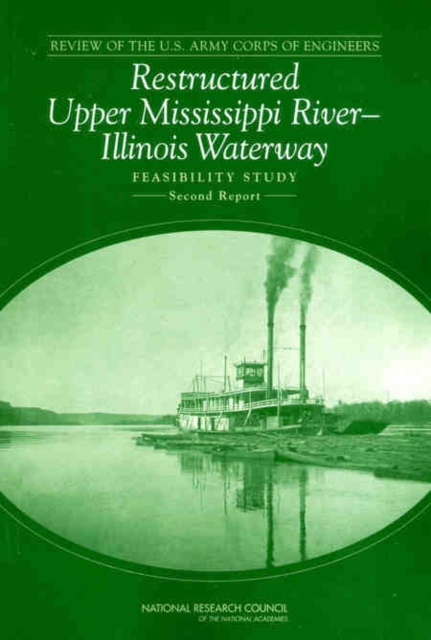
For the past few years, the Corps has been working on what is known as the Restructured Upper Mississippi River-Illinois Waterway Feasibility Study, the heart of which is a multibillion-dollar proposal to double the length of up to a dozen locks on the river. The Research Council first reviewed the feasibility study in 2001 during controversies over the accuracy of models being used by the Corps to justify lock expansion based on increased demand for barge transportation.
More than 100 million tons of cargo-half of it grain destined for international markets, the other half goods such as construction materials, coal, and chemicals-are shipped along the navigation system each year. The locks, which along with dams allow barges to traverse uneven river depths, were originally designed for \"tows\" of barges up to 600 feet long, but the length of a typical tow has increased, forcing the Corps to look for ways to relieve congestion.
The book finds the U.S. Army Corps of Engineers has made good progress in broadening its proposed plan for navigation improvements on the Upper Mississippi River-Illinois Waterway system to give greater consideration to ecological restoration. However, the plan still does not provide sufficient economic justification for expanding locks on the rivers because of flaws in the models the Corps used to predict demand for barge transportation. Little attention is paid to inexpensive, nonstructural navigation improvements that could help better manage existing levels of barge traffic.
The revised plan has been usefully expanded to include many creative and potentially useful ecosystem restoration measures. These measures, however, should be more firmly grounded in river science principles and more broadly consider ways the river's ecology might affect or be affected by navigation, recreation and other uses.
eBook
Stretching the Qing bureaucracy in the 1826 sea-transport experiment
\"In a new study of the Qing government's 1826 experiment in sea transport of government grain in response to the collapse of the Grand Canal (1825), Jane Kate Leonard highlights how the Daoguang Emperor, together with Yinghe, his chief fiscal adviser, and Qishan, Governor-General of Liangjiang, devised and implemented this innovative plan by temporarily stretching the Qing bureaucracy to include local \"assistant\" officials and ad hoc bureaus (ju) and by recruiting (zhaoshang) private organizations, such as merchant shippers, dockside porters, and lighterage fleets. This is significant because it explains how the Qing leadership was able to respond successfully to crises and change without permanently expanding the reach and expense of the permanent bureaucracy\"-- Provided by publisher.
Book
Telematics Solutions in Maritime and Inland Waterway Transport
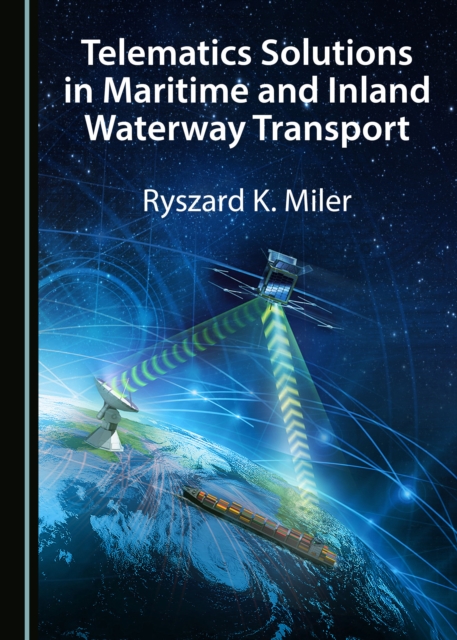
This book contributes to the identification and systematisation of current telematics solutions applied in maritime and inland waterway transport. It represents the first time that most telematics systems currently applied in the modes of water transport have been described in detail. The volume details the massive scope of the application of telematics solutions in maritime transport, showing how it ranges from simple systems of navigation to unmanned systems which have resulted in the first attempts at launching fully autonomic vessels. The current challenges in the field involve the integration of the systems of maritime and inland waterway transport within the framework of multimodal transport operations.
eBook