
Catalogue Search | MBRL


Are you sure you want to remove the book from the shelf?

{{itemTitle}}
46
result(s) for
"Inscriptions grecques."
Sort by:


Honorific culture at Delphi in the Hellenistic and Roman periods
This book brings Hellenistic and Roman Delphi to life. By addressing a broad spectrum of epigraphic topics, theoretical and methodological approaches, it provides readers with a first comprehensive discussion of the Delphic gift-giving system, its regional interactions, and its honorific network.
eBook

The Materiality of Text - Placement, Perception, and Presence of Inscribed Texts in Classical Antiquity
This volume explores the significance of the physical materials and contexts of inscribed texts in Greek and Roman antiquity and their performative roles in ancient society from an anthropological and historical perspective (7th century B.C.E. to 4th century C.E.).
eBook
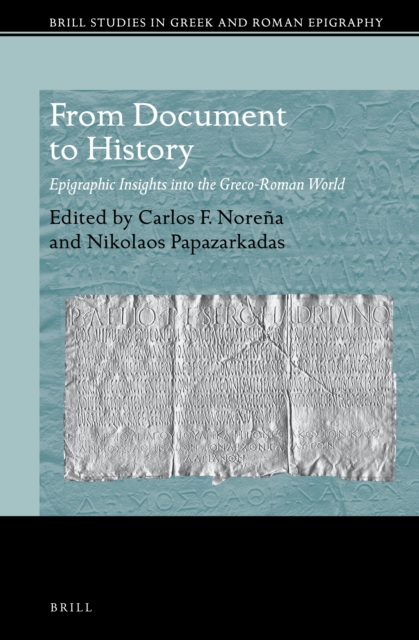
From document to history : epigraphic insights into the Greco-Roman world
From Document to History, edited by Carlos Noreña and Nikolaos Papazarkadas, presents a series of new studies in Greek and Roman epigraphy, highlighting the contribution of documentary evidence to our understanding of ancient Greek and Roman history.
eBook

Athenian Lettering of the Fifth Century B.C
This book has chapters on methodology, on the writing of the first decrees and laws of the years ca. 515 to 450 B.C., on unique examples of writing of ca. 450 to 400, on the inscribers of the Lapis Primus and Lapis Secundus (IG I3 259-280), and on those of the Attic Stelai (IG I3 421-430). These are followed by studies of 11 individual cutters arranged in chronological order. This study brings order to the study of hands of the fifth century by setting out a methodology and by discussing the attempts of others to identify hands. Another aim is to bring out the individuality of the writing of these early inscribers. It shows that from the beginning the writing on Athenian inscriptions on stone was very idiosyncratic, for all intents and purposes individual writing. It identifies the inscribing of the sacred inventories of Athena beginning about 450 B.C. as the genesis of the professional letter cutter in Athens and traces the trajectory of the profession. While the dating of many inscriptions will remain a matter for scholarly discussion, the present study narrows the dates of many texts. It also pinpoints the origin of the mistaken idea that three-bar sigma did not occur on public documents after the year 446 in order to make those who are not expert more aware that this is not a reliable means of dating.
eBook

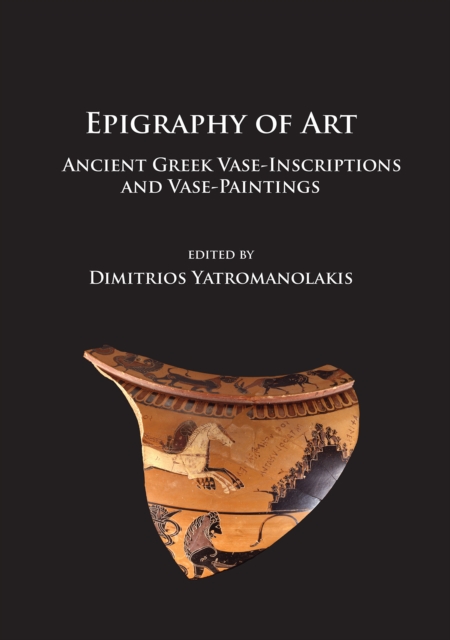
Epigraphy of Art
Ancient Greek vase-paintings offer broad-ranging and unprecedented early perspectives on the often intricate interplay of images and texts. By bringing together—for the first time in English-language scholarship—an international group of leading scholars in classical art and archaeology who have worked on vase-inscriptions, this book investigates epigraphic technicalities of Attic and non-Attic inscriptions on pottery as well as their broader iconographic and sociocultural significance. The ten chapters in this book propose original and expert methodological approaches to the study of vase-inscriptions and vasepaintings, while also foregrounding the outstanding but not fully examined importance of the area of vase-inscriptions for current research on ancient Greek visual representations. Epigraphy of Art: Ancient Greek Vase-Inscriptions and Vase-Paintings constitutes a major contribution to the fields of Greek epigraphy and classical art and archaeology and will prove significant for epigraphists, archaeologists, and art-historians interested in the complexities of the interaction of art and text.
eBook
Panhellenes at Methone : graphê in late geometric and protoarchaic Methone, Macedonia (ca. 700 BCE)
Trends in Classics, a new series and journal to be edited by Franco Montanari and Antonios Rengakos, will publish innovative, interdisciplinary work which brings to the study of Greek and Latin texts the insights and methods of related disciplines such as narratology, intertextuality, reader-response criticism, and oral poetics. Both publications will seek to publish research across the full range of classical antiquity. The series Trends in Classics Studies welcomes monographs, edited volumes, conference proceedings and collections of papers; it will provide an important forum for the ongoing debate about where Classics fits in modern cultural and historical studies. The journal Trends in Classics will be published twice a year with approx. 160 pp. per issue. Each year one issue will be devoted to a specific subject with articles edited by a guest editor.
eBook

Epigraphica Boeotica II
In Epigraphica Boeotica II John Fossey examines Boiotian relations with the rest of the Greek world in Hellenistic and Roman times and continues with discussion of some dedications followed by comments also on shorter texts, letter form developments, prosopography and onomastics.
eBook
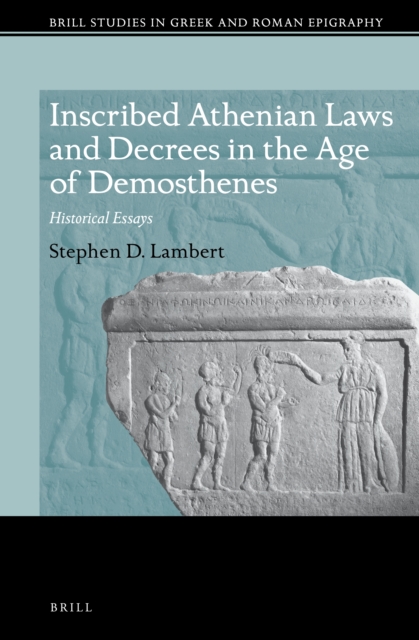
Inscribed Athenian Laws and Decrees in the Age of Demosthenes
This volume collects twelve historical papers, some published here for the first time, in which Stephen Lambert explores the implications of the inscribed Athenian laws and decrees for the history of Athens in the age of Demosthenes.
eBook