
Catalogue Search | MBRL


Are you sure you want to remove the book from the shelf?

{{itemTitle}}
237
result(s) for
"Insect phobia."
Sort by:


Exploring the Acceptance of Entomophagy: A Survey of Italian Consumers
Insect-based food is not common in Europe, because most people do not consider insects to be edible, but rather a threat and a health risk. Fear and refusal to eat a new food product introduced into a culture is called food neophobia, which results in a hesitation to trying and experimenting with new foods. Although there is significant interest in this novel sector, there is a lack of research on the link between rejection, the level of food neophobia, and consumer behavior related to the introduction of insects into the diet. In this study, through 420 questionnaires, a specific experimental scale of insects was introduced which, together with a neophobia scale, analyzed the probability and the intention of respondents to consume insects. Another issue tested has been their intention to eat food containing insects. We observed that the analyses of the two scales produced different results, confirming the need for a specific scale to measure “insect phobia”. This is important, since knowledge about consumer preferences for and barriers to using insects as human food sources is limited but necessary in order to set up commercialization strategies. The development of insect-based food offers physical health benefits and also improves the sustainability of the food industry.
Journal Article

Online Exposure Treatment for Spider Fear: The Effects of Moving Versus Static Images on Treatment Adherence, Fear Elicitation and Habituation
This research aimed to examine the effects of moving (videos) versus static (pictures) images on habituation and progression in a hierarchy during online symbolic exposure (OSE) for spider fear. Participants were 351 people with high spider fear who logged on to an OSE website (www.feardrop.com) for self-help purposes. The inclusion of moving images in the exposure hierarchy increased adherence rates relative to static images, particularly among those with lower relative to higher spider fear. Those who viewed moving images at Stage 2 showed higher Subjective Units of Distress Scale (SUDS) ratings overall, but a similar pattern of habituation relative to those who viewed static images. In addition, 71% of participants completed at least one stage of the OSE program, representing an improvement from 30% adherence in previous research that used an earlier version of the program. These findings support the development of tailored exposure hierarchies to maximise adherence and treatment benefit for individual participants.
Journal Article
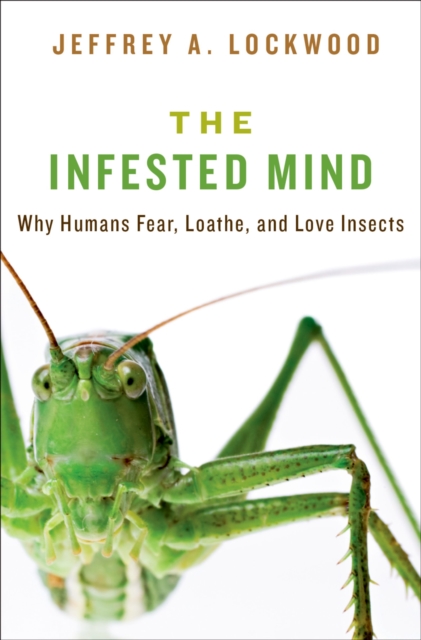
The Infested Mind
The psychological connections between humans and insects are tantalizing and complex. Through both evolutionary associations and cultural representations, insects have deeply infested our minds. They frighten, disgust, and sometimes enchant us. Whatever the case, few of us are ambivalent in the face of wasps, cockroaches, spiders, maggots, crickets or butterflies. They arouse terror, nausea, fascination - but rarely, if ever, indifference. This book is an examination of what scientists, philosophers, and writers have learned about the human-insect relationship. The text explores the nature of anxiety and phobia and the line between them.
eBook

Online Exposure for Spider Fear: Treatment Completion and Habituation Outcomes
This research aimed to investigate habituation to spider images during an online exposure treatment (www.feardrop.com) among participants with a high fear of spiders. Participants (N = 392) undertook a 10-stage online exposure treatment with a stage length of either 180 or 360 seconds. Four Subjective Units of Distress Scale (SUDS) ratings were taken throughout each stage. Treatment completion was found to be a significant challenge, with less than one-third (30%) completing at least one stage of the program. Those in the shorter stage length condition were significantly more likely to complete the first stage relative to those in the longer stage length condition (43% vs. 16%). SUDS ratings decreased significantly across time at Stage 1, suggesting habituation of self-reported anxiety and there was an overall reduction in SUDS ratings at the second relative to the first stage, suggesting generalisation of habituation. The greatest habituation was observed among those with high anticipatory anxiety (pre-exposure SUDS rating), high total exposure time, and younger age. There was preliminary evidence for improvement in symptoms of spider fear at post-treatment. Directions for future research include strategies to facilitate treatment completion, evaluation of treatment outcomes, and expansion to include a range of specific fears.
Journal Article
Computer-Delivered Behavioural Avoidance Tests for Spider Phobia
Behavioural avoidance tests (BATs) are a cornerstone of objective assessment of phobias. However, live BATs have several disadvantages. They are practically difficult and time-consuming to set up and are not standardised. This study examined two computer-delivered BATs (using slide and video presentations of phobic stimuli respectively): first, in respect to their ability to discriminate fearfuls from nonfearfuls, and second, in terms of convergent validity with a live BAT and the Spider Phobia Questionnaire (SPQ). Sixty-four low (n = 32) and high (n = 32) spider-fearful undergraduate participants were administered the three BATs in counterbalanced order. Results showed that subjective anxiety on all BATs was highly discriminative of low and high spider-fearfuls. The number of steps completed did not discriminate between phobics and nonphobics on the computer BATs. However, there was good convergent validity between the live BAT, the SPQ and both computer-delivered BATs on subjective anxiety. Overall, the live BAT gives a clearer indication of avoidance behaviour while the video BAT assesses subjective anxiety across a wider range of steps. The development of computer-delivered BATs that reliably measure avoidance is necessary before contemplating them as an alternative to a live BAT.
Journal Article
Danger Expectancies, Self-efficacy and Subjective Anxiety as Mediators of Avoidance Behaviour in Spider Phobia
Forty-five participants diagnosed with specific phobia (spiders) gave ratings of subjective anxiety, self-efficacy and the probability of being bitten or injured by a spider while completing a behavioural avoidance test involving exposure to a live spider. Testing was performed before and after treatment and at a 3-month follow-up. Results indicated that subjective anxiety was a more useful predictor of avoidance behaviour than self-efficacy. Danger expectancies in relation to being bitten and/or injured by a spider were not found to be a significant cognitive symptom in the majority of spider phobia sufferers during the behavioural avoidance test with a live spider. Methodological factors that may account for the low reporting of danger-related cognitions in the present study are discussed.
Journal Article
