
Catalogue Search | MBRL


Are you sure you want to remove the book from the shelf?

{{itemTitle}}
590
result(s) for
"Insects Poetry."
Sort by:

Bug off! : creepy, crawly poems
Poems about various insect and arachnid species, including facts about each.
Book


Crawly school for bugs : poems to drive you buggy
Welcome to Crawly School for Bugs! Termites, stink bugs, gnats, and every insect in between attend this buzzy school where crickets take classes like How to Be Annoying in 4 Easy Steps. Some students struggle with the temptation to eat fellow classmates, while others deal with a mosquito nurse who always wants to draw blood, or attempt to make friends despite their own microscopic size.
Book
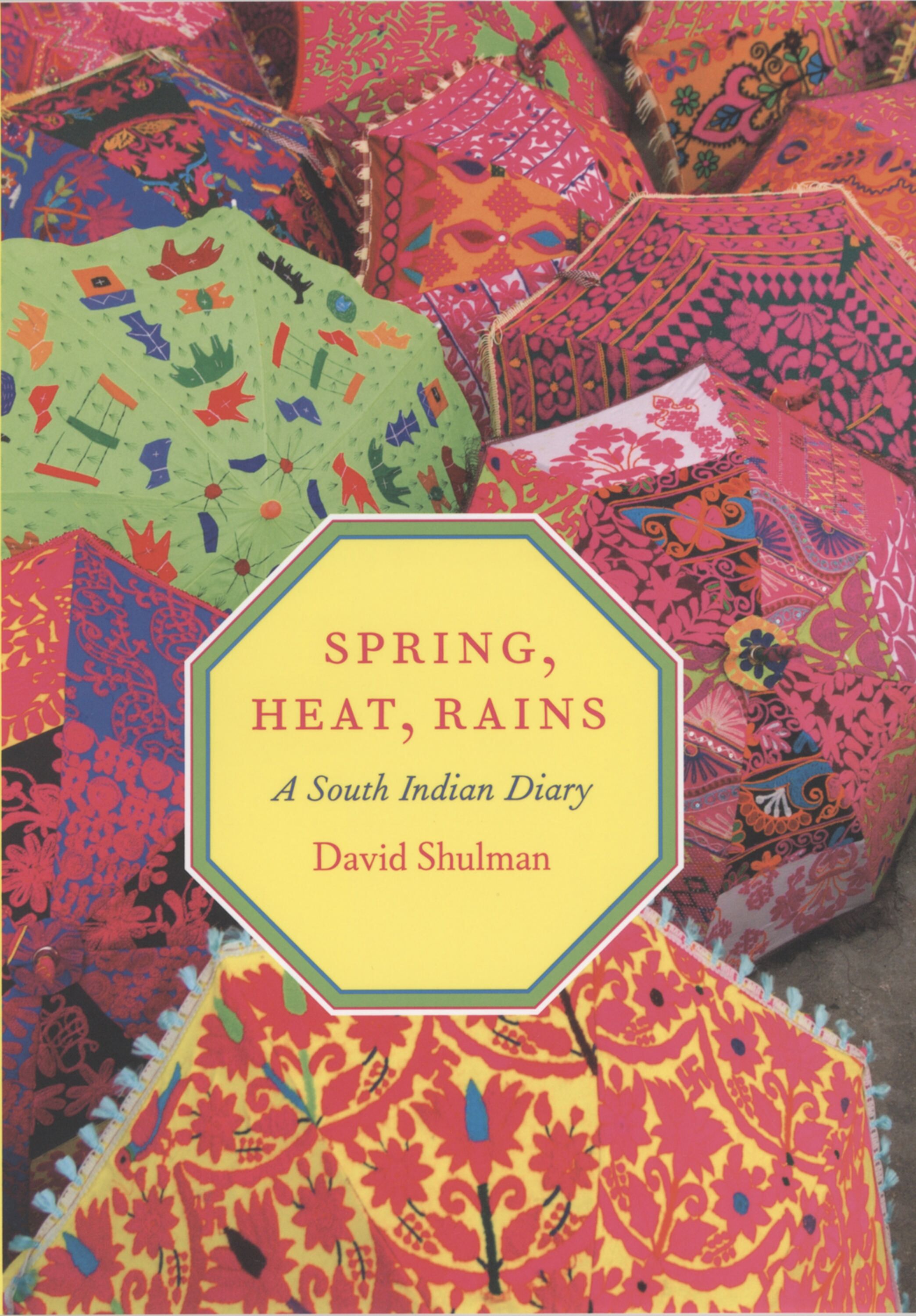
Spring, heat, rains
“Rocks. Goats. Dry shrubs. Buffaloes. Thorns. A fallen tamarind tree.” Such were the sights that greeted David Shulman on his arrival in the South Indian state of Andhra Pradesh in the spring of 2006. An expert on South Indian languages and cultures, Shulman knew the region well, but from the moment he arrived for this seven-month sojourn he actively soaked up such simple aspects of his surroundings, determined to attend to the rich texture of daily life—choosing to be at the same time scholar and tourist, wanderer and wonderer. Lyrical, sensual, and introspective, Spring, Heat, Rains is Shulman’s diary of that experience. Evocative reflections on daily events—from explorations of crumbling temples to battles with ineradicable bugs to joyous dinners with friends—are organically interwoven with considerations of the ancient poetry and myths that remain such an inextricable part of life in contemporary India. With Shulman as our guide, we meet singers and poets, washermen and betel-nut vendors, modern literati and ancient gods and goddesses. We marvel at the “golden electrocution” that is the taste of a mango fresh from the tree. And we plunge into the searing heat of an Indian summer, so oppressive and inescapable that when the monsoon arrives to banish the heat with sheets of rain, we understand why, year after year, it is celebrated as a miracle. An unabashedly personal account from a scholar whose deep knowledge has never obscured his joy in discovery, Spring, Heat, Rains is a passionate act of sharing, an unforgettable gift for anyone who has ever dreamed of India.
eBook

Erotic Pets and Metapoetic Dildos in Marcus Argentarius, Anyte, Meleager, and Catullus
This article argues that Marcus Argentarius' epigram on Myro's dead grasshopper and cicada ( Anth. Pal . 7.364) provides an obscene interpretation of Anyte's model ( Anth. Pal . 7.190) by transforming Myro's paignia (\"playthings\") into sex toys. Like Catullus (2, 3), he builds on Meleager's eroticization of Anyte's poem in Anth. Pal . 7.195, 196, 207, as well as Herodas Mimiambs 6 and 7, which combine the themes of metapoetic dildos, female poets, and the Demeter/Persephone myth. Finally, I show that an acrostic ( ALIA , 7.364.1–4, \"fruitless, idle\") ties together the poem's erotic and metapoetic themes.
Journal Article

Selected representations of fauna (insects, birds, whale) and the human as a “human animal” in the poetry of Ivan Laučík
The article tackles selected representations of animals in Ivan Laučík’s (1944 – 2004) poetry. From the wide range of animals which the poet invites into his verse, it focuses on the motifs of insects, birds, and whales. In the world of Laučík’s poetry, insects serve as a litmus test for the quality and viability of an ecosystem. The poet, however, also handles insects in relation to the question of the expressive possibilities of language. Laučík’s ethical and ecological worldview also encompasses numerous motifs of birds which serve functions similar to those of insects. The motif of the whale occupies an important position in the poet’s debut collection, Pohyblivý v pohyblivom ([Mobile within mobility] 1968) and is also an indicator of how people relate to fauna and nature in general: as either conquerors or explorers. The ideal of a peaceful cohabitation of humankind with other animals can be glimpsed in Laučík’s handling of the human as a “human animal.” Such ethos can be observed both in individual poems and in the poet’s system of values in general. It accentuates an eco-friendly attitude towards nature to which the human is radically related.
Journal Article

Lucan’s (G)natal Poem
This paper explores the aesthetics of miniaturization in Statius’ Silvae 2.7, in relation to Statius’ unexpected decision to write a tribute to the dead epic poet Lucan in hendecasyllables. The choice of a meter associated with irreverence, ephemerality, speed, and fun has been variously justified as expressing the poet’s ambivalent mood—mourning and celebration combined—or encapsulating his subject’s brief life. This paper builds on these explanations from a different angle. The epitome of miniature, playful poetry in the Silvae is the pseudo-Virgilian Culex (Gnat), mentioned first in Statius’ opening preface as a model for his collection and then in the tribute to Lucan as a yardstick for the young poet’s precocity. This is no casual coincidence. Statius’ résumé of baby Lucan’s future career uses techniques of retrospective prophecy similar to those with which the Culex-poet anticipates and absorbs Virgil’s entire oeuvre. Other clues suggest that Statius is engaging with the faked juvenile work more than sporadically, writing the equivalent for Lucan in the smallest meter imaginable while aiming to surpass both Virgil and Lucan as a poet of speed and synoptic vision.
Journal Article

Students’ figurative communication of malaria messages, belief, norms, and practices in Oromia, Ethiopia: A qualitative content analysis approach
School engagement is an emerging strategy and proven potent vehicles for social and behavioral change communication (SBCC) intervention to prevent and control malaria. Little was known about the figurative speeches used in the malaria messages disseminated and communicated by school students. Therefore, this study evaluated the figurative speeches used in the poems to convey messages related to malarial perceptions, beliefs, norms and practices to prevent and control malaria.
A qualitative content analysis was conducted to explore the figurative speeches used in malaria messages conveyed in poems produced by primary school students. Twenty poems were purposively selected from twenty schools across rural villages in five districts of Jimma Zone. Data were analyzed using ATLAS.ti version 7.1.4 software. The figurative speeches were presented using central themes and categories supported with quotations.
The predominantly used figurative speeches were simile, metaphor, personification and hyperbole. Simile was used to express the nature of anopheles mosquito, and sign and symptoms of malaria. The metaphor was used to express malaria, severity/seriousness of malaria and Insecticide-Treated Net (ITN); and also to express the relationship between persons ITN malpractice and its effect on their health. Personification was used to express the nature of anopheles mosquito and malaria. Finally, hyperbole was used to express nature of anopheles mosquito, severity of malaria and exaggerated effect of ITN and Indoor Residual Spraying (IRS).
The students conveyed messages related to malarial perceptions, beliefs, norms and practices of the local community to prevent and control malaria through different types of figurative speeches. Therefore, conceptualizing the local norms, beliefs, values, perception and practices, and expressing in different figurative speeches to convey messages and convince the local community might be important to bring the desired or intended behavioral change.
Journal Article

Insect Poetics: James Grainger, Personification, and Enlightenments
Originally published in Early American Literature , Volume 52, Number 2. Copyright © 2017 by the University of North Carolina Press. Used by permission of the publisher. www.uncpress.org
Journal Article