
Catalogue Search | MBRL


Are you sure you want to remove the book from the shelf?

{{itemTitle}}
171
result(s) for
"Instrumentation and orchestration"
Sort by:

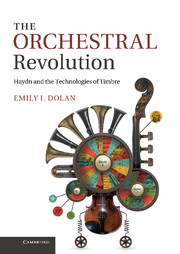
The Orchestral Revolution
The Orchestral Revolution explores the changing listening culture of the eighteenth and early nineteenth centuries. Delving into Enlightenment philosophy, the nature of instruments, compositional practices and reception history, this book describes the birth of a new form of attention to sonority and uncovers the intimate relationship between the development of modern musical aesthetics and the emergence of orchestration. By focusing upon Joseph Haydn's innovative strategies of orchestration and tracing their reception and influence, Emily Dolan shows that the consolidation of the modern orchestra radically altered how people listened to and thought about the expressive capacity of instruments. The orchestra transformed from a mere gathering of instruments into an ideal community full of diverse, nuanced and expressive characters. In addressing this key moment in the history of music, Dolan demonstrates the importance of the materiality of sound in the formation of the modern musical artwork.
eBook

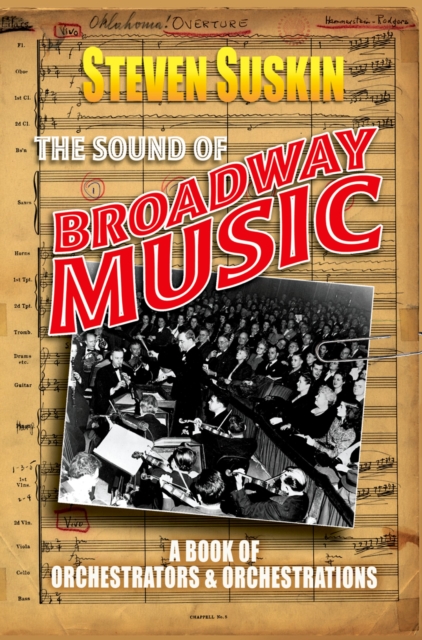
The Sound of Broadway Music
Philip J. Lang, Jonathan Tunick - are names well known to musical theatre fans, but few people understand precisely what the orchestrator does. The Sound of Broadway Music is the first book ever written about these unsung stars of the Broadway musical whose work is so vital to each show's success. The book examines the careers of Broadway's major orchestrators and follows the song as it travels from the composer's piano to the orchestra pit. Steven Suskin has meticulously tracked down thousands of original orchestral scores, piecing together enigmatic notes and notations with long-forgotten documents and current interviews with dozens of composers, producers, conductors and arrangers. The information is separated into three main parts: a biographical section which gives a sense of the life and world of twelve major theatre orchestrators, as well as incorporating briefer sections on another thirty arrangers and conductors; a lively discussion of the art of orchestration, written for musical theatre enthusiasts (including those who do not read music); a biographical section which gives a sense of the life and world of twelve major theatre orchestrators, as well as incorporating briefer sections on another thirty arrangers and conductors; and an impressive show-by-show listing of more than six hundred musicals, in many cases including a song-by-song listing of precisely who orchestrated what along with relevant comments from people involved with the productions. Stocked with intriguing facts and juicy anecdotes, many of which have never before appeared in print, The Sound of Broadway Music brings fascinating and often surprising new insight into the world of musical theatre.
eBook


Jazz composition and arranging in the digital age
This is a comprehensive instructional text and reference guidebook on the art and craft of jazz composition and arranging for small and large ensembles. It is written from the perspective of doing the work using music notation software, and contains many practical and valuable tips to that end for the modern jazz composer/arranger.
eBook

Why can’t I play my tenor horn? Brass band instruments in Australian education
There are many young people playing brass band instruments in Australia, yet there is generally an expectation in secondary education, and almost always in higher education, that students will play orchestral brass instruments. This article explores how schools and tertiary music educations in Australia are equipping students to be 21st century musicians, with a focus on players of brass band instruments. Secondary school students playing brass band instruments are often misunderstood by music teachers and can have trouble fitting in to school music programs. Currently, the only university in Australia that offers a specific brass band subject and lists brass band instruments is Griffith University in Queensland, therefore many dedicated brass band instrumentalists choose to travel overseas for tertiary study. This article seeks to highlight a broader picture regarding music education in Australia, and encourages educators (and institutions) to step out of the conservatory-style specialisation regarding brass instruments.
Journal Article
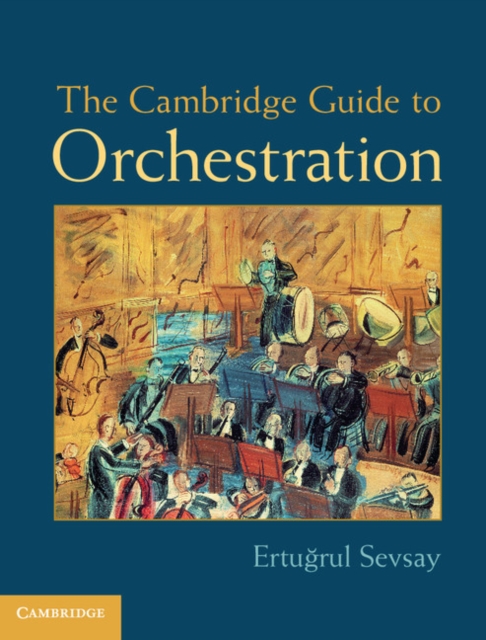
The Cambridge guide to orchestration
Demonstrating not only how to write for orchestra but also how to understand and enjoy a score, this book is an invaluable guide for composers, arrangers, conductors, music theorists and music engineers. Numerous exercises with their solutions will appeal to readers who are interested in learning on their own.
eBook
Why can't I play my tenor horn? Brass band instruments in Australian education
There are many young people playing brass band instruments in Australia, yet there is generally an expectation in secondary education, and almost always in higher education, that students will play orchestral brass instruments. This
article explores how schools and tertiary music educations in Australia are equipping students to be 21st century musicians, with a focus on players of brass band instruments. Secondary school students playing brass band instruments are
often misunderstood by music teachers and can have trouble fitting in to school music programs. Currently, the only university in Australia that offers a specific brass band subject and lists brass band instruments is Griffith University
in Queensland, therefore many dedicated brass band instrumentalists choose to travel overseas for tertiary study. This article seeks to highlight a broader picture regarding music education in Australia, and encourages educators (and
institutions) to step out of the conservatory-style specialisation regarding brass instruments. [Author abstract]
Journal Article
