
Catalogue Search | MBRL


Are you sure you want to remove the book from the shelf?

{{itemTitle}}
7,193
result(s) for
"Integrated pest control"
Sort by:

An integrated anthracnose management approach in Tommy Atkins mango cultivars in Cundinamarca - Colombia
Anthracnose, caused by Colletotrichum gloeosporioides in mango production, can lead to crop losses of 60 %. Synthetic fungicides constitute its leading management strategy. We evaluated combinations of different management practices to control anthracnose in a commercial Tommy Atkins mango grove in 2015 and 2016. We followed a randomized complete block experimental design with a subdivided plot arrangement composed of 12 treatments, three replicates per treatment, and one mango tree per replicate for 36 trees. Pruning was practiced at plot level (with and without pruning), nutrients were applied to subplots (soil fertilizer, foliar nutrient application, and no nutrient supply), and at sub-subplot level, three anthracnose management treatments were given (chemical, biological, and no treatment). In 2015 and 2016, the treatments involving natural or biological applications against anthracnose plus nutrient supply led to the most significant reductions in quiescent leaf infections and disease presence in flowers and fruits. In addition, pruning at specific crop development stages improved results. In light of our results, this integrated anthracnose management approach in mango production can deliver the expected results if implemented consistently.
Journal Article

Integrated Pest Management
Integrated Pest Management: Current Concepts and Ecological Perspective presents an overview of alternative measures to traditional pest management practices using biological control and biotechnology.
eBook
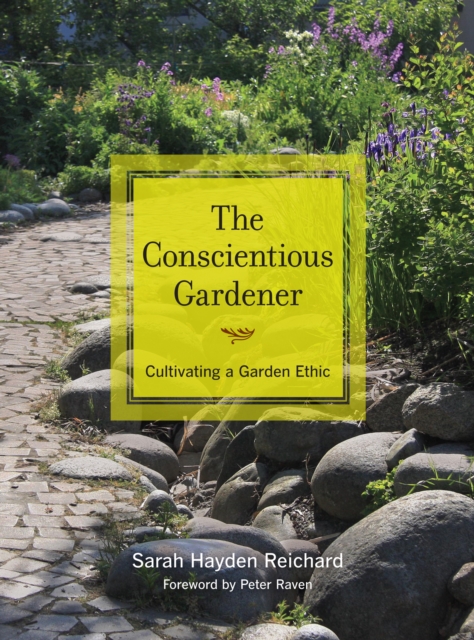
conscientious gardener
In his influential A Sand County Almanac, published at the beginning of the environmental movement in 1949, Aldo Leopold proposed a new ecological ethic to guide our stewardship of the planet. In this inspiring book, Sarah Hayden Reichard tells how we can bring Leopold's far-reaching vision to our gardens to make them more sustainable, lively, and healthy places. Today, gardening practices too often damage the environment: we deplete resources in our own soil while mining for soil amendments in far away places, or use water and pesticides in ways that can pollute lakes and rivers. Drawing from cutting edge research on urban horticulture, Reichard explores the many benefits of sustainable gardening and gives straightforward, practical advice on topics such as pest control, water conservation, living with native animals, mulching, and invasive species. The book includes a scorecard that allows readers to quickly evaluate the sustainability of their current practices, as well as an extensive list of garden plants that are invasive, what they do, and where they should be avoided.
eBook

Integrated pest management: potential, constraints and challenges
IPM Systems need to be developed for agriculture to be economically and environmentallystrong, in production, storage, and food processing. Although the concept and philosophy ofintegrated pest management have been largely accepted for some time, its implementation iscomplex and faces numerous potential problems. If IPM is to enjoy widespread approval and adoption, it must be clearly defined and economically and socially acceptable. The topics covered in this book include a range of topics, such as: risk-benefit analysis, transgenic crops in IPM and consumer response to IPM.
eBook

Ecologically based integrated pest management
Integrated pest management (IPM) is a sustainable approach to manage pests through biological, cultural, physical and chemical means in order to minimize economic and environmental injury caused by such pests. Any comprehensive IPM programme requires an understanding of the ecological relationships between crops, pests, natural enemies and the environment. This book presents a series of review chapters on ecologically-based IPM. Topics covered range from the ecological effects of chemical control practices to the ecology of predator-prey and parasitoid-host systems.
eBook

Integrated pest management in the global arena
This book presents experiences and successful case studies of integrated pest management (IPM) from developed and developing countries and from major international centres and programmes. In nearly 40 chapters, the following themes are addressed: Emerging issues in IPM, such as biotechnology, pesticide policies, socio-economic considerations, country experiences from Africa, Asia, North and South America, Europe, Australia and New Zealand, regional and international experiences, including FAO, the World Bank and CGIAR System-wide IPM Program.
eBook
Ecologically based pest management: new solutions for a new century
Widespread use of broad-spectrum chemical pesticides has revolutionized pest management. But there is growing concern about environmental contamination and human health risks-and continuing frustration over the ability of pests to develop resistance to pesticides. In Ecologically Based Pest Management , an expert committee advocates the sweeping adoption of ecologically based pest management (EBPM) that promotes both agricultural productivity and a balanced ecosystem. This volume offers a vision and strategies for creating a solid, comprehensive knowledge base to support a pest management system that incorporates ecosystem processes supplemented by a continuum of inputs-biological organisms, products, cultivars, and cultural controls. The result will be safe, profitable, and durable pest management strategies.
The book evaluates the feasibility of EBPM and examines how best to move beyond optimal examples into the mainstream of agriculture. The committee stresses the need for information, identifies research priorities in the biological as well as socioeconomic realm, and suggests institutional structures for a multidisciplinary research effort. Ecologically Based Pest Management addresses risk assessment, risk management, and public oversight of EBPM. The volume also overviews the history of pest management-from the use of sulfur compounds in 1000 B.C. to the emergence of transgenic technology. Ecologically Based Pest Management will be vitally important to the agrichemical industry; policymakers, regulators, and scientists in agriculture and forestry; biologists, researchers, and environmental advocates; and interested growers.
eBook
Professional Societies and Ecologically Based Pest Management
The National Research Council's (NRC) Board on Agriculture and Natural Resources invited professional societies associated with agriculture and ecology to participate in a two-day workshop to explore leadership and a common vision for ecologically based pest management (EBPM).
eBook
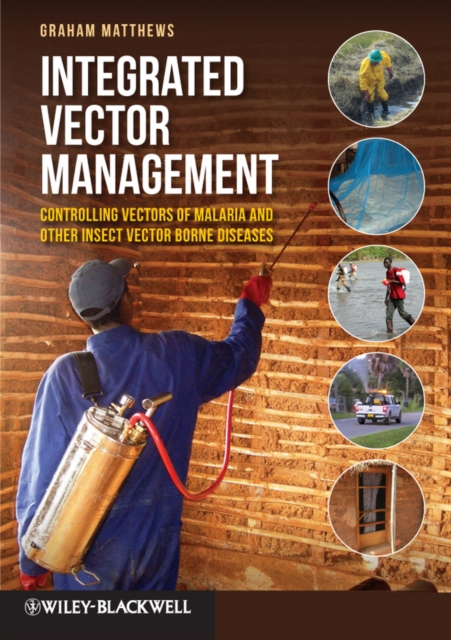
Integrated Vector Management
Diseases transmitted by insects continue to have a major impact on human populations. Malaria, dengue, onchocerciasis, sleeping sickness and leishmaniasis all adversely affect man. Malaria is one of the most important causes of child mortality and reduces economic development in many countries, with agricultural productivity often greatly reduced, as many vectors are active in the wet season favourable for crop production. Vector control is crucial to reduce the extent to which drugs are needed to treat the diseases, as the parasite can become resistant, or the drugs are often too expensive for those living in rural areas and urban slums most affected by these diseases. Chemical control of vectors is often the only method that can reduce vector populations in a disease epidemic, but with vectors developing resistance to insecticides, there is increasing awareness that a single control method is often insufficient and also that chemical control must be integrated where possible with other control measures. In Integrated Vector Management, Graham Matthews covers the main chemical methods of vector control, including the use of indoor residual spraying, space treatments, the use of treated bed nets and larviciding, but also stresses the importance of drainage schemes and improvement of houses to prevent access of indoor vectors, techniques that have largely been responsible for reducing the risk of vector borne diseases in Europe and the USA. This book combines practical information from successful vector control programmes, including early use of DDT, and recent research into a vital resource for all those now involved in combating insect vector borne diseases. Integrated Vector Management is an essential tool, not only for medical entomologists and those directly involved in government health departments, but also for all those who provide the skills and management needed to operate successful area-wide vector management programmes. Libraries in all universities and research establishments world-wide, where biological sciences, medicine and agriculture are studied and taught should have multiple copies of this important book.
eBook

Biorational tree-fruit pest management
As the human impact upon the environment becomes more apparent and severe, the need to develop agricultural techniques that cause minimal damage to the environment has increased. This is particularly the case in the area of pest management, where integrated pest management (IPM) strategies have become a fundamental component of plant protection. Focusing on insect pests of tree fruits and combining behavioural research with crop protection applications, this book emphasizes the importance of environmentally sustainable approaches in an agroecosystem. Both experimental and applied topics are discussed, including the conceptual framework of IPM, functional and behavioural ecology of a pest, host detection mechanisms and monitoring tool development, as well as pest management case studies. Representing a comprehensive discussion of tree-fruit pest management, from the evolution, ecology and behaviour of insect pests to the implementation of applied biorational programmes, this will be essential reading for researchers as well as commercial growers and extension agents.
eBook