
Catalogue Search | MBRL


Are you sure you want to remove the book from the shelf?

{{itemTitle}}
13
result(s) for
"Integration av invandrare."
Sort by:

Strangers no more : immigration and the challenges of integration in North America and Western Europe
\"Strangers No More is the first book to compare immigrant integration across key Western countries. Focusing on low-status newcomers and their children, it examines how they are making their way in four critical European countries--France, Germany, Great Britain, and the Netherlands--and, across the Atlantic, in the United States and Canada. This systematic, data-rich comparison reveals their progress and the barriers they face in an array of institutions--from labor markets and neighborhoods to educational and political systems--and considers the controversial questions of religion, race, identity, and intermarriage. Richard Alba and Nancy Foner shed new light on questions at the heart of concerns about immigration. They analyze why immigrant religion is a more significant divide in Western Europe than in the United States, where race is a more severe obstacle. They look at why, despite fears in Europe about the rise of immigrant ghettoes, residential segregation is much less of a problem for immigrant minorities there than in the United States. They explore why everywhere, growing economic inequality and the proliferation of precarious, low-wage jobs pose dilemmas for the second generation. They also evaluate perspectives often proposed to explain the success of immigrant integration in certain countries, including nationally specific models, the political economy, and the histories of Canada and the United States as settler societies. Strangers No More delves into issues of pivotal importance for the present and future of Western societies, where immigrants and their children form ever-larger shares of the population.\"--Jacket.
Book

The Logics and Politics of Post-WWII Migration to Western Europe
Few phenomena have been more disruptive to West European politics and society than the accumulative experience of post-WWII immigration. Against this backdrop spring two questions: Why have the immigrant-receiving states historically permitted high levels of immigration? To what degree can the social and political fallout precipitated by immigration be politically managed? Utilizing evidence from a variety of sources, this study explores the links between immigration and the surge of popular support for anti-immigrant groups; its implications for state sovereignty; its elevation to the policy agenda of the European Union; and its domestic legacies. It argues that post-WWII migration is primarily an interest-driven phenomenon that has historically served the macroeconomic and political interests of the receiving countries. Moreover, it is the role of politics in adjudicating the claims presented by domestic economic actors, foreign policy commitments, and humanitarian norms that creates a permissive environment for significant migration to Western Europe.
eBook

Immigration and Social Cohesion in the Republic of Ireland
In the last decade Ireland’s immigrant population grew to more than one in ten. Now in the midst of an economic crisis the integration of immigrants has become a topical issue. Drawing extensively on demographic data and research on immigrant lives, immigrant participation in Irish politics and the experiences of immigrants living in deprived communities, this book offers a thorough study of the immigrant experience in Ireland today. Well-researched chapters and case studies examine the effects of immigration on social cohesion, the role of social policy, the nature and extent of segregation in education, racism and discrimination in the labour market, and the barriers faced by immigrants seeking Irish citizenship. This book will be essential reading for students and scholars of immigration in Ireland and will appeal more broadly to those studying politics, sociology, geography and social policy.
eBook

The Changing Face of World Cities
A seismic population shift is taking place as many formerly racially homogeneous cities in the West attract a diverse influx of newcomers seeking economic and social advancement. Not only do young people from immigrant backgrounds make up a large and growing share of these cities’ populations but they will steadily replace the native-born baby boom generation as it ages out of the workplace and positions of influence. In The Changing Face of World Cities, a distinguished group of immigration experts presents the first systematic, data-based comparison of the lives of young adult children of immigrants growing up in seventeen big cities of Western Europe and the United States. Drawing on a comprehensive set of surveys, this important book brings together new evidence about the international immigrant experience and provides far-reaching lessons for devising more effective public policies. The Changing Face of World Cities pairs European and American researchers to explore how youths of immigrant origin negotiate educational systems, labor markets, gender, neighborhoods, citizenship, and identity on both sides of the Atlantic. Maurice Crul and his co-authors compare the educational trajectories of second generation Mexicans in Los Angeles with second generation Turks in Western European cities. In the U.S., uneven school quality in disadvantaged immigrant neighborhoods and the high cost of college are the main barriers to educational advancement, while in some European countries, rigid early selection sorts many students off the college track and into dead-end jobs. Students who got their education in the comprehensive U.S., French, or Swedish systems are more likely to go on to college than those from the highly stratified German and Austrian systems. Liza Reisel, Laurence Lessard-Phillips, and Phil Kasinitz find that while more young members of the second generation are employed in the U.S. than in Europe, they are also likely to hold low-paying jobs that barely lift them out of poverty. In Europe, where immigrant youth suffer from higher unemployment, the embattled European welfare system still yields them a higher standard of living than many of their American counterparts. Van Tran, Susan Brown, and Jens Schneider find that the benefits of the European social welfare system extend to the quality of life in immigrant neighborhoods: second generation Turks in Berlin live in much better neighborhood conditions than do Mexicans and Dominicans in L.A. and New York. Turning to issues of identity and belonging, Jens Schneider, Leo Chávez, Louis DeSipio, and Mary Waters find that it is far easier for the children of Dominican or Mexican immigrants to identify as American, in part because the U.S. takes hyphenated identities for granted. In Europe, religious bias against Islam makes it hard for young people of Turkish origin to identify strongly as German, French, or Swedish. Editors Maurice Crul and John Mollenkopf conclude that despite the barriers these youngsters encounter on both continents, they are making real progress relative to their parents and are beginning to close the gap with the native-born. The Changing Face of World Cities goes well beyond existing immigration literature focused on the U.S. experience to show that national policies on each side of the Atlantic can be enriched by lessons from the other. The Changing Face of World Cities will be vital reading for anyone interested in the young people who will shape the future of our increasingly interconnected global economy.
eBook
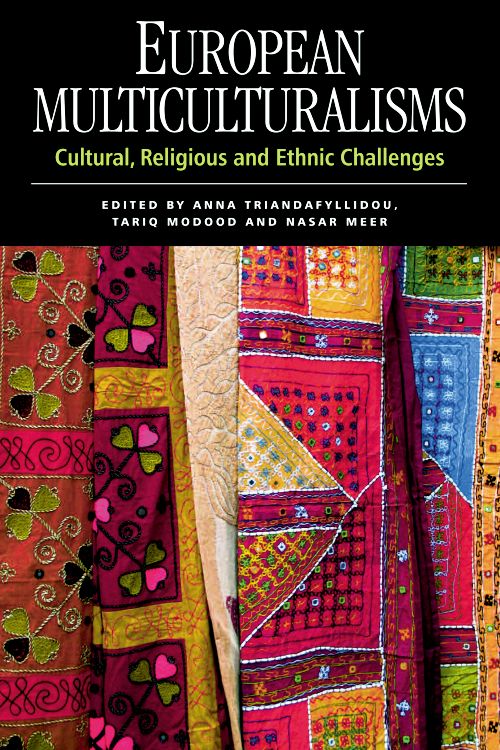
European multiculturalisms
Proposes a common European intellectual framework to evaluate recent developments in European multiculturalism The heightened security awareness in the wake of the 9/11 attacks and the London and Madrid bombings has resulted in a 'crisis of multiculturalism'. Now is the time to look at the renewed challenges that multiculturalism faces today. Each chapter in this interdisciplinary book reviews the actual state of affairs in several countries in relation to the theories behind immigrant minority claims. With a special focus on Muslim immigrants, the contributors look at the value issues entrenched in multiculturalism and the policy challenges and measures adopted to address them. Key Features * Focuses on 7 European countries - Belgium, Britain, Denmark, France, Germany, Greece and Spain * Gives an overview of different approaches to multiculturalism * Looks at issues of citizenship, diversity, civic recognition, gender, religious diversity & education, integration, anti-discrimination policies and social policy
eBook

Immigrant Adaptation in Multi-Ethnic Societies
As a result of international immigration, ethnic diversity has increased rapidly in many countries, not only in major cities, but also in smaller cities. This trend is not limited to the traditional immigrant receiving countries, such as the United States and Canada, but occurs also in many other countries where doors are gradually opening to immigration, especially in Asia. This combination of a growing immigrant population and ethnic diversity has fostered a more complex immigrant integration process.
This book addresses the subject at the city ecological level, inter-group level, and individual level. It contributes to the understanding of immigrant adaptation in a multi-ethnic context, brings Asian perspectives into the discussion of immigration and race and ethnic relations, and will serve as a basis for future study of immigrant adaptation in a multi-ethnic context.
eBook

Growing up Between Two Cultures
This volume deals with social, emotional and educational issues of Muslim children growing up in a Western country. It aims at shedding light on factors that contribute to the successful adjustment of these immigrant children and ways of helping them to adjust to the new life in their new country.
eBook

Readiness or Resistance? - Newly Arrived Adult Migrants' Experiences, Meaning Making, and Learning in Sweden
This thesis is about newly arrived adult migrants’ meaning making and learning in Swedish society during the two years’ introduction period, after they have received the residence permit. I have specifically studied Arabic speaking adults’ meaning making and learning, by carrying out observations and individual in-depth interviews with 12 migrants. The introduction period consists mainly of three so called introduction measures; the civic orientation course, Swedish for immigrants (SFI), and different work related activities, such as internship at different work places. The results show that etablering is about shaping the newly arrived adult migrants into ”good” citizens, through the introduction measures, among other things in the civic orientation course, which is regulated through the policy documents, and which so to say provides meaning to the newly arrived. The “good” citizen has some specific characteristics, which, roughly, are that he or she is independent (and advocates individuality), free, equality thinking, secularized, law-abiding (which includes being honest), responsible, and a “good” parent. These characteristics are expressed in different ways in the civic orientation course, for instance through the course material. The Swedish society is described as something desirable, and different from what is implied to be ”Arabic” values and ways of thinking. The idea of the “good” citizen appears to aim at constructing the adult migrants’ (and their families’) identity, something which many of the study’s respondents make a resistance to. As concerns the migrant’s new experiences, it is, for example, those which the migrant get through the contact with the Swedish Public Employment Service (SPES) that affect the meaning making in the new society. The meaning which most of the respondents have made of the SPES’s measures for them is that this authority only offers “prepackaged” solutions, and does not provide the help or support that they need. Also the experiences which the migrant has in the civic orientation course, and the meaning which ”old” migrants give to him or her, play a role when he or she makes meaning of Sweden and Swedes, and of his or her new life situation. Further, it has been shown that it is those experiences that the adult individual has been socialized through, and those which he or she has gained through work or education in his or her country of origin, which affect his or her meaning making in Sweden. It is mostly values which concern child upbringing and religion that lead to a certain understanding and construction of one’s new life. These values, when related to the values which are included in the ”good” citizen idea, also lead to either a resistance or a readiness towards the meaning giving that is embedded in the ”good” citizen notion.
Dissertation

Migration, Family and the Welfare State
Migration, Family and the Welfare State explores understandings and practices of integration in the Scandinavian welfare societies of Denmark, Norway and Sweden through a comprehensive range of detailed ethnographic studies. Chapters examine discourses, policies and programs of integration in the three receiving societies, studying how these are experienced by migrant and refugee families as they seek to realize the hopes and ambitions for a better life that led them to leave their country of origin. The three Scandinavian countries have had parallel histories as welfare societies receiving increasing numbers of migrants and refugees after World War II, and yet they have reacted in dissimilar ways to the presence of foreigners, with Denmark developing tough immigration policies and nationalist integration requirements, Sweden asserting itself as a relatively open country with an official multicultural policy, and Norway taking a middle position. The book analyses the impact of these differences and similarities on immigrants, refugees and their descendants across three intersecting themes: integration as a welfare state project; integration as political discourse and practice; and integration as immigrants' and refugees' quest for improvement and belonging.
This book was originally published as a special issue of the Journal of Ethnic and Migration Studies.
eBook

The Territorial Embeddedness of Novel Labour Integration Policy: Something Old, Something New and Something Borrowed
This paper examines how local governments can develop new practices in labour integration policy through cross-sector collaborations, and the role of territorial embeddedness in enabling them. The paper is informed by three initiatives for labour market integration of immigrants led by the city district of an urban suburb in the city of Göteborg, in collaboration with actors from the public sector, private sector, and civil society. The paper contributes to research into institutional entrepreneurship and local governments. First, it shows the importance of undermining old, or traditional, practices in labour market integration as part of the process of developing new ones. It also reveals how new practices and organizational forms are added to existing ones, instead of replacing them. Thus, expanding the scope of the public sector in the local labour market integration policy field through elaborative rather than radical change. Second, it reveals the importance to diffuse the new practices, beyond the boundaries of the collaboration that facilitates their creation. Third, the paper illustrates how, rather than hindering, the territorial embeddedness of these collaborative coalitions in marginalized urban suburbs provides access to a wide repertoire of resources, practices, and ideas to facilitate change. Paradoxically, the territorial embeddedness also hampered the diffusion of new practices in the broader field of labour market integration.
Journal Article