
Catalogue Search | MBRL


Are you sure you want to remove the book from the shelf?

{{itemTitle}}
79
result(s) for
"Intellectuals Germany Biography."
Sort by:

The man who knew everything : the strange life of Athanasius Kircher
\"A nonfiction biography of Athanasius Kircher, a 17th-century Jesuit, scientist, and polymath, [who] was one of the modern world's first scientific celebrities. His interests ranged from hieroglyphics to China to astrology to geology. He was one of the first scientists to formulate theories based on observation. In 1638, he was lowered into the smoking crater of Mount Vesuvius to observe how volcanoes worked. He published his findings 30 years later\"-- Provided by publisher.
Book

The demon of geopolitics
Karl Haushofer, a Bavarian general and professor, is widely recognized as the “father of geopolitics.” In 1945 the United States sought to put him on trial at Nuremberg as a major war criminal for being “Hitler’s intellectual godfather” and the true author of Mein Kampf. In this definitive biography, noted historian Holger H. Herwig assesses the fiction and reality behind these claims. Making comprehensive use of Haushofer’s previously unavailable private papers, Herwig analyzes Haushofer’s geopolitical concepts, his relations with his student Rudolf Hess, and his mentorship of Hitler and Hess at Landsberg Prison in 1924. Herwig offers unique insights into Haushofer’s crucial behind-the-scenes influence in providing the Nazis with his theories of Autarky and Lebensraum, the rationale for Germany’s control of Europe and the world. This riveting book ends with Haushofer’s final verdict on himself: “I want to be forgotten and forgotten.” But the author concludes with the admonition that the “demon” of Geopolitik demands much closer scrutiny in this new age of geopolitics.
eBook


System und Subversion
Den Philosophen und Theologen Friedrich Schleiermacher und den dänischen Philosophen, Mineralogen und Theologen Henrik Steffens verband nicht nur eine enge Freundschaft, sondern sie verstanden sich - kurz nacheinander 1804 an die Universität Halle berufen - auch als wissenschaftliches Pendant.
eBook

Toward the Century of Words
In the decades between the French Revolution and the first stirrings of liberalism in the 1830s, German political culture defined itself apart from that of its neighbors to the west. Focusing on the career of Johann Cotta, the preeminent publisher of his generation, this book offers a lens through which we can more fully view and understand these turbulent years. Cotta is a familiar figure in the history of German letters, but his public life has never been studied comprehensively. He financed and directed the Allgemeine Zeitung of Augsburg, which would become one of the great European newspapers of the nineteenth century. He was the first German to convert money and cultural prestige into political power by means of the press. Cotta and his colleagues emerge not as liberals, but as characteristic figures of the Reform era. Their aim was to define and institutionalize a realm of thought and action beyond the control of the state, but short of opposed to it--a \"public\" realm in which intellectual independence and political loyalty would be equally well served. This title is part of UC Press's Voices Revived program, which commemorates University of California Press's mission to seek out and cultivate the brightest minds and give them voice, reach, and impact. Drawing on a backlist dating to 1893, Voices Revived makes high-quality, peer-reviewed scholarship accessible once again using print-on-demand technology. This title was originally published in 1990. Many titles in the Voices Revived program are also newly available as ebooks, offered at a discounted price to support wider access to scholarly work.
eBook

Berlin psychoanalytic
One hundred years after the Berlin Psychoanalytic Institute was established, this book recovers the cultural and intellectual history connected to this vibrant organization and places it alongside the London Bloomsbury group, the Paris Surrealist circle, and the Viennese fin-de-siècle as a crucial chapter in the history of modernism. Taking us from World War I Berlin to the Third Reich and beyond to 1940s Palestine and 1950s New York—and to the influential work of the Frankfurt School—Veronika Fuechtner traces the network of artists and psychoanalysts that began in Germany and continued in exile. Connecting movements, forms, and themes such as Dada, multi-perspectivity, and the urban experience with the theory and practice of psychoanalysis, she illuminates themes distinctive to the Berlin psychoanalytic context such as war trauma, masculinity and femininity, race and anti-Semitism, and the cultural avant-garde. In particular, she explores the lives and works of Alfred Döblin, Max Eitingon, Georg Groddeck, Karen Horney, Richard Huelsenbeck, Count Hermann von Keyserling, Ernst Simmel, and Arnold Zweig.
eBook
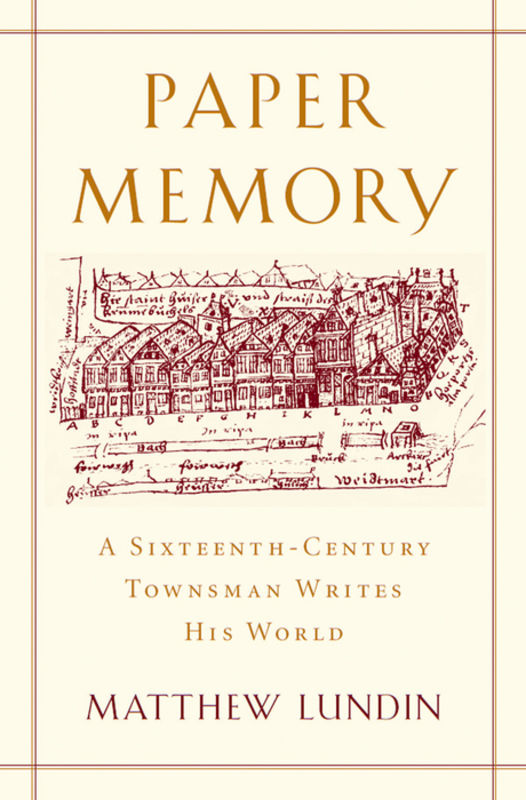
Paper Memory
Paper Memory tells of one man's mission to preserve for posterity the memory of everyday life in sixteenth-century Germany. Lundin takes us inside the mind of an undistinguished German burgher, Hermann Weinsberg, whose early-modern writings sought to make sense of changes that were unsettling the foundations of his world.
eBook
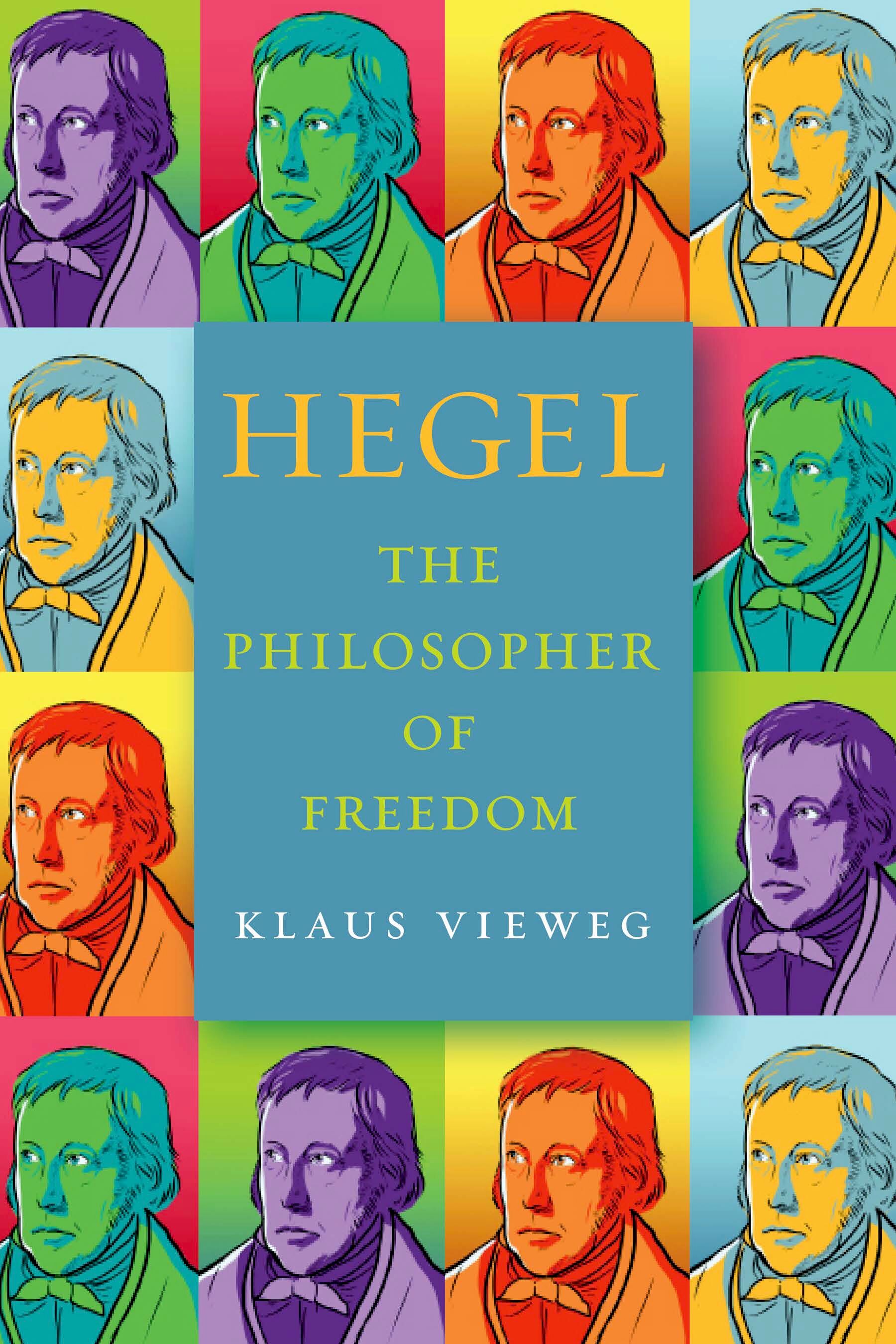
Hegel
A monumental new biography of a pivotal yet poorly understood pioneer in modern philosophy.
When a painter once told Goethe that he wanted to paint the most celebrated man of the age, Goethe directed him to Georg Wilhelm Friedrich Hegel. Hegel worked from the credo: To philosophize is to learn to live freely. While he was slow and cautious in the development of his philosophy, his intellectual growth was like an odyssey of the mind, and, contrary to popular belief, his life was full of twists and turns, suspense and even danger.
In this landmark biography, the philosopher Klaus Vieweg paints a new picture of the life and work of the most important representative of German idealism. His vivid portrait provides readers an intimate account of Hegel's times and the milieu in which he developed his thought, along with detailed, clear-sighted analyses of Hegel's four major works. What results is a new interpretation of Hegel through the lens of reason and freedom.
Vieweg draws on extensive archival research that has brought to light a wealth of hitherto undiscovered documents and handwritten notes relating to Hegel's work, touching on Hegel's engagement with the leading thinkers and writers of his age: Kant, Fichte, Schelling, Hölderlin, and others. Combatting clichés and misunderstandings about Hegel, Vieweg also offers a sustained defense of the philosopher's more progressive impulses. Highly praised upon its release in Germany as having set the new biographical standard, this monumental work emphasizes Hegel's relevance for today, depicting him as a vital figure in the history of philosophy.
eBook

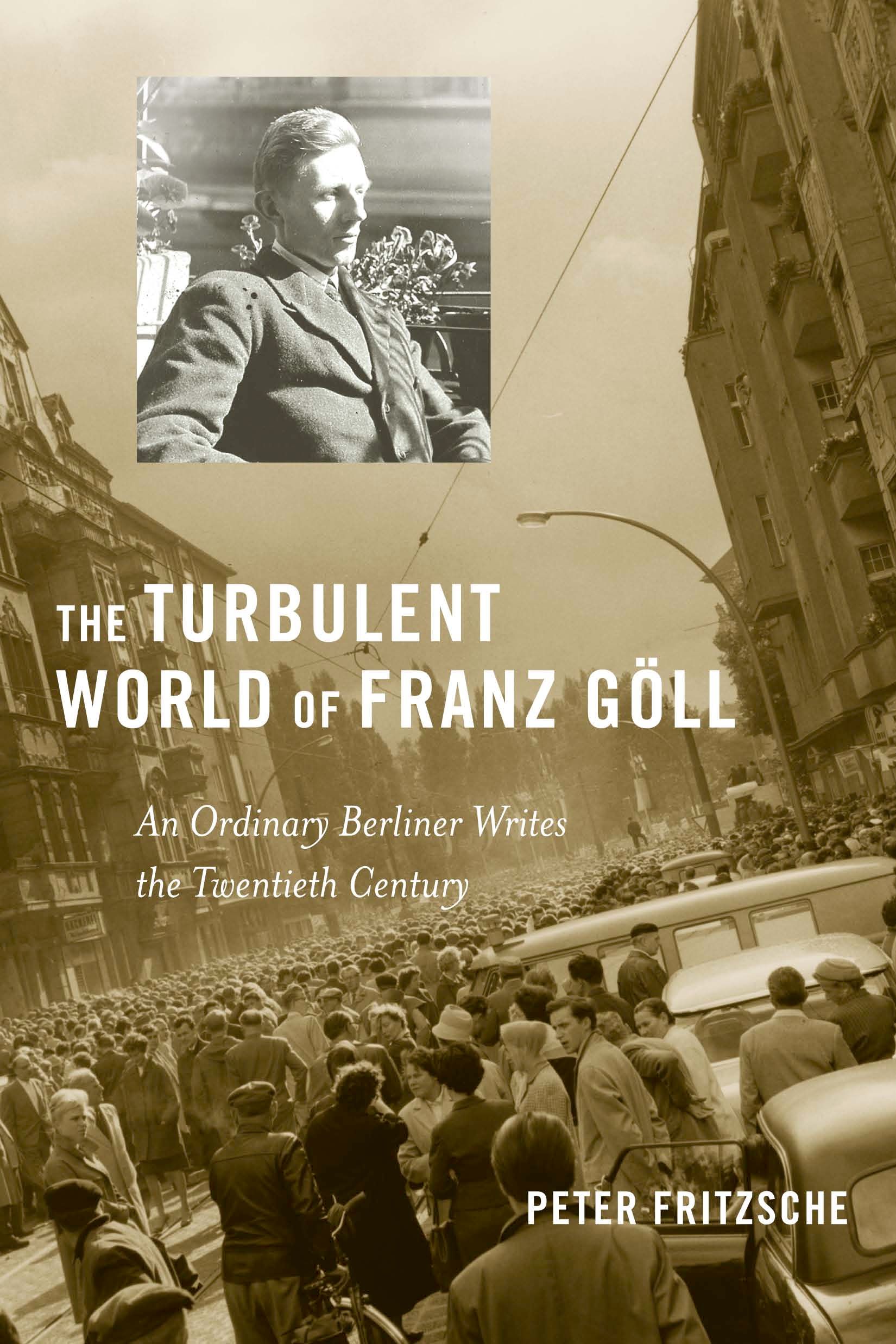
The turbulent world of Franz Göll : an ordinary Berliner writes the twentieth century
Franz Göll was a thoroughly typical Berliner. He worked as a clerk, sometimes as a postal employee, night watchman, or publisher's assistant. He enjoyed the movies, ate spice cake, wore a fedora, tamed sparrows, and drank beer or schnapps. He lived his entire life in a two-room apartment in Rote Insel, Berlin's famous working-class district. What makes Franz Göll different is that he left behind one of the most comprehensive diaries available from the maelstrom of twentieth-century German life. Deftly weaving in Göll's voice from his diary entries, Fritzsche narrates the quest of an ordinary citizen to make sense of a violent and bewildering century.
Peter Fritzsche paints a deeply affecting portrait of a self-educated man seized by an untamable impulse to record, who stayed put for nearly seventy years as history thundered around him. Determined to compose a \"symphony\" from the music of everyday life, Göll wrote of hungry winters during World War I, the bombing of Berlin, the rape of his neighbors by Russian soldiers in World War II, and the flexing of U.S. superpower during the Reagan years. In his early entries, Göll grappled with the intellectual shockwaves cast by Darwin, Freud, and Einstein, and later he struggled to engage with the strange lifestyles that marked Germany's transition to a fluid, dynamic, unmistakably modern society.
With expert analysis, Fritzsche shows how one man's thoughts and desires can give poignant shape to the collective experience of twentieth-century life, registering its manifold shocks and rendering them legible.
eBook