
Catalogue Search | MBRL


Are you sure you want to remove the book from the shelf?

{{itemTitle}}
101,945
result(s) for
"Intelligence Studies"
Sort by:

Intelligence Services in the Post-Truth Era: New Institutions of Truth? The Czech Case
The article examines how Czech intelligence services—the Security Information Service (BIS) and Military Intelligence (VZ)—adapt their public communication to challenges of the post-truth era marked by declining trust, disinformation, and social polarisation. Through an exploratory analysis of media outputs and public reactions from 2017–2025, the study assesses whether greater transparency and strategic communication can strengthen democratic resilience and enhance the legitimacy of intelligence institutions. The findings show that BIS and VZ are perceived on social media mainly in pragmatic or neutral terms, with positive legitimacy responses exceeding critical ones. Conceptually, the article links critical intelligence studies, the democratisation of intelligence, and militant democracy to evaluate how public engagement can support societal trust. The study argues that intelligence services can foster institutional credibility and societal resilience when they communicate apolitically, transparently, and in accessible ways.
Journal Article

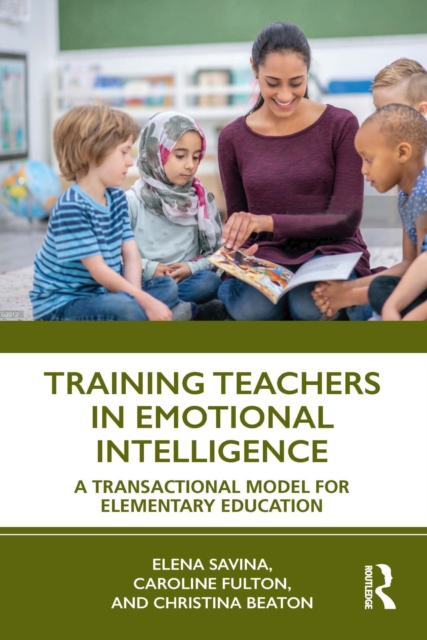
Training Teachers in Emotional Intelligence
Training Teachers in Emotional Intelligence provides pre- and in-service teachers with foundational knowledge and skills regarding their own and their students' emotions. Teachers are increasingly charged with providing social-emotional learning, responding to emotional situations in the classroom, and managing their own stress, all of which have real consequences for their retention and student achievement. Focused on the primary/elementary level, this book is an accessible review of children's emotional development, the role of emotions in learning, teaching, and teachers' professional identity. The book provides strategies for teachers to foster their emotional awareness, use emotions to promote learning and relationships, foster emotional competencies in students, and stay emotionally healthy.
eBook

Health 5.0 : concepts, challenges, and solutions
\"This book presents a detailed explanation of the concepts, taxonomy, and challenges in Healthcare 4.0 and provides frameworks and architectures for the adaptation and fusion of emerging technologies under Healthcare 5.0. The healthcare industry requires technological upgrades to provide precise, accurate, and automatic remote health monitoring and diagnosis. This reference book offers an early opportunity to explore emerging technologies and understand current issues, problems, and concepts. The primary audience for this book incorporates academicians, researcher scholars, IoMT developers, Cloud-Based health application designers, and medical practitioners who are engaged in providing healthcare services using recent technologies\"-- Provided by publisher.
BOOK

Why Intelligence Fails
The U.S. government spends enormous resources each year on the
gathering and analysis of intelligence, yet the history of American
foreign policy is littered with missteps and misunderstandings that
have resulted from intelligence failures. In Why Intelligence
Fails , Robert Jervis examines the politics and psychology of
two of the more spectacular intelligence failures in recent memory:
the mistaken belief that the regime of the Shah in Iran was secure
and stable in 1978, and the claim that Iraq had active WMD programs
in 2002.
The Iran case is based on a recently declassified report Jervis
was commissioned to undertake by CIA thirty years ago and includes
memoranda written by CIA officials in response to Jervis's
findings. The Iraq case, also grounded in a review of the
intelligence community's performance, is based on close readings of
both classified and declassified documents, though Jervis's
conclusions are entirely supported by evidence that has been
declassified.
In both cases, Jervis finds not only that intelligence was badly
flawed but also that later explanations-analysts were bowing to
political pressure and telling the White House what it wanted to
hear or were willfully blind-were also incorrect. Proponents of
these explanations claimed that initial errors were compounded by
groupthink, lack of coordination within the government, and failure
to share information. Policy prescriptions, including the recent
establishment of a Director of National Intelligence, were supposed
to remedy the situation.
In Jervis's estimation, neither the explanations nor the
prescriptions are adequate. The inferences that intelligence drew
were actually quite plausible given the information available.
Errors arose, he concludes, from insufficient attention to the ways
in which information should be gathered and interpreted, a lack of
self-awareness about the factors that led to the judgments, and an
organizational culture that failed to probe for weaknesses and
explore alternatives. Evaluating the inherent tensions between the
methods and aims of intelligence personnel and policymakers from a
unique insider's perspective, Jervis forcefully criticizes recent
proposals for improving the performance of the intelligence
community and discusses ways in which future analysis can be
improved.
eBook

Mastering AI : a survival guide to our superpowered future
\"A Fortune magazine journalist draws on his expertise and extensive contacts among the companies and scientists at the forefront of artificial intelligence to offer dramatic predictions of AI's impact over the next decade, from reshaping our economy and the way we work, learn, and create to unknitting our social fabric, jeopardizing our democracy, and fundamentally altering the way we think. Within the next five years, Jeremy Kahn predicts, AI will disrupt almost every industry and enterprise, with vastly increased efficiency and productivity. It will restructure the workforce, making AI copilots a must for every knowledge worker. It will revamp education, meaning children around the world can have personal, portable tutors. It will revolutionize health care, making individualized, targeted pharmaceuticals more affordable. It will compel us to reimagine how we make art, compose music, and write and publish books. The potential of generative AI to extend our skills, talents, and creativity as humans is undeniably exciting and promising. But while this new technology has a bright future, it also casts a dark and fearful shadow. AI will provoke pervasive, disruptive, potentially devastating knock-on effects. Leveraging his unrivaled access to the leaders, scientists, futurists, and others who are making AI a reality, Kahn will argue that if not carefully designed and vigilantly regulated AI will deepen income inequality, depressing wages while imposing winner-take-all markets across much of the economy. AI risks undermining democracy, as truth is overtaken by misinformation, racial bias, and harmful stereotypes. Continuing a process begun by the internet, AI will rewire our brains, likely inhibiting our ability to think critically, to remember, and even to get along with one another--unless we all take decisive action to prevent this from happening\"-- Provided by publisher.
Book

Assessing with respect : everyday practices that meet students' social and emotional needs
In this timely and thoughtful call to action, author and educator Starr Sackstein examines the critical intersection between assessment and social and emotional learning (SEL), particularly as it affects students of color and other marginalized groups. The book addresses the five SEL competencies identified by the Collaborative for Academic, Social, and Emotional Learning (CASEL)--self-awareness, self-management, social awareness, relationship skills, and responsible decision making--and explains how teaching students to develop their abilities in these areas can help them improve their learning and assessment experiences. Sackstein also raises important considerations for educators, urging them to: (1) Examine their implicit biases to improve their relationships with students; (2) Deepen their understanding of the impact of grades and assessments on students' self-image and their ability to reach their full potential as learners; and (3) Develop personalized assessment systems that ensure an accurate, fair, and equitable portrayal of what students know and can do. In addition to presenting the relevant research, Sackstein draws from personal experience and the reflections of students, teachers, and administrators to present a compelling case for approaching assessment through the SEL lens. Educators at all levels who have witnessed the devastating effects that testing can have on students' beliefs in themselves as learners will find \"Assessing with Respect\" to be an invaluable guide to ensuring better outcomes--and better emotional health--for all students.
eBook


Intelligence and Strategy
John Ferris' work in strategic and intelligence history is widely praised for its originality and the breadth of its research. At last his major pioneering articles are now available in this one single volume.
In Intelligence and Strategy these essential articles have been fundamentally revised to incorporate new evidence and information withheld by governments when they were first published. This volume reshapes the study of communications intelligence by tracing Britain's development of cipher machines providing the context to Ultra and Enigma, and by explaining how British and German signals intelligence shaped the desert war. The author also explains how intelligence affected British strategy and diplomacy from 1874 to 1940 and world diplomacy during the 1930s and the Second World War. Finally he traces the roots for contemporary intelligence, and analyzes intelligence and the RMA as well as the role of intelligence in the 2003 Gulf War. This volume ultimately brings new light to our understanding of the relations between intelligence, strategy and diplomacy between the end of the 19th century and the beginning of the 21st century.
John Ferris is a Professor of History at The University of Calgary. He has written widely on military history, strategy and intelligence studies. Among his works are The Evolution of British Strategic Policy, 1919-1926 (1989) and The British Army and Signals Intelligence during the First World War. He is a co-author of A World History of Warfare (2002).
1. Lord Salisbury, Secret Intelligence and British Policy Toward Russia and Central Asia, 1874-1878 2. 'Indulged in all Too Little'?: Vansittart, Intelligence and Appeasement 3. Image and Accident: Intelligence and the Origins of the Second World War, 1933-1941 4. The British 'Enigma': Britain, Signals Security and Cipher Machines, 1906-1953 5. The British Army, Signals and Security in the Desert Campaign, 1940-42 6. Clausewitz, Intelligence, Uncertainty and the Art of Command in Modern War (with Michael Handel) 7. NCW, C4ISR, IO and RMA: Towards a Revolution in Military Intelligence?
eBook