
Catalogue Search | MBRL


Are you sure you want to remove the book from the shelf?

{{itemTitle}}
7,578
result(s) for
"Intelligence levels."
Sort by:

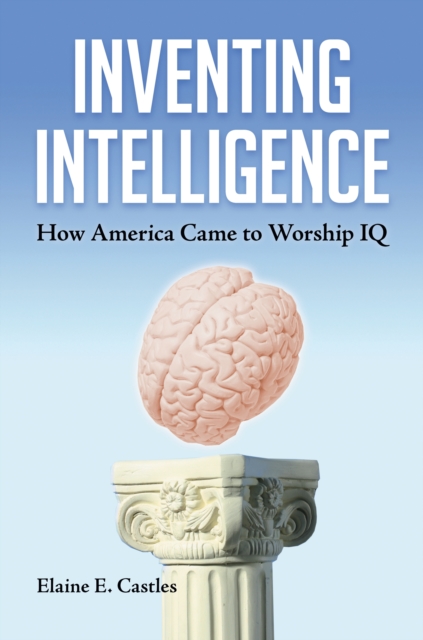
Inventing intelligence : how America came to worship IQ
The use and misuse of IQ tests has long been a subject of contention in the scientific and social communities, particularly because these evaluations favor intelligence at the expense of other valuable human qualities. This is the first book of its kind to examine the historical development of our modern concept of intelligence and to explore America's fascination with the controversial exams that purport to measure it.
Most of us assume that people in every period and in every region of the world have understood and valued intelligence in the same way we do today. Our modern concept of intelligence, however, is actually quite recent, emerging from the dramatic social and scientific changes that rocked the United States during the 19th century.
Inventing Intelligence: How America Came to Worship IQ discusses the historical context for understanding the development of the concept of intelligence and the tests used to measure it. The author delves into the intertwined issues of IQ, heredity, and merit to offer a provocative look at how Americans came to overvalue IQ and the personal and social problems that have resulted.
eBook


A survey on large language model based autonomous agents
Autonomous agents have long been a research focus in academic and industry communities. Previous research often focuses on training agents with limited knowledge within isolated environments, which diverges significantly from human learning processes, and makes the agents hard to achieve human-like decisions. Recently, through the acquisition of vast amounts of Web knowledge, large language models (LLMs) have shown potential in human-level intelligence, leading to a surge in research on LLM-based autonomous agents. In this paper, we present a comprehensive survey of these studies, delivering a systematic review of LLM-based autonomous agents from a holistic perspective. We first discuss the construction of LLM-based autonomous agents, proposing a unified framework that encompasses much of previous work. Then, we present a overview of the diverse applications of LLM-based autonomous agents in social science, natural science, and engineering. Finally, we delve into the evaluation strategies commonly used for LLM-based autonomous agents. Based on the previous studies, we also present several challenges and future directions in this field.
Journal Article

Are we getting smarter? : rising IQ in the twenty-first century
\"The 'Flynn effect' is a surprising finding, identified by James R. Flynn, that IQ test scores have significantly increased from one generation to the next over the past century. Flynn now brings us an exciting new book which aims to make sense of this rise in IQ scores and considers what this tells us about our intelligence, our minds and society.\"--Provided by publisher.
Book

A Growth Mindset Scale for Young Children
Beliefs about the malleability of intellectual ability-mindsets-shape achievement. Recent evidence suggests that even young children hold such mindsets; yet, no reliable and valid instruments exist for measuring individual differences in young children's mindsets. Given the potential relevance of mindsets to children's achievement-related behavior and learning, we developed and tested the psychometric properties of the Growth Mindset Scale for Children (GM-C). Among other psychometric properties, we assessed this instrument's (a) factor structure, (b) measurement invariance, (c) internal consistency, (d) temporal stability (test-retest reliability), (e) concurrent validity, and (f) cross-cultural robustness in samples of US children (Study 1; N = 220; ages 4 through 6; 50% girls; 39% White) and South African children (Study 2; predominantly grades 4 and 5; N = 331; 54% girls; 100% non-White). The GM-C scale exhibited four factors, representing beliefs about the instability of low ability, the malleability of low ability, the instability of high ability, and the malleability of high ability. The GM-C scale also demonstrated invariance across age, acceptable internal consistency ([alpha]s between .70 to .90), and moderate temporal stability over approximately one month (rs between .38 to .72). Concurrent validity was supported by significant relations between children's scores on the subscales about low ability and their goal orientations (Studies 1 and 2), challenge-seeking behavior, and achievement in math and English (Study 2). These findings suggest that the GM-C scale is a promising tool for measuring mindsets in young children. We offer practical recommendations for using this new scale and discuss theoretical implications.
Journal Article

Intelligence : a very short introduction
Some people appear to be smarter than others, but how do we measure intelligence? Why do some people have better thinking powers than others? What does intelligence predict about people's health and social outcomes? This \"Very Short Introduction\" uses the best, large-scale psychological data to answer important questions about intelligence, such as how environment, genes, brain structure, gender, and age affect people's thinking skills. It asks whether intelligence increased over the 20th century. Ian Deary also considers the new field of cognitive epidemiology, which discovers links between higher intelligence and better health, lower rates of illness, and longer life. -- From publisher's description.
Book

Genetics and intelligence differences: five special findings
Intelligence is a core construct in differential psychology and behavioural genetics, and should be so in cognitive neuroscience. It is one of the best predictors of important life outcomes such as education, occupation, mental and physical health and illness, and mortality. Intelligence is one of the most heritable behavioural traits. Here, we highlight five genetic findings that are special to intelligence differences and that have important implications for its genetic architecture and for gene-hunting expeditions. (i) The heritability of intelligence increases from about 20% in infancy to perhaps 80% in later adulthood. (ii) Intelligence captures genetic effects on diverse cognitive and learning abilities, which correlate phenotypically about 0.30 on average but correlate genetically about 0.60 or higher. (iii) Assortative mating is greater for intelligence (spouse correlations ~0.40) than for other behavioural traits such as personality and psychopathology (~0.10) or physical traits such as height and weight (~0.20). Assortative mating pumps additive genetic variance into the population every generation, contributing to the high narrow heritability (additive genetic variance) of intelligence. (iv) Unlike psychiatric disorders, intelligence is normally distributed with a positive end of exceptional performance that is a model for ‘positive genetics’. (v) Intelligence is associated with education and social class and broadens the causal perspectives on how these three inter-correlated variables contribute to social mobility, and health, illness and mortality differences. These five findings arose primarily from twin studies. They are being confirmed by the first new quantitative genetic technique in a century—Genome-wide Complex Trait Analysis (GCTA)—which estimates genetic influence using genome-wide genotypes in large samples of unrelated individuals. Comparing GCTA results to the results of twin studies reveals important insights into the genetic architecture of intelligence that are relevant to attempts to narrow the ‘missing heritability’ gap.
Journal Article


The neuroscience of human intelligence differences
Key Points
More than 100 years of empirical research provide conclusive evidence that a general factor of intelligence (also known as
g
, general cognitive ability, mental ability and IQ (intelligence quotient)) exists, despite some claims to the contrary. Intelligence can be reliably measured, is stable in rank-order across the lifespan, and is predictive of many important life outcomes, including educational and occupational success, health and longevity.
Intelligence shows high heritability in quantitative genetic studies; this heritability increases across the lifespan to mid-adulthood and partly overlaps with genetic variance that influences brain structure.
As with many other highly heritable complex traits, the genetic polymorphisms underlying normal-range intelligence differences remain elusive. One possible explanation is that many mildly harmful, lineage-specific, rare genetic variants ('mutation load') might be responsible for the heritability of intelligence.
The most robust finding in the neuroscience of intelligence is that larger brains, and a greater volume of grey matter in various regions in the brain, are associated with higher intelligence.
Intelligence does not reside in a single localized area in the brain. The available evidence suggests a widely distributed network of parieto-frontal brain areas underlies intelligence.
The distributed nature of intelligence in the brain suggests a crucial role of white matter integrity and an efficient neurological network structure. Both hypotheses have initial empirical support.
Functional efficiency (that is, low energy consumption in task-relevant brain areas) is also related to higher intelligence, especially when task difficulty is neither particularly high nor particularly low.
Various lines of evidence suggest that men and women might use their brains differently to achieve similar levels of cognitive performance. These sex differences might extend to individual differences: people might differ in how they use their brains to solve the same cognitive tasks.
The biological bases of individual differences in intelligence are largely unknown. Deary and colleagues discuss why, despite its high heritability, the molecular underpinnings of intelligence remain elusive, and show that variations in the structure and efficiency of brain pathways might contribute to intelligence differences.
Neuroscience is contributing to an understanding of the biological bases of human intelligence differences. This work is principally being conducted along two empirical fronts: genetics — quantitative and molecular — and brain imaging. Quantitative genetic studies have established that there are additive genetic contributions to different aspects of cognitive ability — especially general intelligence — and how they change through the lifespan. Molecular genetic studies have yet to identify reliably reproducible contributions from individual genes. Structural and functional brain-imaging studies have identified differences in brain pathways, especially parieto-frontal pathways, that contribute to intelligence differences. There is also evidence that brain efficiency correlates positively with intelligence.
Journal Article