
Catalogue Search | MBRL


Are you sure you want to remove the book from the shelf?

{{itemTitle}}
3,070
result(s) for
"Intelligentsia"
Sort by:

La muerte es un lujo innecesario Del cosmismo ruso al transhumanismo universal
A lo largo del siglo XIX, Rusia conoció una larga tradición utópica y emancipatoria letrada desarrollada por la intelligentsia. El cosmismo ruso, más tarde casi olvidado, formó parte de este espíritu inconformista. Al revisitarlo, podemos ver en él debates e ¡deas -algunas «descabelladas»que conectan con utopías y distopías de nuestro presente.
Journal Article
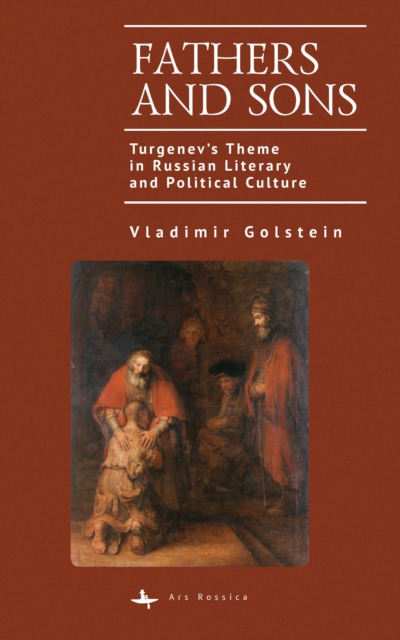
Fathers and Sons
With political power in Russia flowing directly from the ruler to his subjects, the distinction between the public and private became porous. The identification of political rulers with fathers, and population with children created a dynamic that significantly shaped Russian attitudes and cultural practices, and tinted social conflicts with intensity of family dramas. This book examines artistic works generated by the reforms, revolutions, and other political transformations of the last two centuries, through the prism of generational interaction, illuminating and re-interpreting the frequently misunderstood or misread cultural events such as the reception of St. Petersburg, Dostoevsky’s and Bely's novels, Stalin’s cult of personality, and Eisenstein’s films.
eBook

Educated acquiescence: how academia sustains authoritarianism in China
As a presumed bastion of the Enlightenment values that support a critical intelligentsia, the university is often regarded as both the bedrock and beneficiary of liberal democracy. By contrast, authoritarian regimes are said to discourage higher education out of fear that the growth of a critical intelligentsia could imperil their survival. The case of China, past and present, challenges this conventional wisdom. Imperial China, the most enduring authoritarian political system in world history, thrived in large part precisely because of its sponsorship of a form of higher education closely tied to state interests. Although twentieth-century revolutions brought fundamental change to Chinese politics and pedagogy, the contemporary party-state also actively promotes higher education, cultivating a mutually advantageous state-scholar nexus and thereby reducing the likelihood of intellectual-led opposition. As in the imperial past, authoritarian rule in China today is buttressed by a pattern of
educated acquiescence
, with academia acceding to political compliance in exchange for the many benefits conferred upon it by the state. The role of educated acquiescence in enabling Chinese authoritarianism highlights the contributions of a cooperative academy to authoritarian durability and raises questions with prevailing assumptions that associate the flourishing of higher education with liberal democracy.
Journal Article
The Authority and Symbolic Capital of the Polish Intelligentsia
There has been a notable absence of analysis of how the intelligentsia is perceived by society, eventhough such studies would be instrumental in the current context, where there are growing challenges to authorityand intensifying anti-elite sentiment aimed especially at cultural elites. This paper addresses the current authorityand symbolic capital of the intelligentsia. It draws on empirical data collected in a survey of Polish society andutilizes Weber’s concept of authority and Bourdieu’s theory of capital. The study established that Poles identifythe intelligentsia mainly in its historically shaped form as people with cultural capital and an ethos understood aslifestyle or moral obligation. The image of the intelligentsia is defined in opposition to “specialists without spirit,”and only then it is socially effective and still recognized as symbolically important. As a result, the intelligentsiais cast as an authority, which gives it the right to play a leading role. This paper posits that as long as the imageof an ethos-based, selfless group endowed with cultural capital prevails in society, the intelligentsia will continueto possess symbolic capital.
Journal Article

Social Genealogy of the Polish Intelligentsia
The text is a reprint of the second chapter of Józef Chałasiński’s essay Społeczna genealogia inteligencji polskiej [Social Genealogy of the Polish Intelligentsia], originally published in 1946.
Journal Article

Using southern theory
Recent work in social science challenges managerial assumptions about homogenous knowledge domains, and traces the effects of a world economy of knowledge structured by the history of colonialism and current north-south global inequalities. The differentiation of knowledge rests on the very different histories and situations of metropolitan, creole, colonized and post-colonial intelligentsias. Different knowledge projects have been constructed in global space, which feed back on our understanding of knowledge itself. Less recognized, but increasingly important, are uses of southern and postcolonial perspectives in applied social science, in areas ranging from education to urban planning. Some implications of these applications are discussed: southern theory is not a fixed set of propositions but a challenge to develop new knowledge projects and new ways of learning with globally expanded resources.
Journal Article
INTELLIGENTSIA CONGOLAISE, REFONDATION DE L’ÉTAT ET DÉVELOPPEMENT LOCAL EN TERRITOIRE DE FIZI, SUD-KIVU, R. D. CONGO
Several authors have demonstrated, through theoretical and empirical studies, that democratic institutions play a very important role in the economic growth process. By clearly defining the mechanisms for accession to power and alternation of power, democratic regimes inhibit political destabilization. Most of the population of Fizi Territory, in the province of South Kivu, lives from agriculture, fishing, livestock breeding, small-scale trade and artisanal mining. Following the cyclical instability observed since the independence of Congo-Zaïre in 1960, the Territory of Fizi has remained a red zone. The Force Bendera dam, Lake Tanganyika and the RN5, the main sources of local development, have never been exploited. Until 2008, the political intelligentsia navigated blindly without any local development planning tools. The long-awaited basic elections never took place. Sovereignty at grassroots level was violated and is now in the hands of the protectors of the land. As a result, the rebuilding of the now non-existent state is a real and pressing priority. Identity-based violence must be banished by all means.
Journal Article
From Wallerstein to Rothschild
This article investigates a neglected issue of the influence of systemic transformation in Central and Eastern Europe on the (sub)field of social sciences and more broadly on local fields of power. Our case study concerns a vibrant and internationally connected network of scholars from various disciplines and generations who were involved in developing and popularizing a dependency paradigm in communist Poland. As we show that the fall of communism and related transformation in the Polish field of power brought about dramatic shift in terms of their career trajectories as well as their ideological orientation and in consequence a sudden disappearance of this academic ecosystem. On this basis we argue about wider changes—encompassing marginalization of the “critical,” autonomous tradition and strengthening of heteronomic trends in social sciences in the region but also at the global level.
Journal Article

\Perhaps A Very Curious Document Will Emerge for Posterity on the State of Mind Around the Year 1893\
Hermann Bahr's Der Antisemitismus: Ein Internationales Interview (1894) is a forgotten study that offers a wide tapestry of insights into a problem that does not seem to go away. What is remarkable about this work is that it does not follow a scientific or scholarly template, i.e., it does not attempt to include a cross section of the population of a given country or a specific target group across many countries, but, instead, interviews the best and the brightest of the European intelligentsia of the time, irrespective of political affiliation or ideology. Writers as diverse as Henrik Ibsen, August Bebel, Theodor Mommsen, and Edmond Picard discuss four central questions: What is the nature of antisemitism? What are its causes? What is a Jew? And finally, what can be done to combat antisemitism?
Journal Article

History without Documents
Shakry explores the idea of a \"history without documents,\" first by outlining the material inaccessibility of postcolonial state archives in the Middle East, and second by questioning the compositional logics of archival imaginaries of decolonization. She also determines the ways historians have remembered, forgotten, or appropriated the various intellectual traditions that belonged to the era of decolonization in the Middle East. By shifting people's attention away from dominant and declensionist narratives of decolonization as a state-driven and secular political process so as to include members of the intelligentsia, social scientists, and religious thinkers, who are by-passed in or excised from traditional archives, she suggests that they might better see decolonization as \"an ongoing process and series of struggles rather than a finite event, as regional as well as national, intellectual and cultural as well as political, and religious as well as secular.\"
Journal Article