
Catalogue Search | MBRL


Are you sure you want to remove the book from the shelf?

{{itemTitle}}
9
result(s) for
"Intercountry adoption-Law and legislation"
Sort by:


Facing the Past
In a growing number of countries, inquiries into past intercountry adoptions take place that identify systemic abuses and irregularities and conclude that adoption stakeholders encouraged or facilitated illegal intercountry adoptions.
eBook

Belonging in an adopted world
Since the early 1990s, transnational adoptions have increased at an astonishing rate, not only in the United States, but worldwide. In Belonging in an Adopted World, Barbara Yngvesson offers a penetrating exploration of the consequences and implications of this unprecedented movement of children, usually from poor nations to the affluent West. Yngvesson illuminates how the politics of adoption policy has profoundly affected the families, nations, and children involved in this new form of social and economic migration. Starting from the transformation of the abandoned child into an adoptable resource for nations that give and receive children in adoption, this volume examines the ramifications of such gifts, especially for families created through adoption and later, the adopted adults themselves. Bolstered by an account of the author’s own experience as an adoptive parent, and fully attuned to the contradictions of race that shape our complex forms of family, Belonging in an Adopted World explores the fictions that sustain adoptive kinship, ultimately exposing the vulnerability and contingency behind all human identity.
eBook

The traffic in babies : cross-border adoption and baby-selling between the United States and Canada, 1930-1972
Between 1930 and the mid-1970s, several thousand Canadian-born children were adopted by families in the United States. At times, adopting across the border was a strategy used to deliberately avoid professional oversight and take advantage of varying levels of regulation across states and provinces. The Traffic in Babies traces the efforts of Canadian and American child welfare leaders — with intermittent support from immigration officials, politicians, police, and criminal prosecutors — to build bridges between disconnected jurisdictions and control the flow of babies across the Canada-U.S. border. Karen A. Balcom details the dramatic and sometimes tragic history of cross-border adoptions — from the Ideal Maternity Home case and the Alberta Babies-for-Export scandal to trans-racial adoptions of Aboriginal children. Exploring how and why babies were moved across borders, The Traffic in Babies is a fascinating look at how social workers and other policy makers tried to find the birth mothers, adopted children, and adoptive parents who disappeared into the spaces between child welfare and immigration laws in Canada and the United States.
eBook
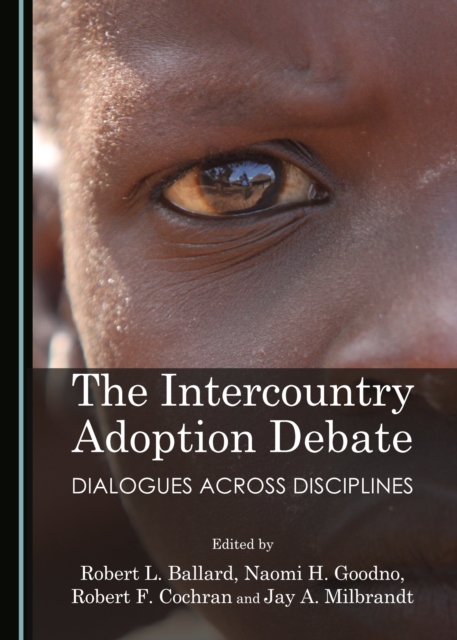
The Intercountry Adoption Debate
Meaningful discussion about intercountry adoption (the adoption of a child from one country by a family from another country) necessitates an understanding of a complex range of issues. These issues intersect at multiple levels and processes, span geographic and political boundaries, and emerge from radically different cultural beliefs and systems. The result is a myriad of benefits and costs that are both global and deeply personal in scope. This edited volume introduces this complexity an.
eBook

To Link International Adoptions in Kenya to Trafficking Is Ignorance
\"Child trafficking is an illegal act of sale of children by unscrupulous persons or organisations for ill purposes. It's an ugly thing, an abuse to humanity, a criminal act, a money making scheme. In fact, proper and well streamlined adoption procedures local or inter-country are a deterrent to child trafficking. Before the ban on inter-country adoptions was announced, Kenya cooperated with Netherlands, Denmark, Finland, Sweden, Norway, U.S.A, Germany, Canada and Italy as receiving countries for our adopted children. To demonise inter-country adoptions and make it synonymous to child trafficking displays a high level of ignorance on the subject. A prospective adoptive parent going through the legally stipulated process of adoption is not a child trafficker.\" (AllAfrica.com) This editorial argues international adoption is not a cause of child trafficking and ignorance is behind those who link the two.
Newspaper Article

Forming Families by Law
\"Adoptive families are created through the law, not by biology or blood. Although there is a long history in this country of some children being raised by adults other than their biological parents, legal recognition of these families was not generally available until states began enacting formal adoption laws in the mid-nineteenth century. Today [2009], an adoption decree is only available from state courts--and in some instances Indian tribal courts once they find that the necessary legal prerequisites have been satisfied and that the proposed adoption is in the best interests of the child.\" (Human Rights) This article summarizes adoption law and procedures in America as well as the makeup of modern adoptive families.
Magazine Article
Banana Republic to Baby Republic
Our focus is on the best interests of the child,\" says Dora Giusti, a UNICEF assistant program specialist previously based in Guatemala. \"Only as a last resort do we look to international adoption if there's no other alternative. We think international adoption is a good option ... if it's well regulated.\" On Aug. 11, the paranoia reached a fever pitch when Guatemalan authorities raided the Casa Quivira adoption foster home outside of Antigua under suspicions of \"irregularities\" in the adoption process. The government seized 42 kids waiting to be adopted and placed them in homes that don't focus on adoption, according to industry sources who wish to remain anonymous. In 2006, I helped reunite a teenage adoptee named [Ellie] with her biological mother in Guatemala-seven years after her relinquishment. During the emotional reunion, Ellie's adoptive mother, Judy, learned from the biological mother, [Antonia Cubillas], that Casa Quivira's [Sandra Gonzalez] had offered to pay for Ellie, then refused to pay once the girl was in the homes custody. Antonia had a change of heart and returned to Antigua three months later to try and reclaim Ellie but was ridiculed and refused access to her daughter. In the adoption dossier, Sandra Gonzalez wrote, \"Mother of child presents a troublesome and conflicted personality that makes her interpersonal relationships difficult.\"
Magazine Article