
Catalogue Search | MBRL


Are you sure you want to remove the book from the shelf?

{{itemTitle}}
21
result(s) for
"Interdependenz/Verflechtung"
Sort by:

Post-Communist Mafia State
Having won a two-third majority in Parliament at the 2010 elections, the Hungarian political party Fidesz removed many of the institutional obstacles of exerting power. Just like the party, the state itself was placed under the control of a single individual, who since then has applied the techniques used within his party to enforce submission and obedience onto society as a whole. In a new approach the author characterizes the system as the ‘organized over-world’, the ‘state employing mafia methods’ and the ’adopted political family', applying these categories not as metaphors but elements of a coherent conceptual framework.The actions of the post-communist mafia state model are closely aligned with the interests of power and wealth concentrated in the hands of a small group of insiders. While the traditional mafia channeled wealth and economic players into its spheres of influence by means of direct coercion, the mafia state does the same by means of parliamentary legislation, legal prosecution, tax authority, police forces and secret service. The innovative conceptual framework of the book is important and timely not only for Hungary, but also for other post-communist countries subjected to autocratic rules.
eBook
Emerging and advanced economies markets behaviour during the COVID ‐19 crisis era
This article examines the consequences of the COVID-19 crisis on the interdependencies between emerging and advanced economies. Using daily market index data from 22 developed and emerging markets, we develop a combination of statistical methods based on Diebold and Yilmaz spillover index and Toda–Yamamoto and Dolado and Lütkepohl causality approach. The results substantiate an increase in the interdependence between emerging and advances economies, which suggests an increase in the transmission of the stress and uncertainty between financial markets during the pandemic period. Our findings show that the emerging countries are affected by the financial markets of advanced economies during the COVID-19 crisis and, in particular, by European markets, which appear to be the primary driver of contagion and transmission of stress and uncertainty to all other regional markets.
Paper

From Poverty to Possibility: Unpacking the Link Between Poverty and Food Insecurity in Pakistan
This paper explores the link between poverty and food insecurity in Pakistan using household survey data and three measures of food insecurity—average calorie availability, minimum dietary energy requirement, and the perception-based Food Insecurity Experience Scale—at national, rural, and urban levels. Our results reveal that poorer households are more likely to be food insecure across all measures. Although reduction in household consumption expenditures and increase in both dependency ratio and household size may worsen the situation of food insecurity, improved economic opportunities (agricultural employment), human capital (education of the household head), inflows of international remittances, ownership of assets (livestock and agricultural land), and access to clean drinking water alleviate food insecurity. Highlighting the need for multidimensional interventions, our analysis for Pakistan reveals that poverty alleviation alone is insufficient to ensure food security.
Journal Article

Local-currency debt and currency internationalization dynamics: A nonlinear framework
The aim of this article is to investigate the relationship between the exposition of emerging countries to original sin and the internationalization process of their currency in a nonlinear framework. For that purpose, we use a panel dataset of 12 emerging countries from 2005Q4 to 2018Q3, and we implement two complementary methodologies: a multiplicative interaction model and a dynamic panel threshold model. We investigate the impact of the measures of the currency internationalization process on the ability of emerging countries to issue debt in local currency. We show that the Economic size and the institutional quality of emerging countries, as well as the FX turnover of their currency, interact when explaining the share of local-currency external debt. Moreover, our results reveal the existence of thresholds beyond which there is a change in the evolution of original sin, notably for the economic size and the governance index of emerging countries.
Journal Article
Political constraints and currency crises in emerging markets and less developed economies
Political institutions may directly affect the likelihood of currency crises by influencing market confidence. They may indirectly affect the likelihood of currency crises by influencing economic fundamentals. This study uses econometric mediation to estimate both direct and indirect causal pathways for veto player theory—a common framework for analyzing political institutional constraints—and finds this approach improves upon the standard econometric approach in the extant literature, which only estimates the direct causal pathway. This new mediated approach shows that political constraints also indirectly reduce the likelihood of crises through strengthening key economic fundamentals. Additionally, the analysis finds that when global conditions are stable, more constraints are shown to directly reduce the risk of crises. When global conditions are volatile, more constraints are shown to directly increase the risk of crises. Global volatility is more likely to cause crises in countries with relatively constrained political systems, and vice versa.
Journal Article

The interaction of interests and norms in international democracy promotion
The existing research on international democracy promotion is characterised by a peculiar tension. On the one hand, many scholars agree that, since 1990, democracy promotion has indeed become a significant aim guiding the foreign and development policies of North-Western democracies. On the other hand, there is a far-reaching consensus that this normative goal is regularly ignored once it collides with economic and/or security interests. This article challenges the notion that we can understand the motives and drivers behind democracy promotion by assuming that interests and norms represent two neatly separated and clearly ranked types of factors. It argues that democracy promotion policies are the result of a complex interaction of interests and norms. After first developing this argument theoretically, the article presents results from a comparative research project on the US and German democracy promotion that support this claim.
Journal Article

Poverty reduction in the course of African development
In the light of the opportunities and the challenges facing African economies in the 21st century, this edited volume traces an evolution of poverty in the course of economic development in sub-Saharan Africa over the recent decades. By engaging with and seeking to develop on the work of Professor Erik Thorbecke, it examines the evolving dynamics of poverty in multiple dimensions, in the light of Africa’s growth spell since the turn of the 21st century. It further discusses the way forward for addressing the question of how to lay down a foundation for improved governance and institutions towards realization of inclusive development in sub-Saharan Africa. Thus, the volume aims to contribute to our understanding of dynamics of pro-poor growth and pro-growth poverty reduction, and to ongoing policy and academic debates on how to overcome fragility and vulnerability and secure inclusive development through socio-economic transformation in sub-Saharan Africa. The volume is divided into four parts: two overview chapters in Part I set out a common theme running through the volume. Four chapters in Part II examine an evolution of the poverty profile in different dimensions in sub-Saharan Africa since the new millennium. Part III presents three country case studies of tracing poverty dynamics under a country-specific institutional and policy environment. Part IV consists of three chapters, each of which addresses the question of how to advance an inclusive development agenda in sub-Saharan Africa, but from three different perspectives—structural changes, a governance framework, and an institutional foundation.
eBook

Energy security and geopolitics in the arctic
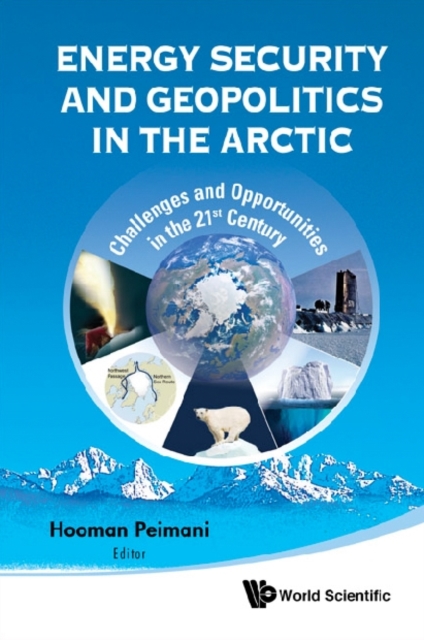
This book sheds light on how global warming has caused the ongoing environmental disaster in the Arctic, namely its melting. This development, if left unabated, will have a major negative environmental impact, not only on the Arctic itself, but on the entire planet, including the worsening of global warming and rising sea levels. The latter is a major threat to all island countries and all countries having coastlines with open seas with major environmental, social, economic, political and military/security implications. The Arctic melting is bringing about challenges while opening doors for certain opportunities. These are the accessibility of the region's large oil, gas and coal reserves and minerals, including rare earth elements. They are in demand both in the Arctic littoral states (Canada, Denmark/Greenland, Norway, Russia and USA) and the Greater Arctic countries (Iceland, Finland and Sweden) as well as in other parts of the world. In particular, major oil and gas importers (China, India, Japan and South Korea) are interested in the Arctic energy resources, the main non-regional countries with a capability to engage in the region. The obvious importance of the regional energy and mineral resources makes the division of the region among the regional countries crucial.
eBook

Red Capitalists in China
It has become a truism that continued economic reform in China will contribute to political change. Policy makers as well as many scholars expect that formation of a private sector will lead, directly or indirectly through the emergence of a civil society, to political change and ultimately democratization. The rapidly growing numbers of private entrepreneurs, the formation of business associations, and the cooperative relationships between entrepreneurs and local officials are seen as initial indicators of a transition from China's still nominally communist political system. This book, first published in 2003, focuses on two related issues: whether the Chinese Communist Party is willing and able to adapt to the economic environment its reforms are bringing about, and whether China's 'red capitalists', private entrepreneurs who also belong to the communist party, are likely to be agents of political change.
eBook