
Catalogue Search | MBRL


Are you sure you want to remove the book from the shelf?

{{itemTitle}}
2,125
result(s) for
"Interdisciplinary Literary Studies"
Sort by:

Conversations in postcolonial thought
\"Based on original material, this book offers a series of 12 conversational interviews with a diverse set of postcolonial thinkers from across the globe in the social sciences and humanities. Using a biographical approach to map out life histories, uniquely this book not only examines the key ideas of the thinkers interviewed, but it also invites readers to share their personal journeys to help one understand the experiences that led to their work within the field. The selection of thinkers included within this text is done so not with the aim to offer an encyclopedic index, but rather, to show how postcolonial thought as a broader concern can been found across a range of disciplines\"-- Provided by publisher.
Book
Jabra Ibrahim Jabra’s In Search of Walid Masoud’s intertextuality with William Shakespeare’s Hamlet
This article argues that Jabra Ibrahim Jabra’s In Search of Walid Masoud parallels Shakespeare’s Hamlet by exploring various themes and motifs such as the ghost, the gravedigger, Ophelia’s suicide, adultery, chastity, and madness. Through these themes and motifs, Jabra weaves a narrative that simultaneously recalls and reinvents Shakespeare’s classic play in a contemporary, politically-charged context. This article shows that Jabra utilizes Hamlet as a pivotal reference to represent the main concerns of his Palestinian people from a new and distinctive literary perspective. This is explicit in Jabra’s representation of revenge, in particular. In Hamlet, Shakespeare explores the theme of a son’s revenge for his father. Jabra, on the other hand, structures In Search of Walid Masoud around the revenge of a father for his son, which makes the revenge at the heart of the novel not personal but rather collective (the father’s revenge for his motherland/Palestine). This demonstrates Jabra’s proclivity to render the national plight of Palestinian people global and permit the Palestinian struggle to be perceived on a larger scale.
Journal Article

The Routledge Companion to Health Humanities
The health humanities is a rapidly rising field, advancing an inclusive, democratizing, activist, applied, critical, and culturally diverse approach to delivering health and well-being through the arts and humanities. It has generated new kinds of interdisciplinary research, knowledge, and communities of practice globally. It has also acted to bring greater coherence and political force to contributions across a range of related disciplines and traditions.
In this volume, a formidable set of authors explore the history, current state, and future of the health humanities, in particular how its vision of the arts and humanities:
Promotes creative public health.
Opens new routes to health and well-being.
Informs and drives better health care.
Interrogates relationships between ill health and social equality.
Develops humanist theory in relation to health and social care practice.
Foregrounds cultural difference as a resource for positive change in society.
Tests the humanity of an increasingly globalized health-care system.
Looks to overcome structural and process obstacles to cross-disciplinary ventures.
Champions co-construction, co-design, and mutuality in solving health and well-being challenges.
Showcases less familiar, prominent, or celebrated creative practices.
Includes multiple perspectives on the value and health benefits of the arts and humanities not limited to or dominated by medicine.
Divided into two main sections, the Companion looks at \"Reflections and Critical Perspectives,\" offering current thinking and definitions within health humanities, and \"Applications,\" comprising a wide selection of applied arts and humanities practices from comedy, writing, and dancing to yoga, cooking, and horticultural display.
eBook

'In America, you are black, baby': race, transnationality and identity (re)formation in Chimamanda Ngozi Adichie's Americanah
Global contemporary trends of transnational migration have shifted in recent years in light of the economic and political developments. Studies have shown that in the context of these transnational migrations, identities are continuously (re)formulated and (re)negotiated across different social worlds. Drawing from Fanon's theorization on the fact of blackness, this article discusses representations of the experience of black African transnationals as represented in Chimamanda Ngozi Adichie's third novel Americanah. The text exposes how thematic aspects transnational mobilities and of its aesthetic nature and style create a discourse on transnationalism, which can help us understand better the transnational lives and experiences of Africans abroad in recent times. The novel tells the story of two young Nigerians, Obinze and Ifemelu who, in the context of limited opportunities in Nigeria, decide to migrate to the West. In this context of migration, it is important to explore the influences of black identity making such as culture, race, gender, hair and language and how these shifts transform in transnational spaces.
Journal Article

The Routledge Concise History of World Literature
This remarkably broad and informative book offers an introduction to and overview of World Literature. Tracing the term from its earliest roots and situating it within a number of relevant contexts from postcolonialism to postmodernism, Theo D’haen examines:
the return of the term \"world literature\" and its changing meaning
Goethe’s concept of Weltliteratur and how this relates to current debates
theories and theorists who have had an impact on world literature
non-canonical and less-known literatures from around the globe
the possibility and implications of a definition of world literature.
This book is the ideal guide to an increasingly popular and important term in literary studies. It is accessible and engaging and will be invaluable to students of world literature, comparative literature, translation and postcolonial studies and anyone with an interest in these or related topics.
1. Introduction: the (Re)Turn of \"World Literature\" 2. Goethe’s \"Weltliteratur\" and the \"Humanist\" Ideal 3. World Literature and Comparative Literature 4. World Literature as an American Pedagogical Construct 5. World Literature and the Literatures of the World 6. World Literature in the Literary Marketplace 7. World Literature and Translation 8. World Literature, (Post)Modernism and (Post)Colonialism 9. Conclusion: The Struggle for World Literature?
Theo D’haen is Professor of English and Comparative Literature at K.U. Leuven University, Belgium and has also worked in Holland, France, and America. He is Editor-in-Chief of the European Review , and President of FILLM (Fédération Internationale de Langues et Littératures Modernes) 2008-2012.
eBook
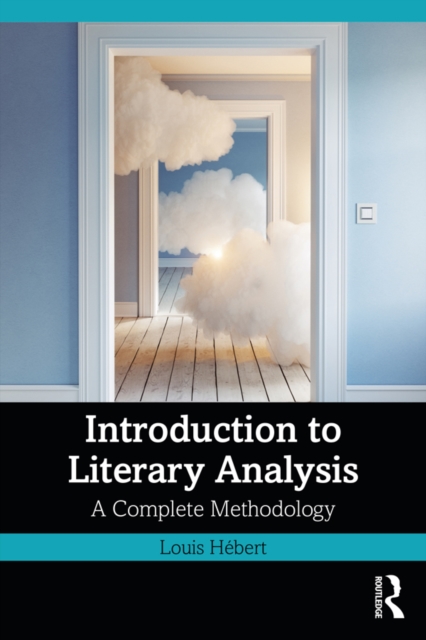
Introduction to Literary Analysis
This book provides a complete guide to analyzing literary works, from an introduction of basic principles to the finer details.
This book is a synthesis of established scholarship with new, original insights, making it an ideal introduction to the study of literature as well as a valuable companion throughout further study.
Separated into three sections, the book covers:
Principles-this looks at what literary analysis is, its three main components, and the various possible objects of analysis
Main components-introduces nearly 30 aspects of text analysis, such as style, themes, social aspects, and context, and then goes on to introduce nearly 50 approaches, such as literary history, ecocriticism, narratology, and sociology
The process of analysis-details the general structure of the analytical text, the structure of a pedagogical essay, the analysis of a theoretical element, possible \"plans\" for the analytical text, methods of argumentation, statements of opinion, hypotheses, the structure of paragraphs, and the use of citations.
eBook
Gendered narratives of trauma in fairy tales
Fairy tales are commonly addressed to children, yet they consistently encode violence, fear, and vulnerability through symbolic and displaced forms. This article offers a comparative analysis of Hansel and Gretel and the Anatolian tale The Weeping Pomegranate and the Laughing Quince (Ağlayan Nar, Gülen Ayva) to examine how trauma is organised within gendered narrative structures. Combining trauma theory, feminist fairy-tale criticism, and structural analysis, the study approaches fairy tales as cultural narratives in which collective memory and social norms shape the representation of vulnerability. The analysis focuses on recurring motifs such as famine, abandonment, violated care, and the transformation of female figures into sites of threat. To examine these patterns, the article proposes a T–C–A (Trauma–Gender–Narrative) coding scheme that traces how trauma becomes legible through narrative sequences, spatial configurations, and role distributions. The findings demonstrate that similar narrative structures produce different configurations of gendered vulnerability. Fairy tales actively organise the distribution of suffering rather than merely reflecting it within narrative form.
Journal Article
Frank Sinatra Has a Cold: myth, masculinity, and the modern hero in New Journalism
This paper examines Gay Talese’s landmark 1966 profile Frank Sinatra Has a Cold through the lens of mythic narrative structure and its ideological function. Arguing that Talese crafts a modern Hero’s Journey around Sinatra at a moment of cultural uncertainty, the study reveals how Talese constructs Sinatra as an embattled but resilient figure. Drawing upon Joseph Campbell’s theory of the Monomyth and Roland Barthes’ critique of myth as ideology, the paper demonstrates that Talese’s portrayal transcends conventional celebrity journalism. Rather than presenting Sinatra merely as an entertainer, Talese mythologizes him as a symbol of shifting ideals of masculinity, fame, and individualism, thereby naturalizing these concepts as innate truths. However, the analysis suggests that the article’s true lasting influence derives not only from its pioneering style of New Journalism, but also from its deeper narrative function which de-naturalizes the hero myth by exposing its construction. In doing so, Talese simultaneously critiques and perpetuates the celebrity myth, offering a portrait of Sinatra that resonates far beyond its immediate historical moment.
Journal Article
Reframing forbidden love: genetic determinism, internalized censorship, the imperial taboo in Shimada Masahiko’s Utsukushī Tamashī
Shimada Masahiko’s 2003 Utsukushī Tamashī reimagines the unfulfilled love of a fictional descendant of Madame Butterfly against the backdrop of the contemporary Japanese Imperial system. While often read as a forbidden love narrative governed by ‘genetic determinism’, this article argues that such readings overlook the novel’s material context and its profound political subtext, specifically its suspension and forced revision due to accusations of disrespect toward the Imperial family. Situating the text within post-1990s Japan, I contend that the novel is a critique of the internalized mechanism of self-censorship that paralyzes the modern subject. Firstly, engaging with Japanese Naturalism (shizen-shugi), I interpret ‘genetic fate’ as a satirical alibi for the protagonist’s ethical paralysis. Second, I deconstruct the protagonist’s victimhood to reveal his complicity in internalizing censorship. Thirdly, I demonstrate how the Prince’s construction as a ‘harmless vacuum’ transforms ‘forbidden love’ into a parody of classical tragedy, which critiques the modern internalization of the Imperial Taboo. Shimada’s narrative functions as a crucial site where social reality and fictional production interact, offering a model for reading the tension between ‘personal agency’ and ‘self-censorship’ in post-1990s Japan.
Journal Article
Echoes of our Touch: the nexus between humanity and the earth in Véronique Tadjo’s ‘ In the Company of Men
This article interrogates the destructive socio-ecological nexus in Véronique Tadjo’s In the Company of Men (2021) through a synthesis of Cajetan Iheka’s framework of ‘proximity’ and Rob Nixon’s concept of ‘slow violence’. While existing scholarship primarily addresses pandemic memorialization, this study identifies a critical gap by analysing how Tadjo’s visceral and multi-sensory imagery functions as a diagnostic of the colonial and socio-economic forces driving ecological collapse. The central argument posits that Tadjo utilizes imagery to manifest the catastrophic outcomes of ‘vulnerable proximity’, where the material enmeshment of species under extractive capitalism facilitates a lethal bridge for pathogens. By applying Nixon’s theory, the analysis demonstrates how the ‘slow violence’ of habitat destruction and unregulated mining, often invisible and attritional, is accelerated into the ‘fast violence’ of zoonotic spillover. The findings reveal that when human-non-human proximity is mediated through post-colonial structural weaknesses and global market demands, it results in a terminal breakdown of species boundaries. This research contributes to the African environmental humanities by illustrating how Tadjo’s aesthetic strategies map the negative externalities of the human–non-human nexus, specifically identifying how habitat loss, pollution, pandemic eruptions and deaths of living beings emerge as inevitable consequences of fractured proximity. Ultimately, the study concludes that the pandemic is the visceral manifestation of long-term, attritional environmental degradation inherent in modern extractive regimes.
Journal Article