
Catalogue Search | MBRL


Are you sure you want to remove the book from the shelf?

{{itemTitle}}
36
result(s) for
"Interethnic adoption."
Sort by:


Blue-ribbon babies and labors of love : race, class, and gender in U.S. adoption practice
An examination of race, class, and gender issues surrounding kinship and family formation in America, seen through the lens of adoption.
eBook

All you can ever know : a memoir
Chung investigates the mysteries and complexities of her transracial adoption in this chronicle of unexpected family for anyone who has struggled to figure out where they belong.
Book
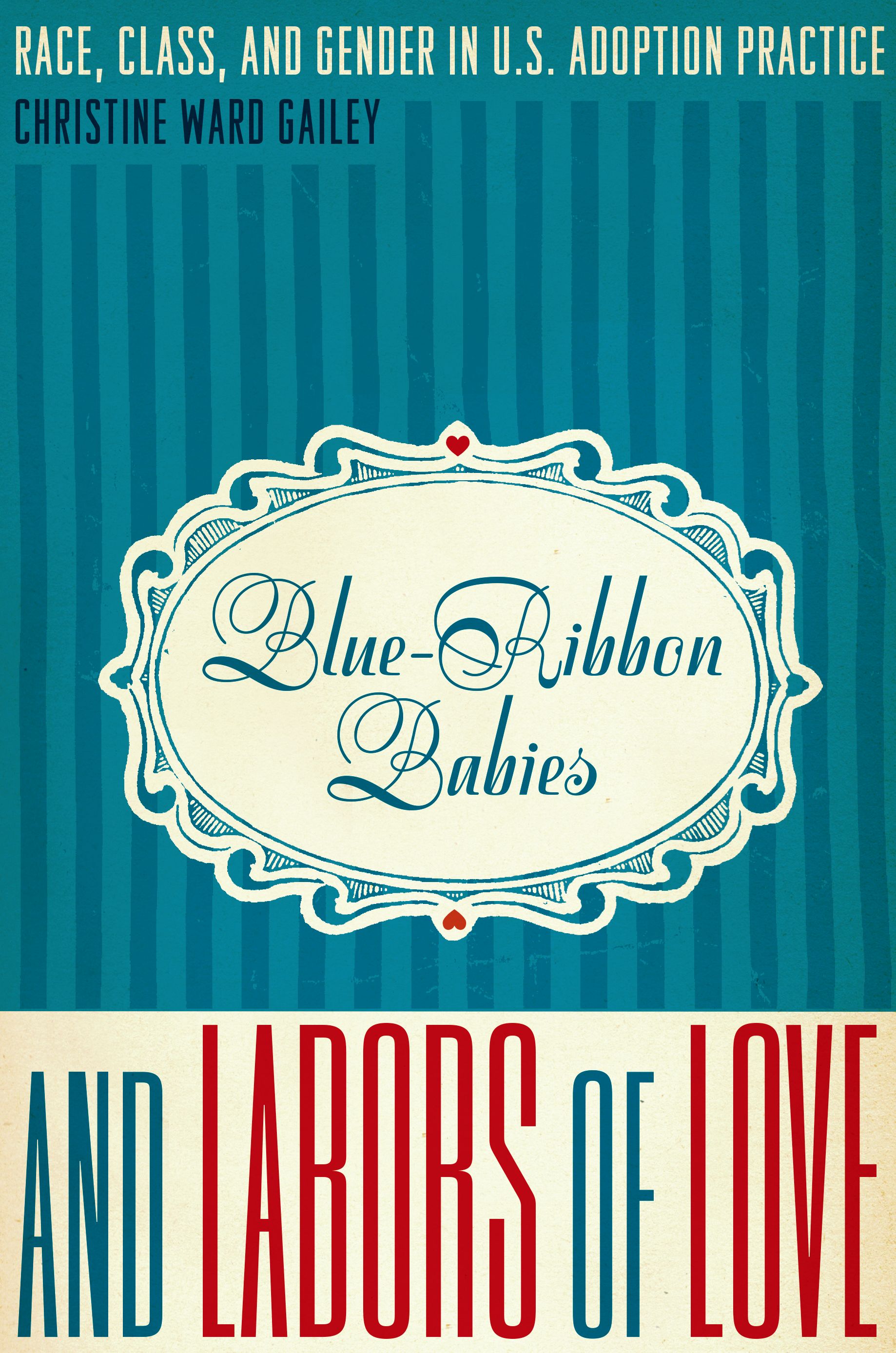
Blue-Ribbon Babies and Labors of Love
Most Americans assume that shared genes or blood relationships provide the strongest basis for family. What can adoption tell us about this widespread belief and American kinship in general? Blue-Ribbon Babies and Labors of Love examines the ways class, gender, and race shape public and private adoption in the United States. Christine Ward Gailey analyzes the controversies surrounding international, public, and transracial adoption, and how the political and economic dynamics that shape adoption policies and practices affect the lives of people in the adoption nexus: adopters, adoptees, birth parents, and agents within and across borders. Interviews with white and African-American adopters, adoption social workers, and adoption lawyers, combined with her long-term participant-observation in adoptive communities, inform her analysis of how adopters' beliefs parallel or diverge from the dominant assumptions about kinship and family. Gailey demonstrates that the ways adoptive parents speak about their children vary across hierarchies of race, class, and gender. She shows that adopters' notions about their children's backgrounds and early experiences, as well as their own \"family values,\" influence child rearing practices. Her extensive interviews with 131 adopters reveal profoundly different practices of kinship in the United States today. Moving beyond the ideology of \"blood is thicker than water,\" Gailey presents a new way of viewing kinship and family formation, suitable to times of rapid social and cultural change.
eBook

A generation removed : the fostering and adoption of indigenous children in the postwar world
\"Examination of the post-WWII international phenomenon of governments legally taking indigenous children away from their primary families and placing them with adoptive parents in the U.S., Canada, and Australia\"-- Provided by publisher.
Book

A Generation Removed
On June 25, 2013, the U.S. Supreme Court heard the caseAdoptive Couple vs. Baby Girl, which pitted adoptive parents Matt and Melanie Capobianco against baby Veronica's biological father, Dusten Brown, a citizen of the Cherokee Nation of Oklahoma. Veronica's biological mother had relinquished her for adoption to the Capobiancos without Brown's consent. Although Brown regained custody of his daughter using the Indian Child Welfare Act (ICWA) of 1978, the Supreme Court ruled in favor of the Capobiancos, rejecting the purpose of the ICWA and ignoring the long history of removing Indigenous children from their families.
InA Generation Removed, a powerful blend of history and family stories, award-winning historian Margaret D. Jacobs examines how government authorities in the post-World War II era removed thousands of American Indian children from their families and placed them in non-Indian foster or adoptive families. By the late 1960s an estimated 25 to 35 percent of Indian children had been separated from their families.
Jacobs also reveals the global dimensions of the phenomenon: These practices undermined Indigenous families and their communities in Canada and Australia as well. Jacobs recounts both the trauma and resilience of Indigenous families as they struggled to reclaim the care of their children, leading to the ICWA in the United States and to national investigations, landmark apologies, and redress in Australia and Canada.
eBook

Palimpsest : documents from a Korean adoption
\"Thousands of South Korean children were adopted around the world in the 1970s and 1980s. More than nine thousand found their new home in Sweden, including the cartoonist Lisa Wool-Rim Sjèoblom, who was adopted when she was two years old. Throughout her childhood she struggled to fit into the homogenous Swedish culture and was continually told to suppress the innate desire to know her origins. \"Be thankful,\" she was told; surely her life in Sweden was better than it would have been in Korea. Like many adoptees, Sjèoblom learned to bury the feeling of abandonment. In Palimpsest, an emotionally charged memoir, Sjèoblom's unaddressed feelings about her adoption come to a head when she is pregnant with her first child. When she discovers a document containing the names of her biological parents, she realizes her own history may not match up with the story she's been told her whole life: that she was an orphan without a background. As Sjèoblom digs deeper into her own backstory, returning to Korea and the orphanage, she finds that the truth is much more complicated than the story she was told and struggled to believe. The sacred image of adoption as a humanitarian act that gives parents to orphans begins to unravel. Sjèoblom's beautiful autumnal tones and clear-line style belie the complicated nature of this graphic memoir's vital central question: Who owns the story of an adoption?\"-- Provided by publisher.
Book

Making families through adoption
This volume examines adoption as a way of understanding the practices and ideology of kinship and family more generally. It focuses primarily on adoption practices in the US but will also use examples of adoption and fostering across cultures to put those American adoption practices into a comparative context.
eBook

Blue-Ribbon Babies and Labors of Love
No detailed description available for \"Blue-Ribbon Babies and Labors of Love\".
eBook

Life Lines
Adoptions that cross the lines of culture, race and nation are a major consequence of conflicts around the globe, yet their histories and representations have rarely been considered. Life Lines: Writing Transcultural Adoption is the first critical study to explore narratives of transcultural adoption from contemporary Britain, Ireland and America: fictions, films and memoirs made by those within the adoption ‘triad’ or those concerned with the pain and possibilities of transcultural adoption. While acknowledging the sobering inequalities which engender transcultural adoptions and the lasting upset of sundered relations, at the same time John McLeod considers the transfigurative and creative propensity of imagining transcultural adoption as radically calling into question ideas of biogenetic attachment, racial genealogy, cultural identity and normative family-making. How might the predicament of ‘being adopted’ transculturally enable the transformative agency of ‘adoptive being’ for all? Exploring works by Andrea Levy, Barbara Kingsolver, Toni Morrison, Sebastian Barry, Caryl Phillips, Jackie Kay and several others, Life Lines makes a groundbreaking intervention in such fields as transcultural studies, postcolonial thought, and adoption theory and practice.
eBook